

Eco Friendly Packaging Australia: The Summer Takeaway Guide to Cold Cups, Salad Bowls & Heat-Safe Containers
When the temperature climbs, takeaway demand shifts. Iced coffees, smoothies, cold brews and salad bowls take over the counter. Hot soups give way to poke bowls, grain salads and chilled desserts. For café, juice bar and takeaway owners, summer is the most profitable season of the year. It is also when packaging mistakes cost the most.
A cup that sweats through, a lid that pops off in a delivery bag, or a “compostable” bowl that goes to landfill can cost you a customer, a refund and a chunk of your sustainability credibility. Choosing eco friendly packaging in Australia is no longer just about picking something green-looking. It means matching the right material, the right lid and the right disposal message to every product on your menu.
This guide covers the five most common summer packaging mistakes we see across Australian cafés and takeaways. It also shows how to choose cold cups, salad bowls and heat-safe containers that perform and hold up to scrutiny.
Why Summer Is the Real Stress Test for Takeaway Packaging

Winter hides a lot of packaging weaknesses. In summer there is nowhere to hide:
- Condensation from iced drinks weakens uncoated or poorly coated paper
- Heat in delivery bags and cars can deform soft bioplastics
- Higher volumes mean more mix-ups between lids, cups and bowls during rushes
- More outdoor consumption means more litter, more bin confusion and more scrutiny of your green claims
Summer is also when customers pay the closest attention to what they are holding. A cup that goes soft, a straw that collapses or a lid that doesn’t seal gets noticed, photographed and reviewed. If you are also planning for the festive rush, our 2026 Christmas Catering Checklist for Cafés & Takeaways is a good companion read.
What “Eco Friendly” Actually Means in Australia (Quick Primer)
“Eco friendly” has no legal definition on a packaging label. It only means something when it is backed by a specific certification or disposal pathway. The terms worth knowing:
- AS 4736:2006: the standard for industrial compostable plastics, designed for commercial composting facilities
- AS 5810:2010: the standard for home compostable products, with much tougher breakdown conditions
- ABA certification: the Australasian Bioplastics Association is the recognised certifier for compostable products in Australia
- ARL (Australasian Recycling Label): the consumer-facing label that tells people which bin each component goes in
We cover this in depth in our guide to what AS 4736 and AS 5810 actually mean for your café. The key takeaway is that a product is “certified” only when it carries a verifiable certificate. A green leaf or the word “compostable” on a box is not one.
The 5 Costly Mistakes Aussie Cafés Make With Summer Packaging
Mistake 1: Buying Non-Certified Products
It is tempting to pick the cheapest “biodegradable” cold cup or bowl from an online marketplace. The risk is that the claim may not be backed by anything.
Why it goes wrong:
- “Biodegradable” and “eco-friendly” are marketing terms. They are not certifications.
- Unverified claims on your own signage or social media can expose you to greenwashing complaints. The ACCC has been increasing its focus on environmental claims.
- If a customer asks where the cup goes and your team can’t answer, trust erodes quickly.
How to avoid it: Ask every supplier for the specific standard (AS 4736, AS 5810 or a recycling pathway) and the certificate itself. At Pakio, certification details are tagged at SKU level for our BioPak range, and documentation is available on request.
Mistake 2: Mixing Plastics (and Other Materials) in One Order
A single drink can come with a PET cup, a PS lid, a PLA straw and a paper sleeve. That is four materials with four different disposal rules.
Why it goes wrong:
- Recycling streams are sensitive to contamination. A compostable item in the recycling bin, or the reverse, can downgrade a whole batch.
- Customers can’t be expected to separate lids, straws and cups unless you tell them how.
- Compostable bioplastics look very similar to conventional plastics. Without clear labelling, they confuse both customers and waste handlers.
How to avoid it: Build your cup system around one material family. A clear PET cold drink cup should be paired with a lid from the same recyclable family, not a random mix. If you go compostable, keep the whole stack consistent across the paper cold cups, lids and paper straws or bamboo fibre straws.
Mistake 3: Using the Wrong Lid Combinations
This is the most common operational headache. Lids are matched to cups by rim diameter in millimetres, not by ounces. A “16oz lid” doesn’t guarantee a fit across every 16oz cup.
Why it goes wrong:
- Poor-fit lids pop off in delivery bags, causing spills, refunds and bad reviews
- Flat lids on whipped or domed drinks crush the topping
- Hot-drink lids on cold cups (or the reverse) can warp, fit loosely or trap condensation
- Staff grab whatever is closest in a rush
How to avoid it:
- Always check the mm rim size on the product page. Our 425ml cup, for example, is listed as a 90mm cup that is Weights & Measures approved.
- Pair cold cups with dedicated cold cup lids, and keep hot lids like CPLA coffee cup lids or bagasse lids in a separate, labelled station.
- Pick domed lids for smoothies and iced drinks with cream, and flat or straw-slot lids for iced coffee.
- Store lids by size, with a printed mm label at each station.
Mistake 4: Poor Customer Disposal Instructions
Even perfect packaging fails if the customer bins it wrongly. And in Australia, the right bin depends on the council.
Why it goes wrong:
- Industrial compostable cups placed in a home compost bin typically won’t break down as intended
- Many councils don’t accept compostable packaging in their FOGO (Food Organics and Garden Organics) stream
- Vague slogans like “Please recycle me” or “100% eco” give customers no usable information
How to avoid it:
- Use specific, conditional wording: “AS 4736 industrial compostable. Check your local council guidelines.”
- Add a simple bin guide at your counter showing which items go where
- Train staff to answer one question confidently: “Where does this go?”
- Offer a reusable cup discount. It is the lowest-risk sustainability action a café can take, because it is a behaviour and not a product claim
For custom branding that carries clear disposal messaging, see our custom cold cups.
Mistake 5: Prioritising Price Over Lifecycle
A cup that is 2 cents cheaper per unit looks like a win until you count what comes with it.
The hidden costs of cheap packaging:
- Failure rate: leaks, collapsed bowls and lids that don’t fit mean remakes and refunds
- Brand cost: a soggy bowl in a customer’s hands undoes your marketing spend
- Compliance cost: unverified claims create risk you can’t see on the invoice
- Waste cost: if the packaging can’t be recovered anywhere, you’ve paid for a green claim you can’t deliver
How to avoid it: Compare cost per successful serve, not cost per carton. Include remakes, complaints and the time your team spends on workarounds. Then factor in end-of-life: is there a realistic recycling or composting pathway for your customers?
How to Choose the Right Cold Cups for Summer

Cold cups are the hero product of the season. Here is how the main options compare.
Clear PET Cold Cups
Clear PET cups show off colour, so smoothies, iced teas and cold brews sell themselves. They are strong, sweat-resistant and widely recyclable where PET is accepted. They also come in a wide size range, from small tasting sizes up to 20oz/600ml and 24oz/700ml.
Best for: iced coffee, iced tea, smoothies, juice, bubble tea.
Popular sizes: 12oz/340ml and 16oz/500ml.
BioPak Clear Cold Cups
If your brand story leans on sustainability, the BioPak cold drink cups offer a clear-cup look in sizes from 150ml tasting cups up to a 420ml Weights & Measures approved cup. Confirm the exact certification and disposal pathway for the SKU you choose, and communicate it honestly (see Mistake 4).
Paper Cold Cups
Paper cold cups suit milkshakes, thickshakes and cafés that want a more natural look. Check the lining, because it determines how the cup performs against condensation and how it is disposed of.
PET Cans for Cold Brew and RTD Drinks
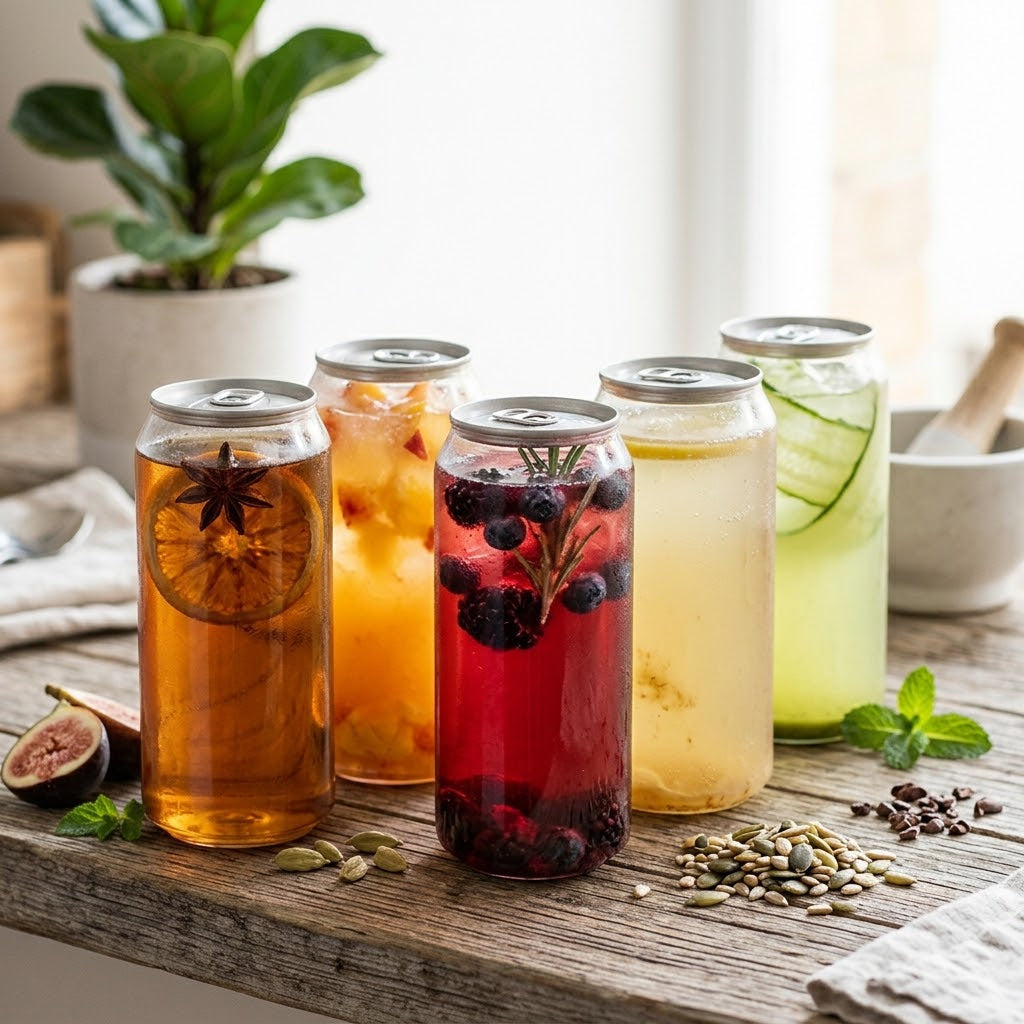
For takeaway cold brew, kombucha or ready-to-drink cocktails, Cantra PET cans are a premium, sealable alternative. They have dedicated ranges for cold brew and iced coffee. Our PET Cans 101 guide explains how cafés and brands are making the switch.
Ice Cream and Dessert Cups
For gelato and frozen desserts, see our compostable paper ice cream cups and the full ice cream & gelato packaging range.
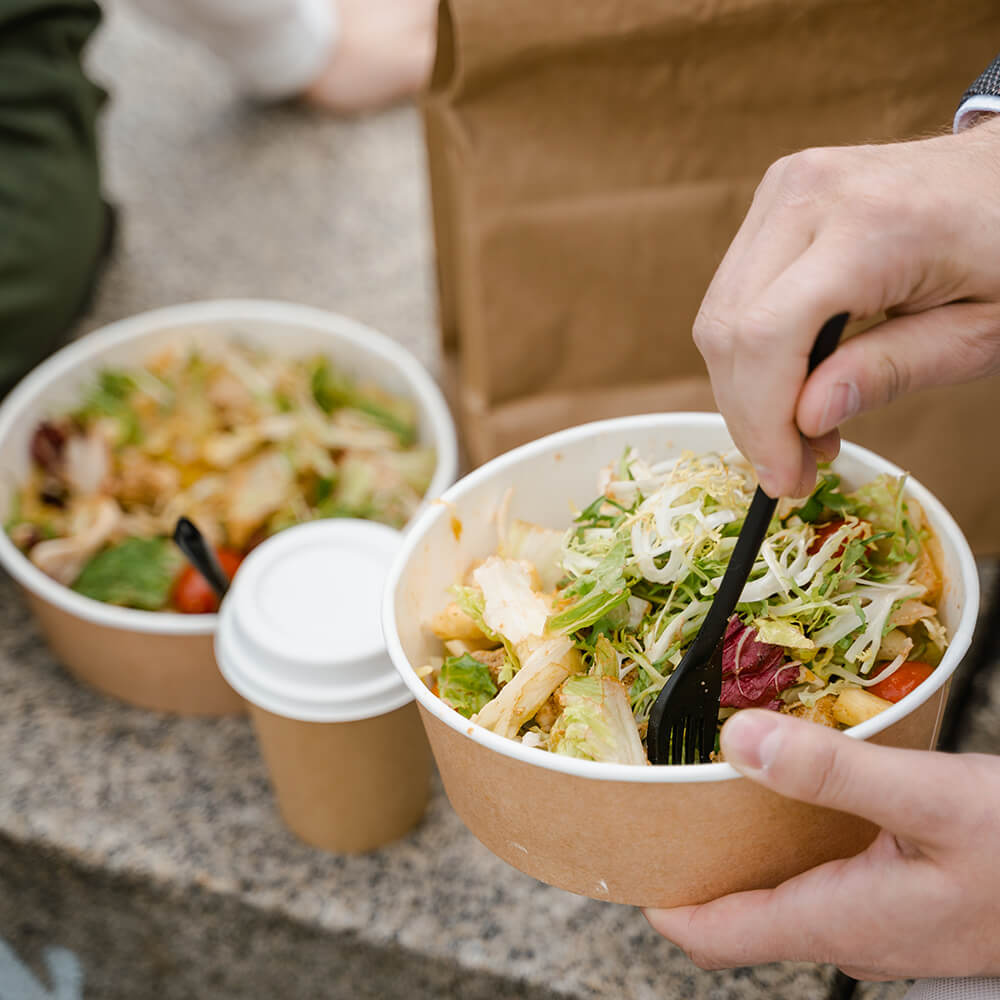
Salad Bowls That Survive Dressing, Delivery and Heat

Salads are a margin-friendly summer bestseller, but they are among the hardest menu items to package. Dressing is oily and acidic, ingredients are wet, and customers often eat an hour after pickup.
What to look for in a salad bowl:
- A moisture and grease barrier that holds through delivery
- Rigid walls so bowls don’t buckle when stacked in a bag
- A lid that suits the fill: domed for tall salads, flat for shallow bowls
- A clear disposal path you can describe to customers
Pakio options:
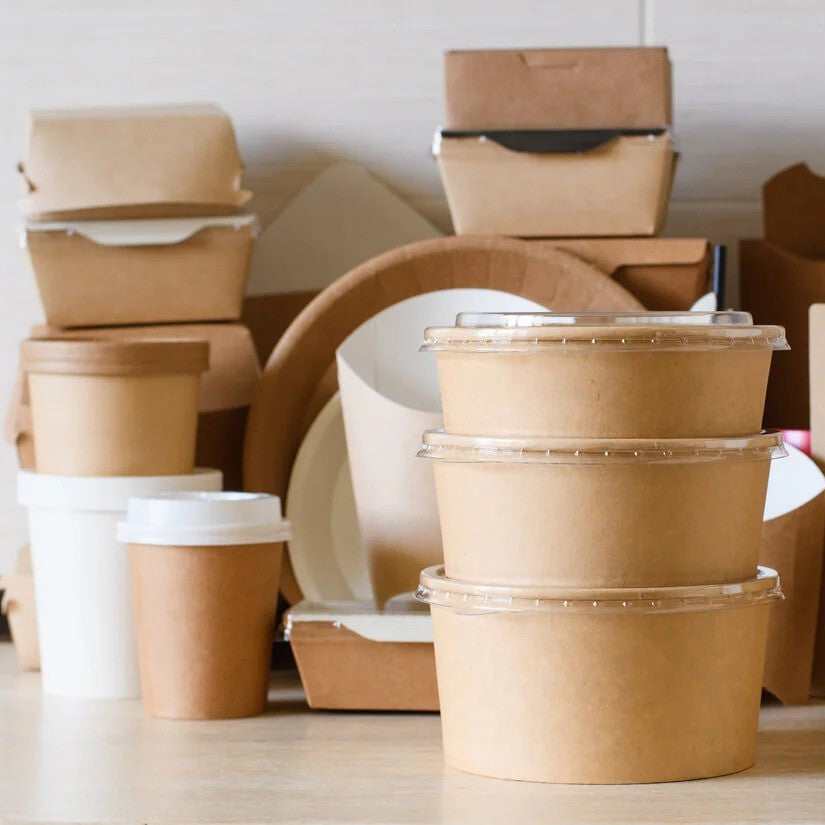
- Paper bowls: our PE coated kraft salad bowls (16oz/500ml) are a practical choice for fresh salads and grain bowls. Browse the full paper salad bowl range.
- Sugarcane bowls: sugarcane (bagasse) bowls are sturdy, grease-resistant and suit both hot and cold food.
- Recyclable plastic bowls: for dressing-heavy salads and poke, the Sho-bowl & poke bowl range gives a secure, see-through presentation.
- Complete solutions: the Salad & Healthy Bowl Packaging and Açaí & Poke Bowl Packaging collections group bowls, lids and accessories together.
Pro tip: Pack dressings separately in portion & sauce containers or sugarcane portion cups. Soggy leaves are the number one complaint about delivered salads.
Heat-Safe Containers: Not Everything Cold Stays Cold

“Summer” doesn’t mean every item is chilled. Hot meals, reheated lunches and catering trays still need containers that cope with heat. A container that is fine for a cold bowl can warp or leak under hot food.
Choosing heat-safe packaging:
- Sugarcane/bagasse containers handle both hot and cold foods well. See the rectangle containers, clamshells and octagonal containers.
- Paper food containers and tubs such as food tubs and paper food containers suit soups, pastas and hot mains.
- Recyclable plastic containers like rectangular containers and noodle bowls suit saucy, liquid-heavy dishes.
- Catering needs sturdier formats. See catering trays and foil trays & containers.
Always check the product spec sheet for microwave and temperature suitability before you promise reheating to a customer. If you also ship chilled or temperature-sensitive meals, our Packaging for Perishables guide covers insulation, air gaps and leak-proofing.
Pakio’s Certified & Eco-Friendly Options: A Quick Reference
| Menu Item | Recommended Pakio Range | Why It Works |
|---|---|---|
| Iced coffee, smoothies, juice | Clear PET Cold Drink Cups + Cold Cup Lids | Clear, sweat-resistant, recyclable |
| Milkshakes, thickshakes | Paper Cold Cups | Natural look, branding-friendly |
| Cold brew, kombucha, RTD | Cantra PET Cans | Sealable, premium, shelf-ready |
| Fresh salads | PE Coated Salad Bowls | Moisture and grease barrier |
| Poke, açaí, dressing-heavy bowls | Sho-bowls & Poke Bowls | Secure, see-through, leak-resistant |
| Hot and cold mains | Sugarcane Containers | Sturdy, heat-tolerant, plant-fibre |
| Sauces and dressings | Portion & Sauce Containers | Keeps salads crisp |
| Straws | Paper / Bamboo Fibre | Consistent with eco story |
Pakio’s BioPak, PLA and aqueous-coated lines carry SKU-level certification details, and full documentation is available on request. Browse the full Eco-Friendly Takeaway Packaging and Compostable Food Packaging collections, or see what’s changing in the rules in our Single-Use Plastic Bans in Australia 2026 guide.
Summer Packaging Checklist for Your Café
Before the heat hits, run through this list:
- Audit your SKUs. Does every cup, lid, bowl and straw have a certificate or a clear disposal pathway?
- Standardise material families. Avoid mixed-material drink stacks.
- Label lid stations by mm size. This removes guesswork during rushes.
- Test under real conditions. Leave a filled cup and bowl in a warm car for an hour.
- Rewrite your signage. Replace “eco-friendly” with specific, conditional disposal wording.
- Train your team. Everyone should be able to answer “where does this go?”
- Order early. Summer demand spikes, so stock up before the peak. Our wholesale program is designed for repeat orders.
Conclusion: Build a Summer Packaging System, Not Just a Shopping List
Choosing eco friendly packaging in Australia is about alignment. The cup, lid, bowl, straw and message all need to work together, and each claim you make has to be something you can prove. Avoid the five mistakes (non-certified products, mixed plastics, wrong lids, vague customer instructions and price-only buying) and you protect your margins, your reviews and your reputation.
Ready to upgrade your summer menu? Explore Café Takeaway Packaging, Juice Bar Takeaway Packaging or the full Eco-Friendly Takeaway Packaging range. Or contact the Pakio team on 1300 362 158 to match certified SKUs to your menu.
Frequently Asked Questions
What is the best eco friendly packaging for cold drinks in Australia?
The best choice depends on your disposal pathway. Clear PET cold cups are widely recyclable and perform well against condensation. Certified compostable options suit venues with a genuine composting stream. Whichever you choose, ask for the certification and pair the cup with a matching lid and clear customer instructions.
Are compostable cold cups really compostable in Australia?
Only if they are certified and your customer has access to a facility that accepts them. Most compostable cups are certified to AS 4736 (industrial composting), not AS 5810 (home composting). Many councils don’t accept them in FOGO bins, so labelling should say so.
How do I know which lid fits my cold cup?
Match the rim diameter in millimetres, not the ounce size. Check the mm measurement listed on the cup’s product page and choose a lid sized to it.
What’s the difference between AS 4736 and AS 5810?
AS 4736 covers industrial compostable plastics (hot, managed commercial facilities). AS 5810 covers home compostable products and has stricter breakdown conditions. See our full explainer.
What salad bowl is best for takeaway and delivery?
Look for a moisture and grease barrier, rigid walls and a secure lid. Paper salad bowls, sugarcane bowls and recyclable plastic bowls each suit different menus. Pack dressing separately to keep ingredients fresh.
Can sugarcane containers hold hot food?
Sugarcane (bagasse) containers suit both hot and cold foods. Always check the specific product’s spec sheet for temperature and microwave suitability.
Does Pakio offer wholesale pricing on eco friendly packaging?
Yes. Pakio supplies cafés, restaurants and takeaways with wholesale pricing and next-business-day delivery to the Melbourne Metro area. See wholesale information or register for an account.