


Australia's war on single-use plastics didn't happen overnight. It rolled out state by state, year by year, ban by ban. And if you run a café, restaurant, food truck or catering business anywhere in the country, the rules now directly affect what you can put on your counter, pack into a takeaway bag, or hand to a customer at a window.
The problem isn't the intent — most food service operators support reducing plastic waste. The problem is keeping up. Each state has its own timeline. Some bans took effect years ago. Others are still being phased in through 2026 and 2027. The definitions vary. The exemptions differ. And the penalties for non-compliance are real.
This guide cuts through the confusion. Here's exactly what's banned, where, and what your business needs to do about it.
The National Picture: What's Banned Everywhere
Before getting into state-specific rules, here's what's now prohibited across all of Australia:
-
Lightweight single-use plastic bags (below 35 microns)
-
Single-use plastic straws (with exemptions for disability/medical use)
-
Plastic stirrers and drink sticks
-
Plastic cutlery (forks, knives, spoons)
-
Expanded polystyrene (EPS) food containers (the white foam clamshells)
The national ban also covers microbeads in rinse-off personal care products and intentional balloon releases, though these are rarely relevant to food service operations.
If your business still has any of the above in stock, you're already non-compliant in every jurisdiction. Replace them now.

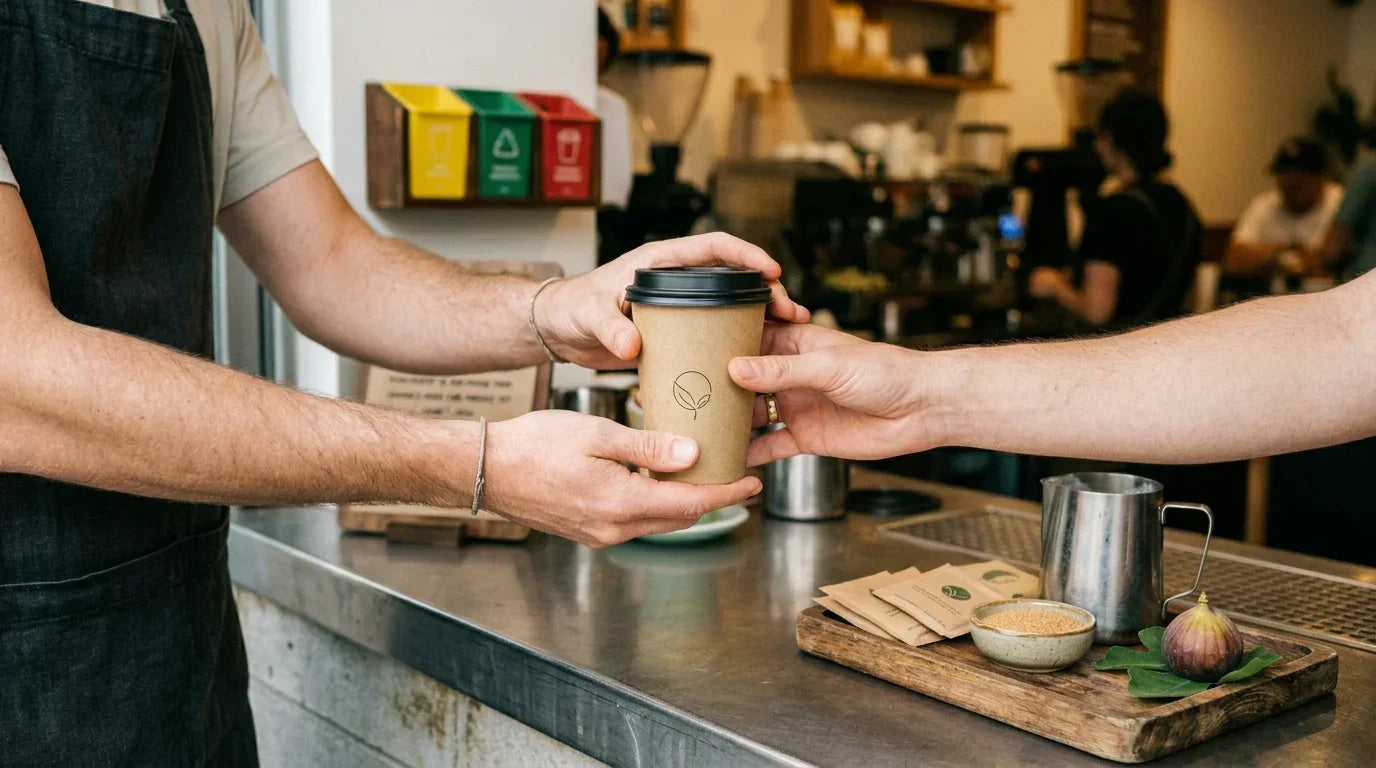
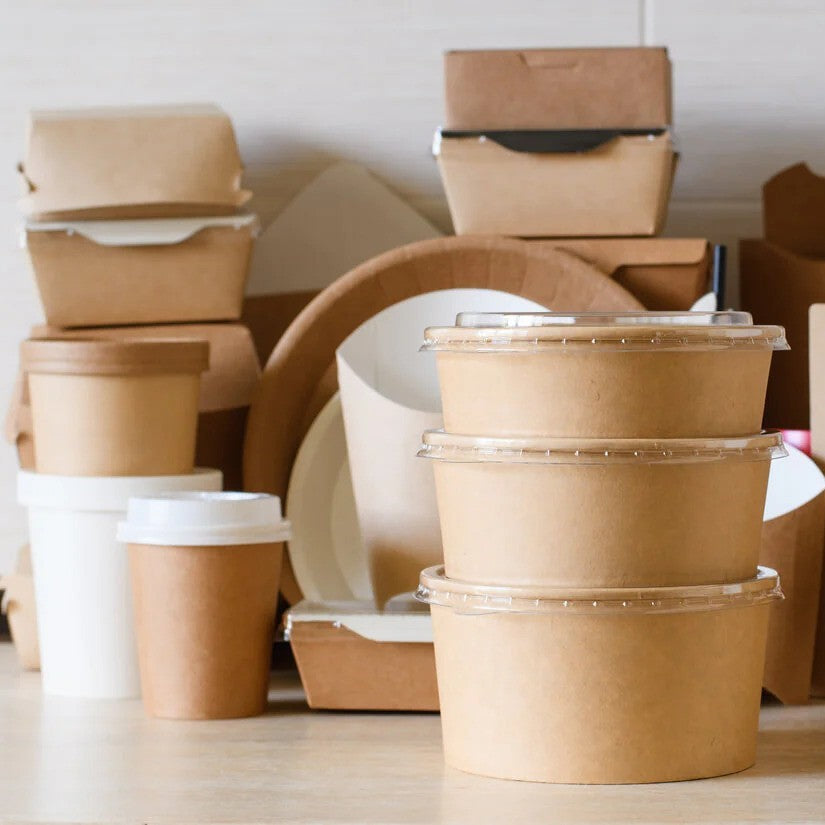
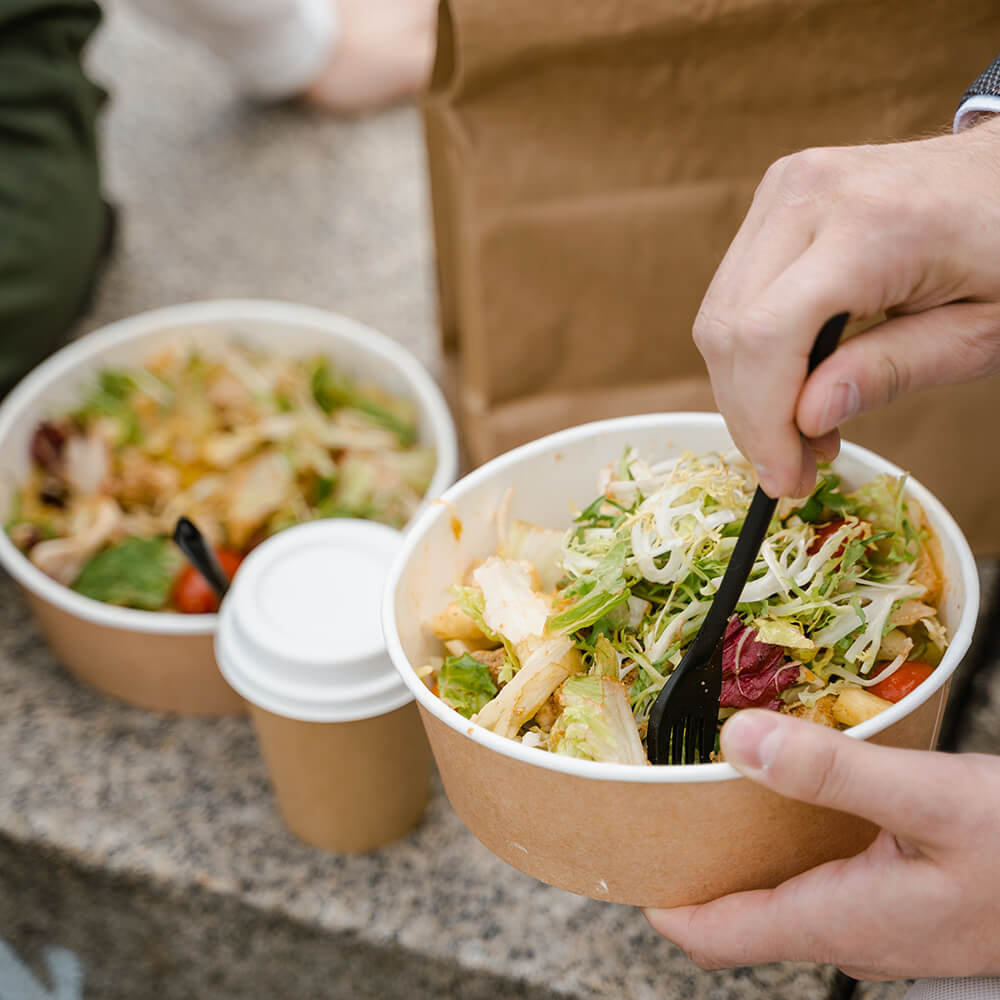
Compostable alternatives for Australian food service: bagasse clamshell containers, kraft paper cups with compostable lids, wooden cutlery, kraft takeaway bags and paper straws. All AS 4736 certified, all compliant across every Australian state and territory as of 2026.
State-by-State: The Details That Matter
New South Wales
NSW banned its first wave of single-use plastics on 1 November 2022. The banned items include straws, stirrers, cutlery, plates, bowls, cotton bud sticks, expanded polystyrene food service items, and microbeads.
What catches people out: NSW also bans plastic-lined single-use coffee cups where the lining makes the cup non-recyclable. If your takeaway cups have a conventional PE (polyethylene) lining, check whether your current supplier offers cups with aqueous or PLA linings that meet recyclability or compostability standards.
Victoria
Victoria's bans have rolled out in phases. The current scope covers single-use plastic straws, cutlery, plates, drink stirrers, cotton bud sticks, expanded polystyrene food and drink containers, and polystyrene loose-fill packaging.
New for 2026: From 1 January 2026, Victoria extended the ban to single-use plastic items integrated into food or drink packaging by a machine-automated process. Examples include a plastic spoon attached to a yoghurt tub or a straw affixed to a juice box. If you source pre-packaged items with attached plastic utensils, check with your supplier. Confirm the latest scope with EPA Victoria.
Queensland
Queensland bans single-use plastic straws, stirrers, cutlery, plates, bowls, cotton bud sticks, expanded polystyrene food and beverage containers, and microbeads. Heavyweight plastic bags (over 35 microns) are still permitted but must be reusable.
Practical note: If you operate in Queensland, sugarcane takeaway containers are one of the most popular alternatives to EPS clamshells. They're sturdy, microwave-safe, and certified compostable.
South Australia
SA has been the most aggressive state on plastics regulation. Its bans already cover straws, cutlery, stirrers, polystyrene containers, oxo-degradable plastics, and single-use plastic cups and lids.
Critical 2026 update: From 1 March 2026, any exemption for AS-certified compostable food and drink containers in SA now requires clear labelling indicating whether the product is home compostable, industrially compostable, or both. If you sell compostable packaging in SA, your products must display this labelling or they're treated the same as conventional plastic. Talk to your supplier about label compliance, and verify current requirements with Green Industries SA.
Coming in 2027: Plastic barrier bags for unpackaged meat, poultry, dairy, fish and seafood will be banned from 1 September 2027. Butchers, delis and seafood counters should start planning now. Check the SA Department for Environment and Water website for confirmed timelines.
Western Australia
WA's ban covers straws, cutlery, stirrers, produce bags, cups, cotton bud sticks, polystyrene food containers, microbeads, and balloon releases.
2026 expansion: WA is extending the ban to non-compostable plastic barrier bags for meat, fish and dairy. If your business handles fresh food, you'll need compostable alternatives for wrapping and bagging. Check with WA's Department of Water and Environmental Regulation for confirmed dates and specifications.
Tasmania
Tasmania bans lightweight plastic bags, straws, cutlery, plates, plastic-lined single-use cups, and expanded polystyrene containers. The state follows the national baseline closely.
ACT
The ACT has one of the broadest bans: cutlery, stirrers, straws, cotton bud sticks, plates, bowls, heavyweight carry bags, expanded polystyrene food containers, EPS loose-fill packaging, EPS trays, and microbeads.
Northern Territory
The NT bans single-use plastic bags, straws, cutlery, stirrers, plates, cotton bud sticks, polystyrene food containers, and microbeads. Enforcement has been progressively tightening.

The compliance timeline at a glance: all 8 Australian states and territories have rolled out single-use plastic bans, with Victoria's machine-integrated plastics extension taking effect 1 January 2026, South Australia's labelling mandate for compostable packaging from 1 March 2026, and SA's barrier-bag ban for unpackaged fresh meat, poultry, dairy and seafood from 1 September 2027. Stock rotation pays for itself. A single NSW corporate fine of $22,000 or an SA $20,000 penalty exceeds the annual cost gap of switching entire categories for most cafés.
Understanding Compostable Certifications: AS 4736 vs AS 5810
When you switch from conventional plastic to compostable alternatives, you'll encounter two Australian standards. Understanding the difference matters, especially in South Australia, where labelling requirements are now legally enforceable.
AS 4736: Industrial (Commercial) Composting
Products certified to AS 4736 break down in commercial composting facilities, the large-scale operations that maintain temperatures of 55–70°C. These products must:
-
Disintegrate within 12 weeks
-
Fully biodegrade within 6 months
-
Leave no toxic residue in the compost
-
Contain more than 50% organic material
Most compostable food packaging and compostable cups on the market carry AS 4736 certification.
AS 5810: Home Composting
Products certified to AS 5810 break down in a backyard compost bin, a much cooler and less controlled environment. The time requirements are stricter:
-
Disintegrate within 180 days (6 months)
-
Fully biodegrade within 12 months
-
Same toxicity and organic content requirements as AS 4736
Home-compostable products (AS 5810) will always meet the industrial standard (AS 4736), but the reverse isn't true.
Which Certification Do You Need?
For most food service businesses, AS 4736 is sufficient. Your packaging goes into commercial waste streams, not backyard compost bins. However:
-
In South Australia, you must label your compostable packaging to indicate which standard it meets (from March 2026)
-
If your brand promotes home compostability as a selling point, you need AS 5810
-
Check whether your local council's FOGO (Food Organics Garden Organics) bin accepts compostable packaging. Only a relatively small number currently do, so confirm directly with your council.
Spotting Certified Products
Look for the Australian Bioplastics Association (ABA) certification logos:
-
Seedling logo (industrial compostable, AS 4736)
-
Home compostable logo (AS 5810)
Ask your packaging supplier for certificates of conformity. If they can't provide them, that's a red flag.
The Packaging Audit: What to Check in Your Business
Before making any changes, audit what you currently use. Walk through your operation and list every single-use item:
Front of House
-
Takeaway cups (hot and cold) and lids
-
Straws
-
Cutlery sets for takeaway orders
-
Plates, bowls, containers for dine-out meals
-
Sauce cups and condiment containers
-
Napkins (usually fine, most are paper) and napkin bands
-
Carry bags
Back of House
-
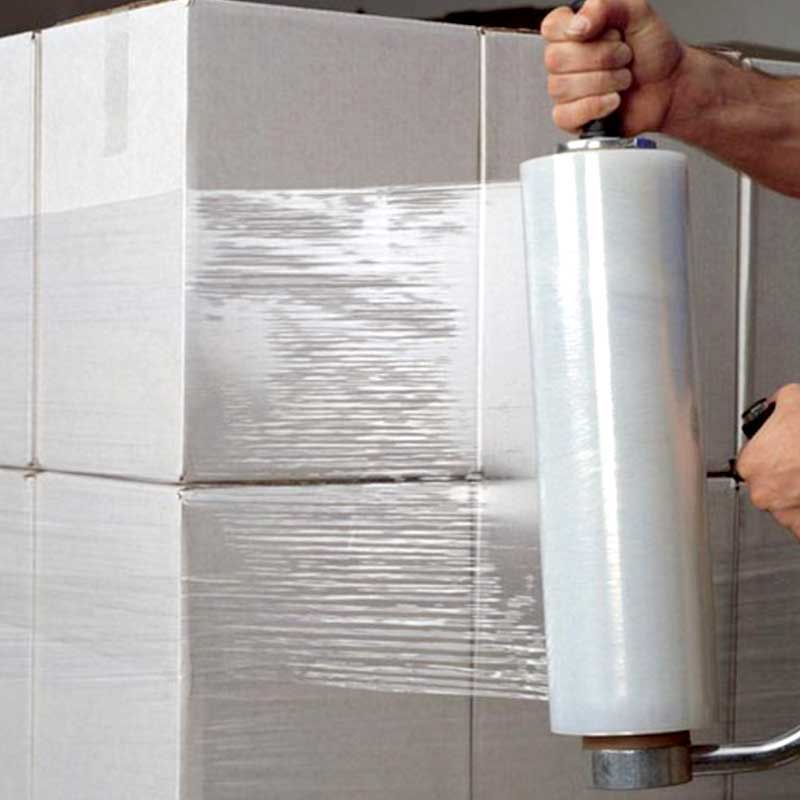
Cling wrap and plastic film
-
Produce bags for fresh ingredients
-
Gloves (check if your state bans specific types)
-
Bin liners
-
Cleaning product packaging
What to Record
For each item, note:
-
Material. What is it made of? (PS, PP, PE, PLA, bagasse, paper?)
-
Supplier and cost per unit
-
Weekly volume. How many do you go through each week?
-
Certification. Is it certified compostable? Which standard?
This audit gives you a clear picture of where you're compliant, where you're at risk, and where switching makes the biggest impact.

AS 4736 (industrial compostable) requires sustained temperatures of 55–70°C, 12-week disintegration and 6-month full biodegradation. Only a facility like this can provide those conditions. AS 5810 (home compostable) works at ambient backyard temperatures but demands faster disintegration within 180 days and full biodegradation within 12 months. An AS 4736-only product will sit unchanged in a backyard bin for years, which is why South Australia has mandated which standard each compostable container must declare, effective 1 March 2026.
Making the Switch: Product-by-Product Guide
Here's how to replace the most common banned items with compliant alternatives, mapped to real product categories.
Cups and Lids
The problem: Traditional PE-lined paper cups aren't recyclable in most council systems and are banned in some states.
The solution: Switch to cups with PLA or aqueous coatings that carry compostable certification. Single-wall and double-wall coffee cups with compostable linings look and perform identically to conventional cups. Pair them with compostable cup lids to complete the set.
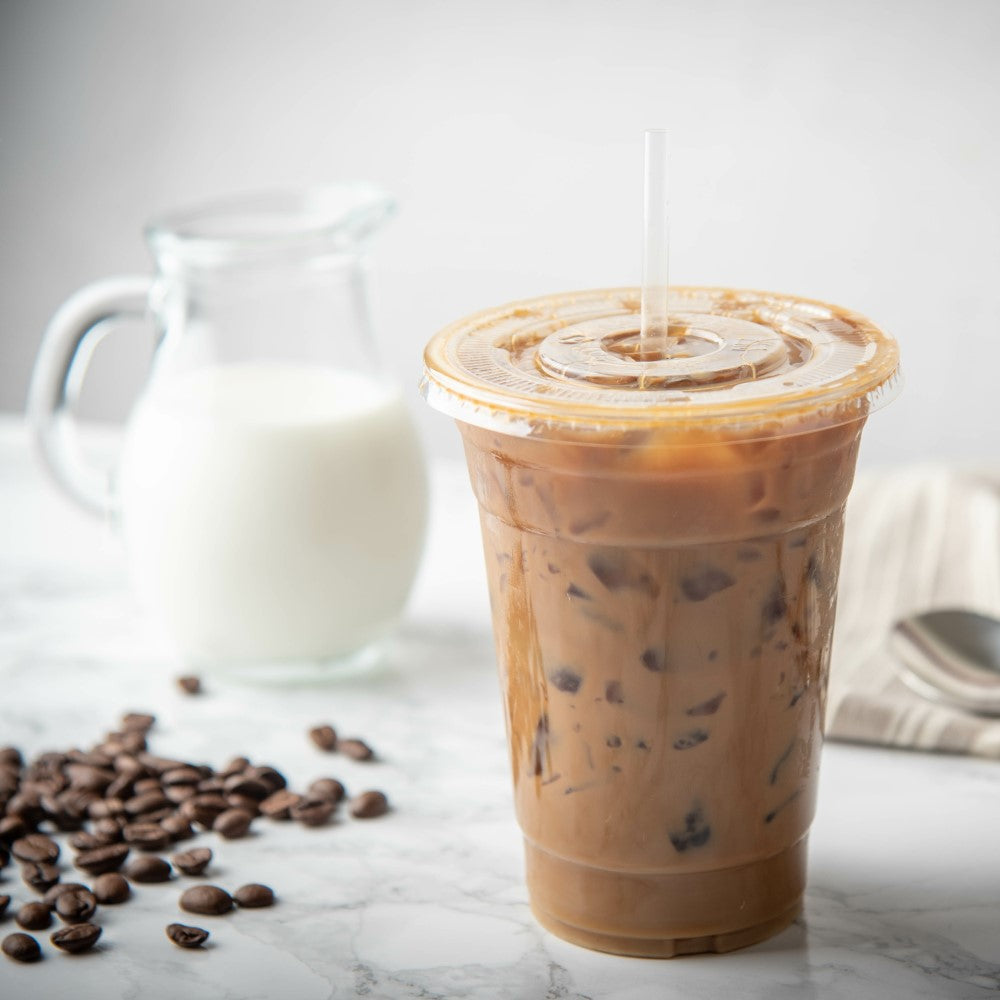
For cold drinks, PET cups remain legal in most states, although PLA cold cups offer a compostable alternative if your brand leans into sustainability. Browse cold cups and ice cream cups for both options.
Food Containers
The problem: EPS (expanded polystyrene) clamshells and trays are banned everywhere.
The solution: Sugarcane (bagasse) containers are the direct replacement. Made from sugarcane fibre (an agricultural byproduct), they're sturdy, oil-resistant, microwave-safe, and certified compostable under AS 4736. Available in every size from snack boxes to large meal containers.
For burgers and sandwiches, corrugated cardboard boxes offer another lightweight, recyclable option.
Cutlery
The problem: Plastic forks, knives and spoons are banned in every state.
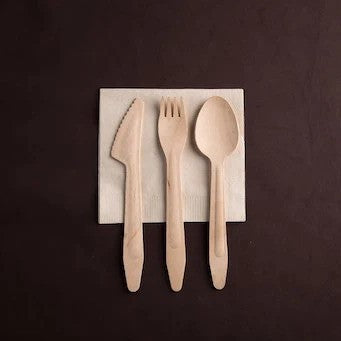
The solution: Wooden or bamboo cutlery is the most common replacement. Compostable PLA cutlery also exists, but check your state's specific definitions. Some jurisdictions ban all single-use plastic-like items regardless of material.
Cost tip: Many cafés now offer cutlery only on request rather than including it in every bag. This alone can cut cutlery costs by 40–60%.
Bags
The problem: Lightweight single-use plastic bags are banned nationwide. Some states are moving to ban non-compostable barrier bags for fresh food.
The solution: Paper bags handle most takeaway needs. They're available in every size, can be branded with custom printing, and are universally recyclable.
For fresh food wrapping (meat, fish, cheese), look for compostable barrier bags certified to AS 4736 if you operate in WA or SA where stricter rules apply.
Straws
The problem: Plastic straws are banned everywhere (with medical/disability exemptions).
The solution: Paper straws are the default for most venues. PLA straws work well for cold drinks but don't hold up in hot beverages. Some venues have moved to metal or bamboo reusable straws for dine-in service.
Cost Reality: What the Switch Actually Costs
Let's be direct: compostable packaging costs more per unit than conventional plastic. How much more depends on the product category.
|
Item |
Conventional Plastic |
Compostable Alternative |
Price Difference |
|
8oz coffee cup |
$0.04–$0.06 |
$0.06–$0.09 |
+30–50% |
|
Clamshell container |
$0.08–$0.12 (EPS) |
$0.14–$0.22 (bagasse) |
+60–80% |
|
Cutlery set (fork/knife/napkin) |
$0.05–$0.08 |
$0.08–$0.14 (wood) |
+50–75% |
|
Straw |
$0.01–$0.02 |
$0.02–$0.04 (paper) |
+50–100% |
|
Carry bag |
$0.03–$0.05 |
$0.06–$0.10 (paper) |
+60–100% |
Prices are indicative ranges based on wholesale volumes typical for independent cafés and small restaurants in Australia, 2026. Actual pricing varies by supplier, volume and specifications.
The real impact on your business: For a café serving 200 takeaway coffees per day, switching to compostable cups and lids might add $6–$10 per day in packaging costs, or roughly $2,000–$3,500 per year. That's real money, but it's also less than a single health inspection fine in most states.
Ways to Offset the Cost
-
Buy in bulk. Packaging costs drop significantly at higher volumes. Wholesale pricing can close much of the gap between conventional and compostable options.
-
Offer cutlery on request. Stops 40–60% of cutlery going straight in the bin unused.
-
Right-size your containers. A smaller container that fits the meal properly uses less material than an oversized one. Audit your most common portion sizes.
-
Charge for extras. Some cafés now charge a small amount for carry bags or extra sauce containers. Customers generally accept this when the reason is clear.
-
Communicate the switch. A small sign or menu note explaining your commitment to reducing plastic can turn the cost increase into a brand asset. Don't apologise for it. Own it.
Enforcement: What Happens If You Don't Comply
Penalties vary by state, but they're not trivial.
Penalty figures below are based on published legislation at the time of writing. Verify current rates with your state authority, as amounts are periodically adjusted.
-
NSW: Up to $11,000 for individuals and $22,000 for corporations per offence (under the Plastics Reduction and Circular Economy Act 2021)
-
Victoria: Penalties under EPA Victoria enforcement, with infringement notices and escalating fines
-
SA: Up to $20,000 per offence (under the Single-use and Other Plastic Products (Waste Avoidance) Act 2020), with the state actively enforcing labelling requirements
-
QLD: Penalties of several thousand dollars per offence (under the Waste Reduction and Recycling Act 2011). Confirm current rates with the Queensland Department of Environment, Tourism, Science and Innovation.
Enforcement is complaint-driven in most states. A customer, competitor, or council inspector can trigger an investigation. The risk is low on any given day, but the consequences of being caught are steep enough to make compliance the obvious choice.
Frequently Asked Questions
Are PLA products considered "plastic" under the bans?
It depends on the state. Some states exempt products certified compostable under AS 4736 or AS 5810. Others define "plastic" broadly to include bio-based polymers. Check your specific state's legislation. When in doubt, choose fibre-based alternatives (paper, bagasse, wood), as these are universally accepted.
Do I need to display compostable certification on my packaging?
In South Australia, yes. From March 2026, compostable food and drink containers must display labelling indicating their composting type (home, industrial, or both). Other states don't currently mandate this, but clear labelling helps avoid confusion for customers and waste collectors.
Can compostable packaging go in my council's green bin?
Possibly. Only a relatively small number of Australian councils currently accept compostable packaging in FOGO bins. Check with your local council. Even where accepted, some facilities can't process certain compostable materials. When in doubt, compostable packaging can go in general waste. It will still break down faster than conventional plastic in landfill conditions.
What about dine-in? Do the bans apply to items used on-premises?
Yes. The bans apply to single-use items regardless of where they're used. A plastic fork served at a table is just as banned as one packed in a takeaway bag. For dine-in service, reusable cutlery, plates and glasses are the straightforward solution, and they've always been cheaper per use than disposables.
How do I verify that my supplier's products are genuinely compostable?
Ask for certificates of conformity to AS 4736 and/or AS 5810. Check for the ABA Seedling logo (industrial) or Home Compostable logo. Reputable suppliers provide this documentation readily. If a supplier claims their products are "biodegradable" but can't produce certification to an Australian standard, look elsewhere.
My business operates across multiple states. Which rules do I follow?
You must comply with each state's rules at each location.
The simplest approach: source packaging that meets the strictest standard you encounter, and use it everywhere.
One SKU, full compliance.
Regulatory Disclaimer
The information in this guide reflects published regulations and publicly available data as of early 2026. Plastic bans, compostable certification requirements and penalty rates are subject to change as state and territory governments update their environmental legislation. Always confirm specific requirements, effective dates and penalty amounts with your state or territory environmental authority before making compliance decisions.
Staying Ahead of the Curve
The direction is clear. Bans are expanding, not contracting. New categories of plastics will be added. Labelling requirements will tighten. Enforcement will increase.
The businesses that treat this as a cost of doing business, rather than waiting until the last possible moment, tend to find it easier and cheaper. They lock in supplier relationships, negotiate better pricing, and build customer goodwill along the way.
If you're not sure where to start, begin with the items you go through fastest, usually cups, lids and containers. Switch those first, get your team comfortable with the new products, and work through the rest of your packaging over the following weeks.
Pakio is a young Australian-founded packaging supplier based in Keysborough, Melbourne. Founders George Weng and Josh Trenerry stock 2,000+ SKUs of compostable and recyclable packaging, from compostable cups and sugarcane containers to paper bags and cutlery, with free Melbourne metro delivery on orders over $200 and competitive wholesale pricing nationwide. If you need help choosing what fits your operation, get in touch.