


PET Cans 101: How Cafés, Breweries & Kombucha Brands Are Switching to Eco Friendly Packaging in Australia
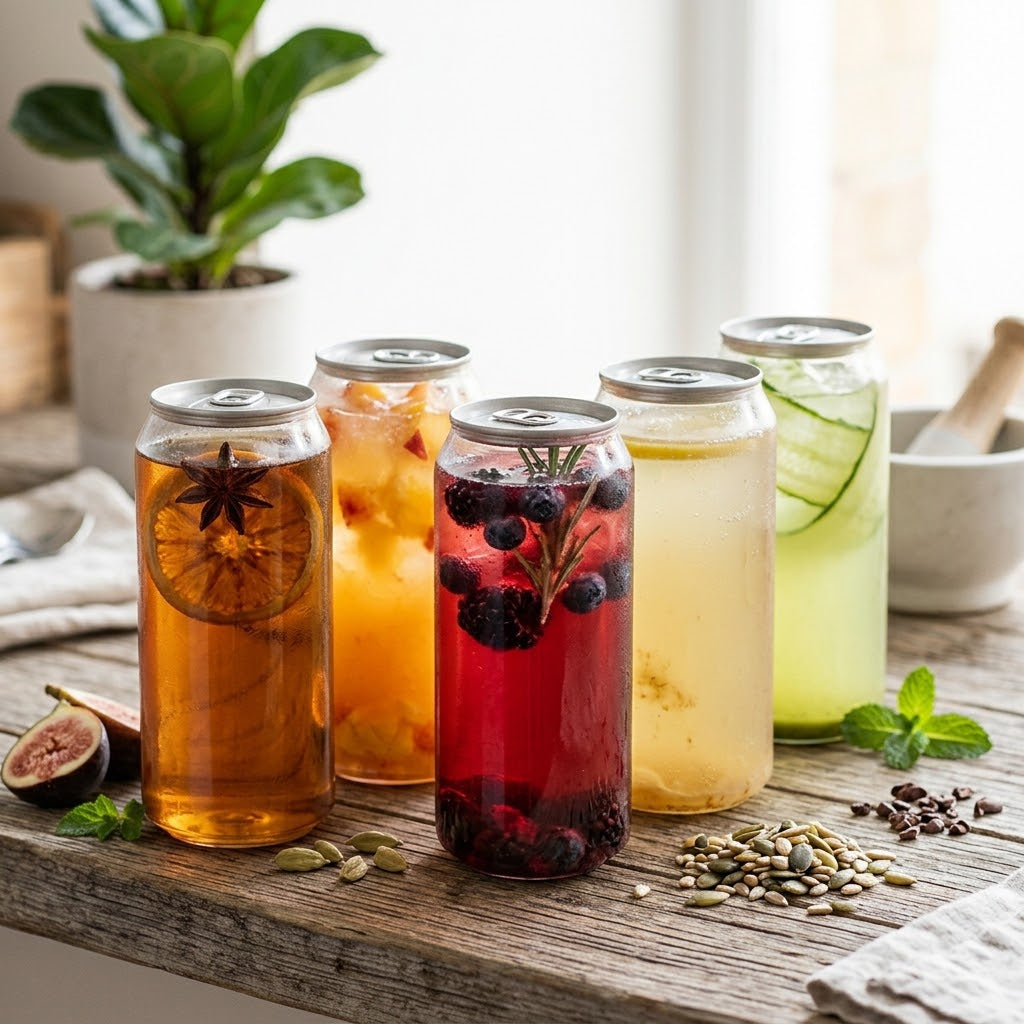
Walk into any bottle shop, specialty grocer or café fridge in Australia and you'll notice a shift. Cold brew, kombucha, RTD cocktails and craft beer are appearing in clear, can-style packaging that shows off the drink inside. These are PET cans, and they're one of the fastest-moving trends in eco friendly packaging in Australia.
The appeal is easy to see. PET cans are lightweight, shatter-resistant and see-through, and they're made from a single, widely recycled resin. They also work at small scale, which is why independent cafés and microbreweries can adopt them without the minimum runs that aluminium demands.
But "eco-friendly" is only true if you choose, combine and communicate your packaging correctly. Most of the sustainability failures we see have nothing to do with the can itself. They come from avoidable mistakes in sourcing, material mixing, lids and customer messaging.
As Australia's fastest-growing packaging marketplace, Pakio supplies cafés, brewers, kombucha labs and juice bars from our Keysborough warehouse. In this guide we'll cover why drinks businesses are switching, the five mistakes that quietly undermine sustainability claims, and how to choose certified, compliant PET can packaging with confidence.
Why Drinks Brands Are Switching to PET Cans

Glass is heavy, breakable and expensive to freight. Aluminium is excellent but often demands large print runs and high minimum order quantities. PET cans sit in a useful middle ground, especially for small and mid-size producers.
A. Shelf Appeal You Can't Get From Aluminium
A clear can lets customers see colour, clarity, garnish and fruit infusions. For a kombucha brand or an RTD cocktail label, the liquid itself is part of the marketing. Aluminium hides it. PET sells it.
B. Lower Barriers to Entry
A café sealing its own iced lattes or a microbrewery trialling a new recipe doesn't want to commit thousands of dollars to printed aluminium. PET cans can be run in small batches with a benchtop seamer, so you can test a product before scaling.
C. Lighter Freight, Fewer Breakages
Compared with glass, PET is far lighter and doesn't shatter, which cuts freight weight, breakage losses and workplace risk in production and retail.
D. A Cleaner Recycling Story
Single-resin PET is one of the most commonly collected plastics in Australia. That makes it a more straightforward end-of-life story than mixed-material cups or laminated pouches, provided you don't undermine it (more on that below).
PET Cans vs Aluminium vs Glass: A Quick Comparison

| Factor | PET Cans | Aluminium Cans | Glass Bottles |
|---|---|---|---|
| Visibility | Fully clear | Opaque | Clear or tinted |
| Weight | Light | Light | Heavy |
| Breakage risk | Very low | Very low | High |
| Light protection | Lower | Excellent | Depends on tint |
| Small-batch friendly | Yes | Often high MOQs | Moderate |
| Best for | Kombucha, cold brew, RTD cocktails, craft pilots | Traditional beer, light-sensitive drinks | Premium or heritage positioning |
The takeaway: if your product benefits from being seen and you want flexibility at lower volumes, PET is hard to beat. If it's highly light-sensitive, aluminium may still be the better call.
Who's Switching, and What They're Making

Cafés: Take-Home Iced Drinks
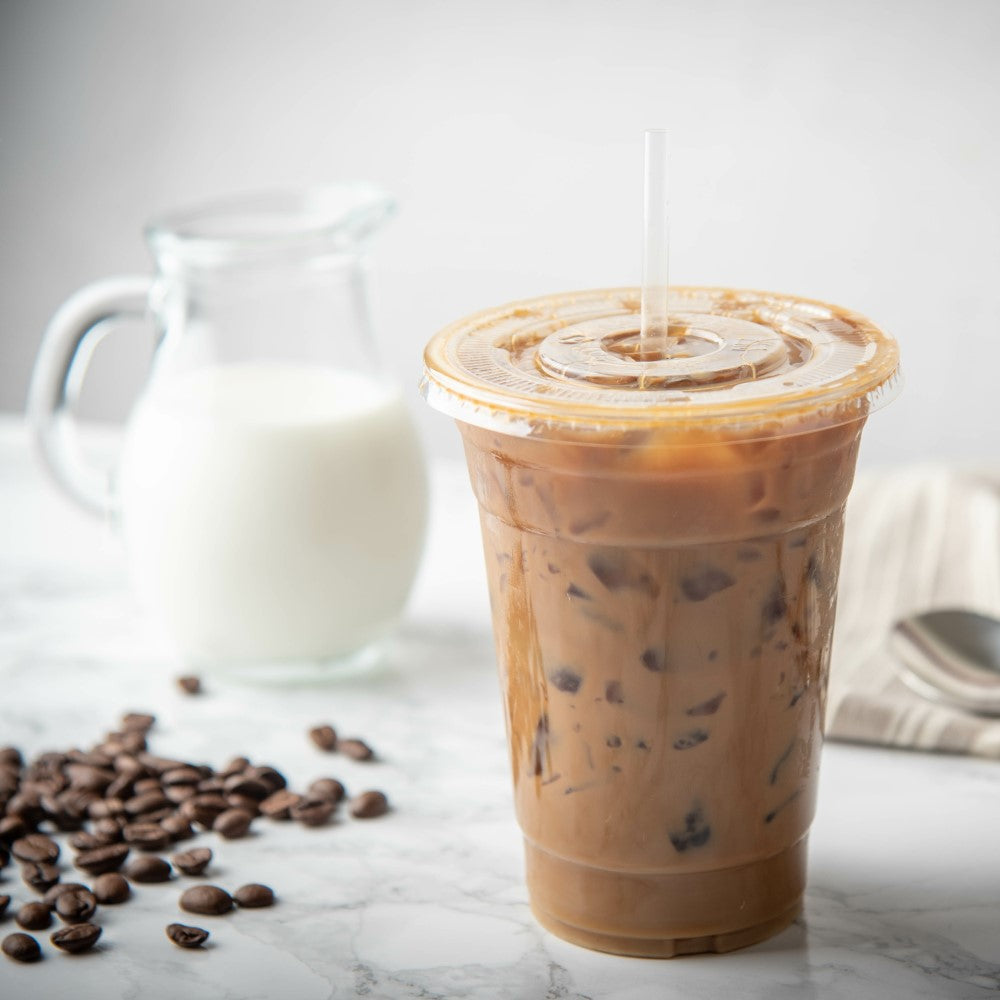
Cafés are sealing iced lattes, matcha and cold brew into 400ml cans for takeaway and retail fridges. It extends your brand beyond the counter and creates a new revenue stream. Pair the format with Café Takeaway Packaging and Cold Drink Cups for your in-store service, and explore Pet Cans for Cold Brew & Iced Coffee for your canned line.
Kombucha Brands: Replacing Glass
Kombucha producers want a premium look without glass's weight and breakage. A slim 330ml or 500ml PET can reads modern on shelf. Browse PET Cans for Kombucha to match format to fill volume.
RTD Cocktail Brands: Showing Off the Product
Colour and garnish matter in ready-to-drink cocktails. See PET Cans for RTD Cocktails, and for venues, the Cocktail & Bar Takeaway Packaging range.
Craft Breweries: Low-Risk Pilot Runs
Microbreweries use PET to trial recipes before investing in aluminium. Fail fast, learn cheap. Start with PET Cans for Craft Breweries.
5 Mistakes That Undermine Eco Friendly Packaging in Australia
This is where good intentions go wrong. Each of these mistakes can turn a genuinely sustainable switch into a greenwashing risk or a compliance headache.
Mistake 1: Buying Non-Certified or Undocumented Products
The most common and most expensive error. A can that looks identical to a compliant one may come with no food-contact documentation, no resin identification and no traceability. If a customer, council or retailer asks you to substantiate a claim, "the supplier said so" won't cut it.
What to ask any supplier before you buy:
- Is the resin food-grade and BPA-free, and is there documentation to prove it?
- Does it meet Australian food-contact requirements?
- Is the resin type clearly identified so it can be sorted correctly at end-of-life?
- If the product is marketed as compostable, is it certified to the relevant standard? Our guide to what AS 4736 and AS 5810 actually mean explains why "compostable" claims need proof.
Pro tip: keep a supplier compliance folder (spec sheets, food-contact declarations, batch details). It protects you during retailer onboarding and audits.
Mistake 2: Mixing Plastics

Recycling works best with clean, single-material streams. Problems start when you combine a PET body with a lid, label, sleeve or seal in a different polymer, or with a coating that can't be separated.
- Keep the body single-resin. Clear PET is the most straightforward.
- Choose labels and sleeves deliberately. Heavy, fully adhesive wraps in a different material can complicate recycling.
- Don't pair a recyclable can with a non-recyclable accessory and then market the whole pack as "recyclable."
For the rest of your range, use consistent material families. Pakio's Recyclable Plastic and Compostable Food Packaging collections make it easy to keep streams separate rather than blended.
Mistake 3: Wrong Lid Combinations
A can is only as good as its closure. The wrong lid means seal failures, leaks, flat or spoiled product, and returns.
- Match the lid to the can neck. Saturn PET cans are designed around a standard 55mm aluminium lid, so there's no proprietary lid lock-in.
- Match the seamer to the lid. Use a seamer rated for 55mm aluminium lids. Pakio's Table-Top Can Seamer is built for this (currently preorder-only, with lead time confirmed at order).
- Don't mix cold-drink and hot-drink lids. For on-premise cups, pick the correct closure: Cold Cup Lids for iced drinks and CPLA Lids or Bagasse Lids for hot. Our winter takeaway cup, lid and sleeve checklist covers the hot-drink side.
A note on materials: a PET body with an aluminium lid is two different recyclable materials. That's perfectly workable, but you should be upfront about it in your on-pack messaging rather than implying one simple stream.
Mistake 4: Poor Customer Instructions

Even the most recyclable pack fails if the customer doesn't know what to do with it. Vague labels like "eco-friendly" or "green" are also a legal risk. The ACCC has been actively scrutinising environmental claims, so specific, verifiable wording is safer.
- Say exactly what to do: "Empty, rinse and recycle the can. Remove the lid and recycle it separately."
- Use recognised labelling such as the Australasian Recycling Label where it applies.
- Be specific, not vague. "Made from recyclable PET" beats "planet-friendly."
- Add a short in-store sign or card for cafés selling canned drinks over the counter.
If your cans or sleeves are custom printed, work the instructions into the artwork from day one. Pakio's Custom Design and Custom Cold Cups services can help.
Mistake 5: Prioritising Price Over Lifecycle
The cheapest unit price rarely gives you the lowest total cost. A can that leaks, fails a retailer's spec or forces a re-run costs far more than the few cents you saved.
Think in lifecycle cost:
- Production: seal reliability, line speed, wastage
- Freight: weight, stackability, local stock vs long sea-freight lead times
- Compliance: documentation, state regulations, retailer requirements
- End-of-life: recyclability and how easily customers can dispose of it correctly
Local stock matters here too. Pakio holds Saturn PET cans in Melbourne for 1–2 working day metro delivery, so you aren't tied up in multi-week freight cycles. Our wholesale supplier buyer's guide walks through how to compare suppliers on more than price.
Know Your State Rules Before You Launch
Australia's single-use plastic rules vary by state, and they keep evolving. The key one right now is Western Australia: from 1 March 2024, PET cans with attached lids or seals that are filled in-store (for example, an iced coffee made on-site and sealed for the customer) fall under the WA Plan for Plastics ban. Factory-filled, fully sealed pre-packaged PET cans are treated separately, and may also interact with container deposit schemes.
At the time of Pakio's own guidance, factory-sealed PET cans were not restricted in NSW, VIC, QLD or the ACT, and SA, NT and TAS were being monitored. This is general information, not legal advice. Always confirm with the relevant regulator before launching a new SKU, especially in WA. Pakio's PET cans page includes the regulator contacts.
Pakio's Certified and Compliant PET Can Range
You don't need to navigate all of this alone. Pakio's Saturn PET cans are built for Australian cafés, brewers and beverage producers.
- Six sizes in stock: 200ml, 330ml slim, 355ml, 400ml, 500ml and 700ml, all ready to ship from Keysborough, VIC
- Food-grade, BPA-free PET meeting Australian and FDA food-contact standards
- Single-resin, recyclable PET body
- One lid standard: the same 55mm aluminium lid across every size, so there's no proprietary lock-in
- No SKU mix minimum: a minimum order of one carton (100–400 units depending on size)
- Free samples for wholesale account holders
- Custom printing available on indent (10,000-unit MOQ, 10–12 week lead time), with sleeve labels for lower volumes
Matching size to product:
| Product | Suggested Format | Start Here |
|---|---|---|
| Iced lattes, cold brew | 400ml | Cold Brew & Iced Coffee Cans |
| Kombucha, soda | 330ml slim or 500ml | Kombucha Cans |
| RTD cocktails | 500ml | RTD Cocktail Cans |
| Craft beer pilots | 355ml | Craft Brewery Cans |
| Sharing formats | 700ml | Browse All Sizes |
Not sure where to start? Explore the full Saturn PET Cans range, or request a size and seamer recommendation from our team.
How to Switch to PET Cans: A Practical Checklist

- Define your product and volume. Daily café production and a 10,000-can brewery run need different setups.
- Choose your size and format. Match the can to your drink and retail positioning.
- Request samples. Test fill, seal and shelf life before committing.
- Confirm your closure and seamer. Make sure the lid, seamer and can are a matched system.
- Check regulations. Verify your state's rules, especially in WA, and any container deposit scheme obligations.
- Plan your customer instructions. Write clear, specific recycling guidance for the pack and the counter.
- Document everything. Keep specs and food-contact declarations on file.
- Scale gradually. Move from pilot to full runs once your process is stable.
Complete Your Eco-Friendly Beverage Setup
A canned range is rarely your whole offering. If you're building a sustainable drinks program, the rest of the setup matters too.
- Hot drinks: PLA Coated Double Wall Cups and Aqueous Coated Double Wall Cups pair with the lids above.
- Cold drinks: Cold Cups and Paper Cold Cups for in-store service.
- Straws: Paper Straws and Bamboo Fibre Straws.
- Takeaway extras: Eco-Friendly Takeaway Packaging for the rest of your range.
- Hospitality venues: Bar & Pool Cold Drinks Packaging.
Sourcing it all from one supplier simplifies compliance, freight and reordering. That's a big part of what a good wholesale supplier relationship is for.
Conclusion: Make the Switch With Confidence
PET cans offer a genuine opportunity for cafés, breweries and kombucha brands: better shelf appeal, flexible volumes and a cleaner recycling story. But the sustainability benefit only holds if you avoid the common traps: undocumented products, mixed materials, mismatched lids, unclear customer instructions and short-term price thinking.
Get those five things right and you'll have packaging that performs on the line, passes scrutiny and genuinely supports your brand.
Ready to explore your options? Browse Pakio's Saturn PET Cans, open a wholesale account for wholesale pricing from your first carton, or get a free recommendation from our team.
Contact the Pakio team on 1300 362 158, email info@pakio.com.au or visit our showroom at Warehouse 3/2 Naxos Way, Keysborough VIC.
Frequently Asked Questions
What is eco friendly packaging in Australia?
Eco friendly packaging in Australia refers to packaging designed to reduce environmental impact across its life, typically by being recyclable, compostable, made from renewable or recycled materials, or lighter to transport. The claim should be backed by documentation, such as food-contact compliance or compostability certification, and by clear customer disposal instructions.
Are PET cans recyclable in Australia?
Yes. PET is one of the most commonly collected plastics in Australia, and a clear single-resin PET can is generally accepted in kerbside recycling. If the can uses an aluminium lid, treat it as a separate recyclable material and check your local council's guidance.
Are PET cans better than aluminium cans?
Neither is universally better. PET is clear, light and suits small-batch production, which makes it ideal for kombucha, cold brew and RTD cocktails. Aluminium offers superior light protection and suits traditional beer and light-sensitive products.
Are PET cans BPA-free and food safe?
Pakio's Saturn PET cans are made from food-grade, BPA-free PET resin that meets Australian and FDA food-contact standards.
Can I put kombucha in a PET can?
Yes. Kombucha brands commonly use 330ml slim or 500ml clear PET cans. Always test fill, seal and shelf life with samples before scaling. See Pakio's PET cans for kombucha.
What size lid fits PET cans?
Saturn PET cans use a standard 55mm aluminium lid across all six sizes, sealed with any benchtop or industrial seamer rated for 55mm lids.
Are PET cans banned in Western Australia?
From 1 March 2024, WA bans PET cans with attached lids or seals that are filled in-store. Factory-filled, pre-sealed PET cans are treated separately. Confirm your use case with WA's Department of Water and Environmental Regulation.
What is the minimum order for wholesale PET cans?
Pakio's minimum is one carton with no SKU mix minimum. Cartons range from 100 units (700ml) to 400 units (200ml).
Can I get custom-printed PET cans?
Yes. Full-wrap printing is available on indent from 10,000 units with a 10–12 week lead time. Sleeve labels suit lower volumes.
How can I avoid greenwashing with my packaging?
Use specific, verifiable claims, keep supporting documents on file, avoid vague terms like "green," and tell customers exactly how to dispose of the pack.