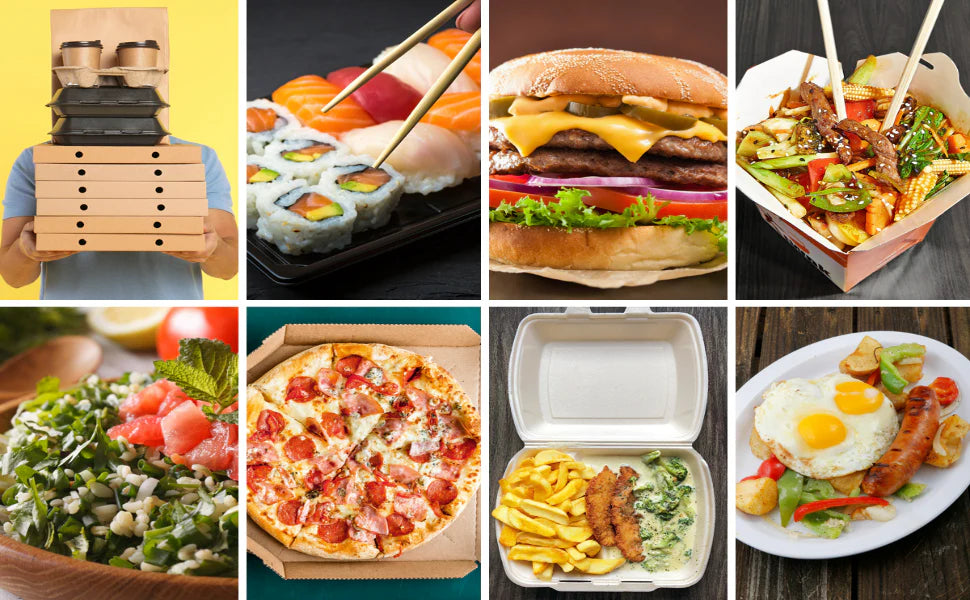


Whether you're launching a new takeaway shop, expanding into delivery apps, or just doing a serious stocktake, getting your restaurant packaging right is one of the most important operational decisions you'll make. The wrong container leaks curry all over a customer's car seat. The wrong bag collapses mid-delivery. And running out of portion cups on a Saturday night? That's a service failure your Google reviews won't forget.
This guide is your complete restaurant packaging checklist — structured by category, grounded in the realities of running a high-volume Australian food business, and designed to help you choose the right products the first time. Whether you run a Chinese takeaway in Footscray, a poke bowl counter in Surry Hills, or a busy pizza shop in the suburbs, you'll find exactly what you need here.
Why Packaging Is a Business Decision, Not an Afterthought
Most restaurant owners think about packaging in one of two moments: when they're setting up for the first time, or when they've run out of something critical. Neither is ideal.
Smart takeaway operators treat packaging as part of their brand, their customer experience, and their compliance framework. In 2026, Australian single-use plastic bans have reshaped what's legally available in many states — and customers are increasingly choosing restaurants that package thoughtfully. If you haven't audited your packaging setup lately, now is the time.
For a full breakdown of what's now banned and what's compliant, read Pakio's guide to Single-Use Plastic Bans in Australia 2026.
The Complete Restaurant Packaging Checklist
1. Food Containers — The Foundation of Every Order
Your containers carry the food. That makes them the single most important line item in your packaging inventory. The right container keeps hot food hot, prevents leaks, stacks safely in a delivery bag, and looks presentable when the customer opens it.
Paper Food Containers
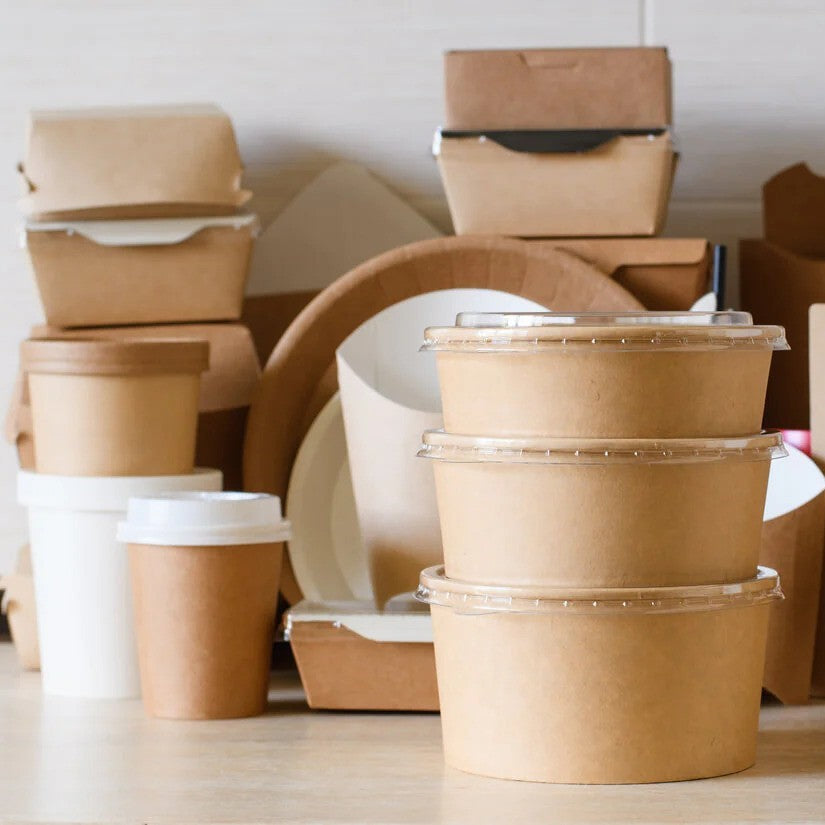
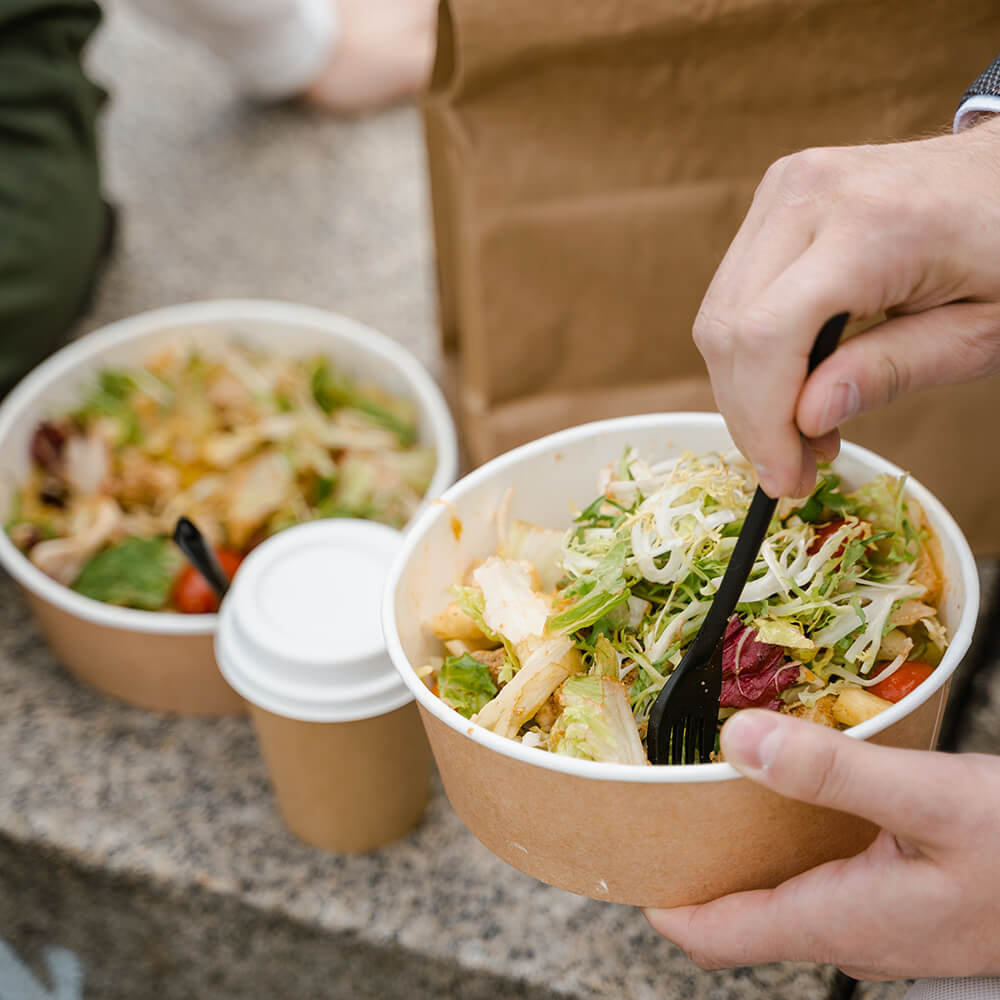
Paper-based containers are the workhouse of takeaway. Pakio's paper food containers cover everything from small snack portions to full meal sizes. Pair them with matching food tubs for soups, stews, and noodle dishes where you need a deeper, sealed option.
For salads, grain bowls, and healthy options, PE-coated salad bowls offer grease and moisture resistance without sacrificing sustainability credentials.
Sugarcane (Bagasse) Containers
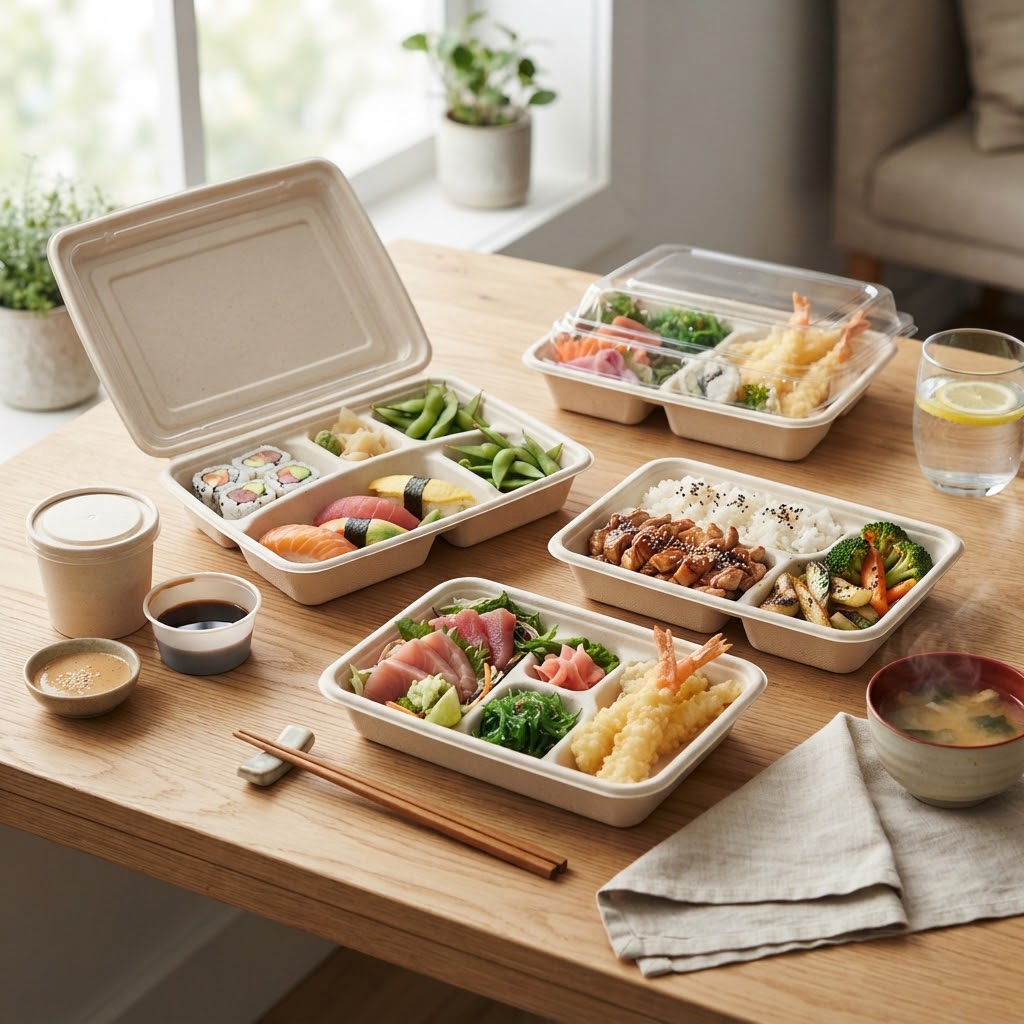
If your brand prioritizes eco-friendly credentials, sugarcane containers are the gold standard. Made from renewable plant fibres and fully compostable, Pakio's sugarcane takeaway containers come in bowls, clamshells, rectangular, square, and octagonal formats — making them versatile enough to replace plastic across your entire menu.
Sugarcane handles heat well, doesn't get soggy easily, and presents beautifully. It's the packaging choice that impresses customers before they've even tasted the food.
For a deep comparison of sugarcane vs paper vs recyclable plastic, see Pakio's Eco-Friendly vs Traditional Packaging Guide.
Recyclable Plastic Containers
For menu items with high liquid content — think Thai curries, laksa, Indian dals, or poke bowls with dressings — recyclable plastic containers remain the most leak-proof option available. Pakio's recyclable plastic food takeaway containers range includes:
- Rectangular containers for full meals
- Noodle bowls for ramen, pho, and laksa
- Deli and round containers for sides and salads
- Sho-bowls and poke bowls for Instagram-friendly bowl formats
All come with secure lids, making them ideal for third-party delivery platforms where orders travel further before being opened.

Checklist item: Do you have containers in at least three size formats (small, medium, large) to cover your full menu?
2. Specialty Containers by Cuisine and Food Type
Generic containers won't cut it for every menu. Here's what to add based on your cuisine type:
Pizza shops: You need proper pizza boxes that vent steam and protect crust integrity. Stack heights matter — make sure your box size matches your pizza diameter precisely.
Fish and chips, fried chicken: Chip cups are essential for separating chips and keeping them crispy. Pair with takeaway trays for combo meals. See Pakio's dedicated Chicken Shop Takeaway Packaging and Fish & Chips Takeaway Packaging collections.
Sushi and Japanese: Paper sushi trays with clear lids keep rolls visible and secure. Browse Pakio's full Sushi & Japanese Takeaway Packaging collection.
Chinese and Asian noodle dishes: Lunch and noodle boxes are a staple. Match container size to your portion sizing — oversized containers make food look sparse and allow too much heat to escape. Browse the full Chinese Takeaway Packaging range.
Catering and events: Move up to catering trays and foil trays and containers when volume and oven-safe transport are priorities. These are also perfect for meal prep and ready-made meals packaging.

3. Takeaway Bags and Carry Solutions
A container without the right carry bag is an accident waiting to happen. Your bags need to be strong enough to hold full meals, structured enough to keep containers upright, and presentable enough to reflect your brand.
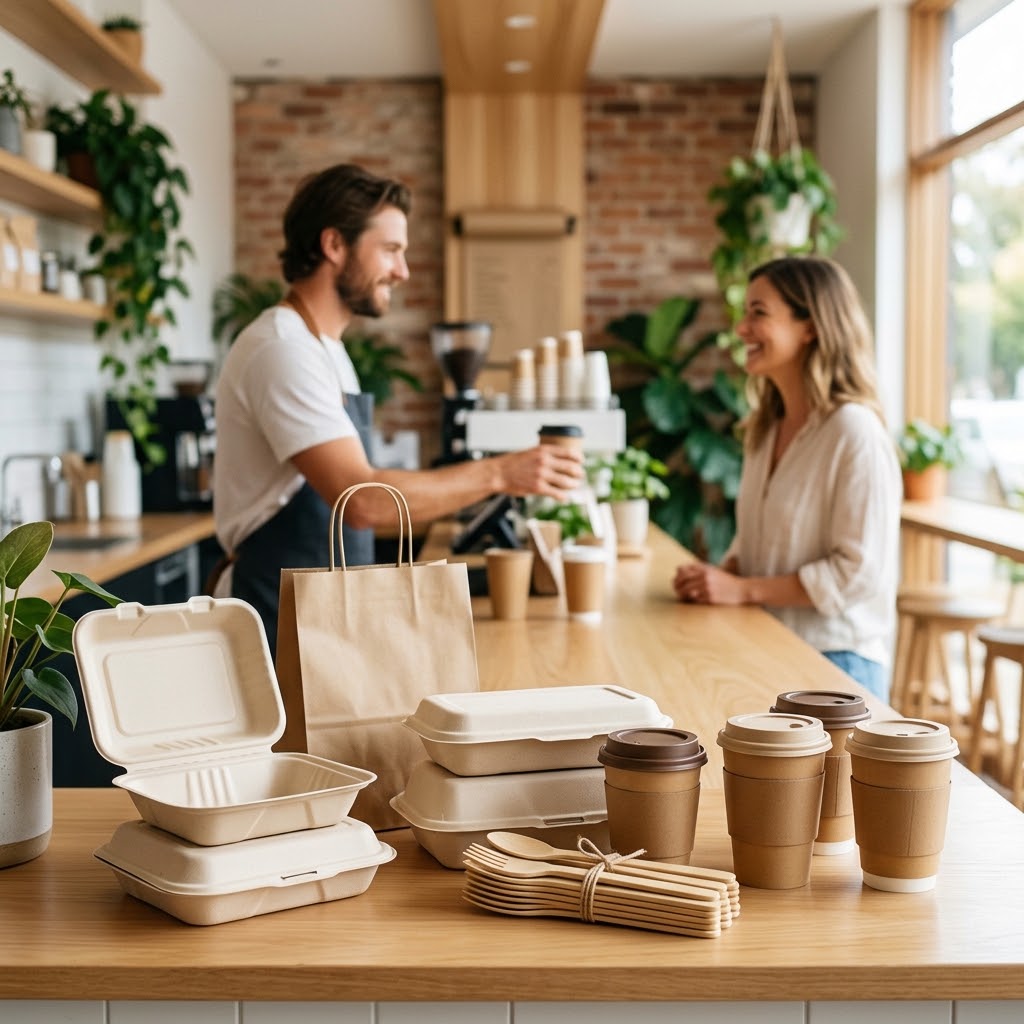
Pakio's takeaway paper carry bags are the everyday workhorse — available in multiple sizes with reinforced handles. For heavier orders with multiple containers, SOS bags (self-opening satchels with flat bottoms) provide the best structural support.
For insulated or hot foods traveling longer distances, foil bags help retain heat and are a smart upgrade for premium delivery services.
Pro tip: Order bags in two sizes minimum. A single-meal order doesn't need the same bag as a family order of six. Right-sizing your bags reduces waste and saves cost at scale.

4. Drink Packaging
If you serve beverages — coffee, cold drinks, smoothies, milkshakes, or bubble tea — your drink packaging deserves just as much attention as your food containers.
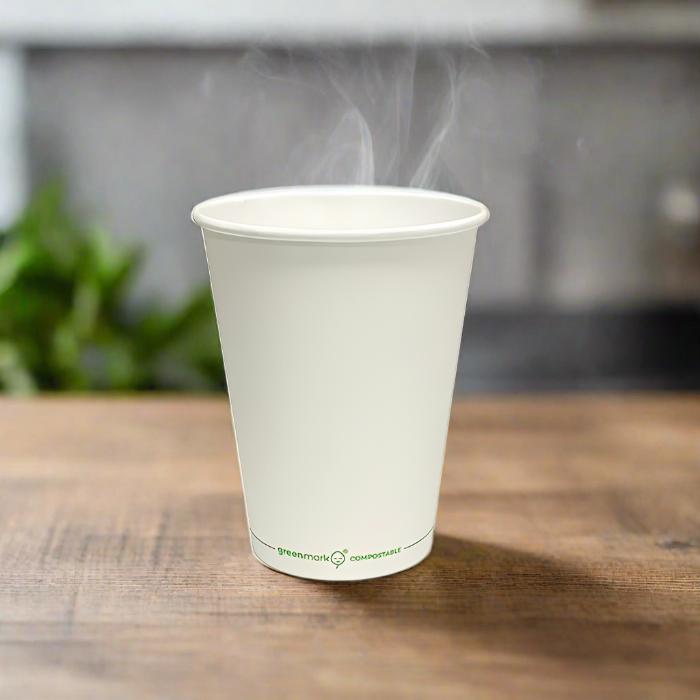
Hot drinks: Pakio's double wall coffee cups provide insulation without a sleeve, making them the preferred choice for high-volume takeaway coffee. Match with the right coffee cup lids — sip lids, spout lids, or CPLA compostable lids depending on your sustainability commitments.
Cold drinks: Clear PET cold drink cups are a must for milkshakes, iced coffees, and soft serves. Don't forget matching cold cup lids and paper straws — plastic straws are now banned in most Australian states.
Cup holders: If you're handing out multiple drinks, cup holders and accessories prevent spillage and make the handover experience far more professional.

5. Food Wrapping Papers and Liners
Wrapping papers and liners are the unsung heroes of takeaway packaging — they line trays, wrap burgers and sandwiches, separate items, and add an extra layer of grease protection.
Every takeaway kitchen should stock:
- Greaseproof paper — essential for chips, fried foods, sandwiches, and anything you want to wrap quickly and cleanly
- Aluminium foil rolls — for wrapping burritos, kebabs, and hot dishes that need to stay warm in transit
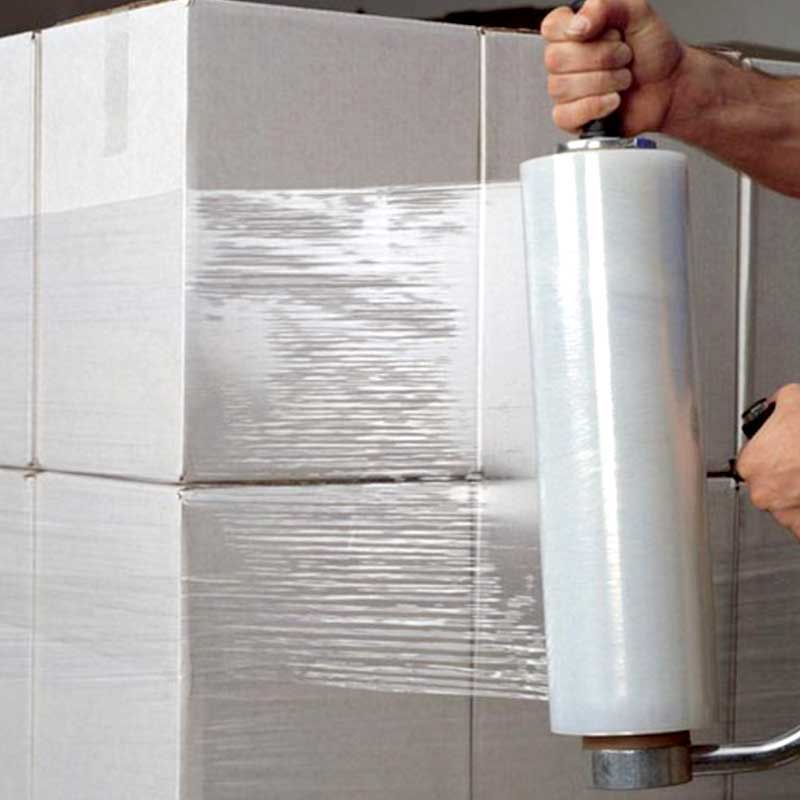
- Cling wrap rolls — for wrapping prepared foods for display, portioning, and short-term storage
These products belong in your kitchen, not just your packaging station. They're consumables that you'll burn through quickly, so buying in bulk via a wholesale account is the most cost-effective approach.
6. Cutlery, Napkins, and Utensils
Cutlery is the detail that separates professional takeaway operations from amateur ones. Forgetting to include it is one of the most common negative triggers in delivery app reviews.
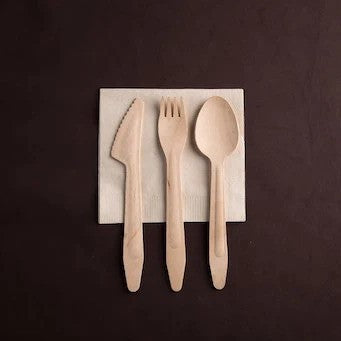
Pakio offers eco-friendly wooden cutlery in fork, knife, spoon, and combo pack formats. These align with single-use plastic bans and give your packaging a natural, premium feel.
Pair with high-quality napkins — dispensed individually or in wrapped packs depending on your service format. For skewers, satay, yakitori, and street food formats, bamboo skewers are a must-stock item.
Checklist item: Is your cutlery included automatically with every takeaway order, or are staff deciding on a case-by-case basis? Standardizing this eliminates complaints and controls costs.
7. Portion Cups and Sauce Containers
Sauces, dips, dressings, and condiments need their own dedicated packaging. A leaking sauce container ruins the food around it — and customer satisfaction drops accordingly.
Pakio's portion and sauce containers come in small round sizes with snap-on lids, purpose-built for dips, sambal, chilli sauce, sriracha, and salad dressing. For higher volumes, the same containers work for bulk condiment dispensing in catering setups.
Checklist item: Are you portioning sauces into individual containers, or sending full bottles? Individual portions reduce cross-contamination risk and look more professional.
8. Food Rotation Labels and Kitchen Organisation
Packaging doesn't stop at the point of handover — it starts in your kitchen. Food safety compliance requires proper labelling of prepped items, including preparation date, use-by date, and allergen information.
Pakio's food rotation labels are designed specifically for commercial kitchen environments. They're easy to write on, adhere cleanly to containers, and remove without leaving residue — keeping your fridges organised and your HACCP compliance on track.
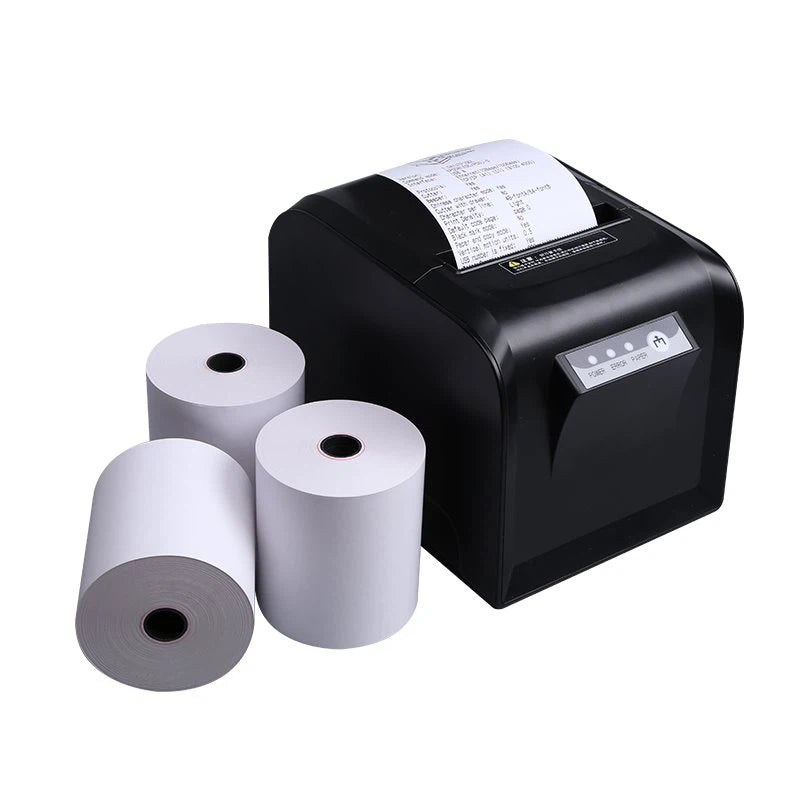
If you use a ticketing or ordering system, thermal label rolls and thermal paper rolls integrate with most POS systems for order labelling at the point of dispatch.
How to Choose the Right Packaging Material

One of the most common questions from takeaway operators is: paper, sugarcane, or plastic? The honest answer is that no single material wins across all applications. Here's how to think about it:
| Material | Best For | Key Advantage | Watch Out For |
|---|---|---|---|
| Paper (PE-coated) | Chips, salads, dry meals | Affordable, wide size range | Not suitable for high-liquid dishes |
| Sugarcane (bagasse) | All meal types, hot food | Compostable, premium look | Higher per-unit cost |
| Recyclable plastic | Curries, soups, wet dishes | Leak-proof, strong seal | Check state plastic ban compliance |
| Foil containers | Catering, oven-safe transport | Heat retention, stackable | Single use, not eco-premium |
For a detailed breakdown on costs and composting compliance, read Pakio's guide on How to Choose Eco-Friendly Takeaway Packaging for Your Café.
What Australia's Plastic Bans Mean for Your Restaurant Packaging
By 2026, every Australian state and territory has enacted restrictions on specific single-use plastics. For most takeaway operators, this means:
- No plastic straws — switch to paper straws or bamboo fibre straws
- No polystyrene containers — migrate to paper, sugarcane, or recyclable alternatives
- No single-use plastic cutlery — replace with wooden cutlery
Compliance isn't optional, and penalties for non-compliance can be significant. The positive news: the alternatives perform just as well, often better, and customer satisfaction with eco-friendly packaging is consistently high.
Get the full state-by-state breakdown: Single-Use Plastic Bans in Australia 2026.
Custom Branded Packaging: Low Cost, High Impact
One underutilised strategy for takeaway businesses is custom-printed packaging. Your packaging travels beyond the restaurant — it sits on desks, gets photographed for social media, and is seen by everyone near the delivery location.
Pakio's custom design packaging service allows you to print your logo, brand colours, and messaging on cups, bags, pizza boxes, burger boxes, and more. The minimum order quantities are accessible for independent restaurants, and the cost-per-unit difference versus unbranded packaging is smaller than most operators expect.
Custom options available include:
For food trucks, pop-ups, and catering businesses, browse the full Food Truck Packaging and Event & Catering Packaging ranges.
How to Buy Restaurant Packaging Wholesale and Save
For any business running more than 30 covers a day, buying packaging retail is leaving money on the table. Wholesale pricing unlocks meaningful per-unit savings — and with Pakio's wholesale program, the process is straightforward.
Benefits of Pakio's wholesale account include:
- Access to over 3,000 SKUs across food packaging, hygiene, and industrial supplies
- Next business day delivery to Melbourne Metro
- A dedicated account manager for large and repeat orders
- Cost Savings Guarantee across major product lines
Register for a wholesale account or log in to your existing wholesale account to access trade pricing. Read more about Pakio's wholesale program here.
Your Quick-Reference Restaurant Packaging Checklist
Use this checklist every time you do a packaging audit or onboard a new supplier:
Food Containers
Paper containers (multiple sizes)
Sugarcane/bagasse containers (bowls, clamshells, rectangles)
Recyclable plastic containers (for wet/liquid dishes)
Specialty containers (pizza boxes, chip cups, sushi trays, noodle boxes)
Catering trays and foil trays (for events and large orders)
Carry Solutions
Paper takeaway bags (small and large)
SOS bags (for heavy/multi-item orders)
Foil insulated bags (for premium delivery)
Drink Packaging
Double wall coffee cups (hot drinks)
Clear cold cups (cold drinks, milkshakes)
Matching lids for all cup types
Paper or bamboo straws
Cup holders (for multi-drink orders)
Wrapping and Liners
Greaseproof paper or rolls
Aluminium foil roll
Cling wrap roll
Cutlery and Utensils
Wooden cutlery (forks, knives, spoons, combos)
Napkins
Bamboo skewers (if applicable)
Sauces and Portions
Portion cups and sauce containers with lids
Kitchen Organisation and Compliance
Food rotation labels
Thermal labels or order stickers
Thermal paper rolls for POS integration

Frequently Asked Questions
What packaging do I need to start a takeaway business in Australia?
At minimum, you'll need food containers (in multiple sizes to cover your menu), takeaway carry bags, some form of food-safe wrapping paper or liner, cutlery, napkins, and portion cups for sauces. If you serve hot drinks, add coffee cups and lids. If you serve cold drinks, add clear cold cups, lids, and paper straws. From there, build out based on your specific cuisine — pizza shops need pizza boxes, sushi shops need sushi trays, and so on.
What food containers are best for delivery orders?
For delivery orders that travel 15–30 minutes, leak-proof recyclable plastic containers are the most reliable for wet or liquid-heavy dishes. For drier meals, paper containers with secure lids perform well and look more premium when opened. Sugarcane containers are the best choice if eco credentials matter to your brand, as they handle heat well and present beautifully.
Are plastic containers banned in Australia?
Not all plastic containers are banned. Single-use polystyrene containers are banned or restricted in most states, and some states have broader restrictions on certain plastic types. Recyclable plastic containers (PET, PP) are still legal and widely used. Check your state's current regulations — Pakio's guide to Australian plastic bans in 2026 covers the current state-by-state rules.
How much does restaurant packaging cost wholesale?
Costs vary significantly by material, size, and order volume. Paper containers typically start from $0.08–$0.25 per unit at wholesale quantities. Sugarcane containers run slightly higher at $0.15–$0.40 per unit, depending on format. Plastic containers fall in a similar range to paper. Registering for a Pakio wholesale account gives you access to trade pricing across all categories.
What is the most eco-friendly restaurant packaging option?
Sugarcane (bagasse) containers are currently the leading option for eco-conscious restaurants — they're made from a renewable byproduct of sugar production, are genuinely compostable under industrial conditions, and perform well with both hot and cold food. For cups, aqueous-coated and PLA-coated options are more sustainable than traditional PE-coated cups. Wooden cutlery and paper straws complete the eco-friendly setup.
Do I need to label my takeaway food?
Yes. In a commercial kitchen context, all prepped and stored foods must be labelled with preparation date and use-by date for food safety compliance. Food rotation labels are specifically designed for this purpose. For customer-facing labelling (delivery orders, allergen info, order details), thermal labels that integrate with your POS system are the most efficient solution.
How do I stop takeaway containers from leaking?
Choose containers rated for your food type — particularly for liquids and sauces. Recyclable plastic containers with snap-lock or pressure-fit lids offer the best leak resistance. Sugarcane containers perform well for moderately wet foods. For high-liquid dishes like soups and curries, always use a secondary container or portion cup for the sauce/liquid component if using paper as your primary container.

Ready to Stock Your Takeaway Operation?
Getting your restaurant packaging sorted doesn't need to be complicated. Work through the checklist above, identify the gaps in your current setup, and source everything from a single, reliable supplier — rather than juggling four or five vendors with different minimum orders and lead times.
Pakio is Australia's packaging marketplace, stocking over 3,000 products across food packaging, hygiene, and commercial supplies. Whether you're setting up your first takeaway shop or optimising a high-volume operation, the team at Pakio can help you find the right products at the right price.
📦 Browse the complete Food Packaging range at Pakio — or contact the team directly on 1300 362 158 for bulk and custom packaging enquiries.
This article is part of Pakio's ongoing series on food business packaging. Related reading: Eco-Friendly vs Traditional Packaging | Packaging for Perishables | Single-Use Plastic Bans in Australia 2026