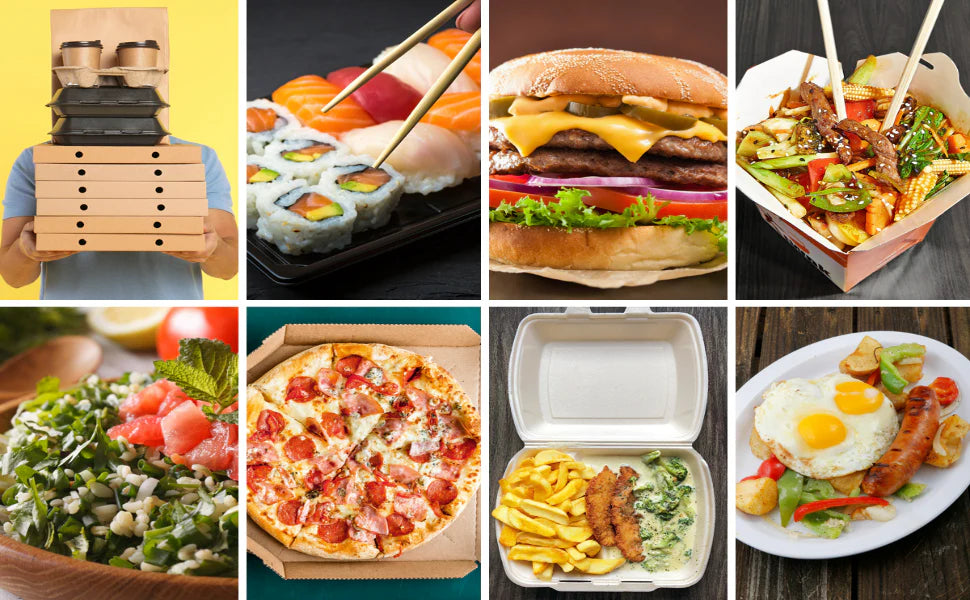




Versatile Packaging for Multiple Menu Items: The Certified Eco Friendly Packaging Australia Guide for Restaurants
Walk into the back-of-house storage room of almost any busy Australian café, restaurant, or cloud kitchen, and you'll find the same problem hiding behind the shelving: too much packaging, not enough system. A shelf of noodle boxes for one dish. A separate carton of clamshells for another. A different lid size for every cup. A "compostable" range that isn't actually certified anywhere.
This is the packaging inventory trap, and it's one of the most common (and most expensive) mistakes food businesses make. The good news is that it's entirely fixable — and the fix starts with a simple but powerful idea: choosing packaging that serves multiple menu items, rather than sourcing a new container for every single dish.
As Australia's fastest-growing packaging marketplace, Pakio works with cafés, restaurants, caterers, and food producers every day who are trying to simplify their packaging without compromising on presentation, food safety, or sustainability. In this guide, we'll break down why versatile packaging matters, the five most common mistakes businesses make when sourcing eco friendly packaging Australia-wide, and how to build a certified, multi-use packaging system that actually works across your entire menu.
Why Versatile Packaging Matters for Australian Food Businesses

Every extra SKU (stock keeping unit) in your packaging inventory adds cost, complexity, and risk. More SKUs mean:
- More storage space taken up in an already-tight kitchen
- More capital tied up in stock that isn't moving
- More staff training on "which container goes with which dish"
- More chance of running out of one specific size mid-service
- More waste when a product line changes and old stock becomes obsolete
By contrast, when you choose versatile, multi-purpose packaging, you consolidate your inventory around a smaller number of high-performing formats that can flex across your menu — from entrées and mains to sides, sauces, and desserts.
This isn't just a cost play, either. Search interest in eco friendly packaging Australia has climbed steadily as consumers, councils, and hospitality groups push for genuine sustainability — not greenwashed marketing. A leaner, well-chosen packaging range also tends to be a more sustainable one, because you're not manufacturing, freighting, and eventually disposing of dozens of near-identical container types.
Restaurants that simplify their packaging inventory by selecting versatile containers — think a single family of Rectangle Containers or Recyclable Plastic Rectangular Containers that can handle noodles, curries, salads, and sides alike — typically report faster line speed, fewer stock-outs, and lower total packaging spend within a single quarter.
The Five Costly Mistakes Businesses Make When Sourcing Eco Friendly Packaging
Before we get to what good versatile packaging looks like, it's worth understanding what goes wrong. These are the five mistakes we see most often when Australian food businesses try to "go eco" without a clear strategy.
Mistake 1: Buying Non-Certified "Eco" Products
The packaging market is flooded with products labelled "biodegradable," "green," or "eco-friendly" that carry no third-party certification whatsoever. Without accreditation such as AS 4736 (industrial compostable) or AS 5810 (home compostable), or recognised international standards like BPI or Seedling, these claims can't be verified — and in Australia, unverified environmental claims can expose a business to ACCC scrutiny for greenwashing.
The fix: Only source packaging with a certification you can point to, verify, and put on your own marketing. Pakio's range — including our BioPak Packaging collection and certified Sugarcane (Bagasse) Packaging — is backed by recognised compostability certifications, so you're not just buying a container, you're buying a defensible sustainability claim.
Mistake 2: Mixing Plastics Across Your Range
It's common for kitchens to accumulate a mix of PP, PET, PS, and PLA containers over time, often bought from different suppliers at different points. The problem: mixed plastic types can't be recycled together, lids and bases from different resins don't always seal properly, and your customers have no way of knowing what to do with each item at the bin.
The fix: Standardise around a consistent material family for each use case. Our Recyclable Plastic Food Packaging range is designed so containers, lids, and inserts within the same family are compatible with one another — reducing confusion in the kitchen and at kerbside recycling.
Mistake 3: Wrong Lid Combinations
Few things frustrate a customer (or a delivery rider) more than a lid that doesn't seal properly. Wrong lid combinations cause leaks, spills, and food safety issues, and they're one of the most preventable packaging errors in hospitality. This usually happens when businesses buy bases and lids from different ranges or suppliers, assuming "close enough" sizing will work.
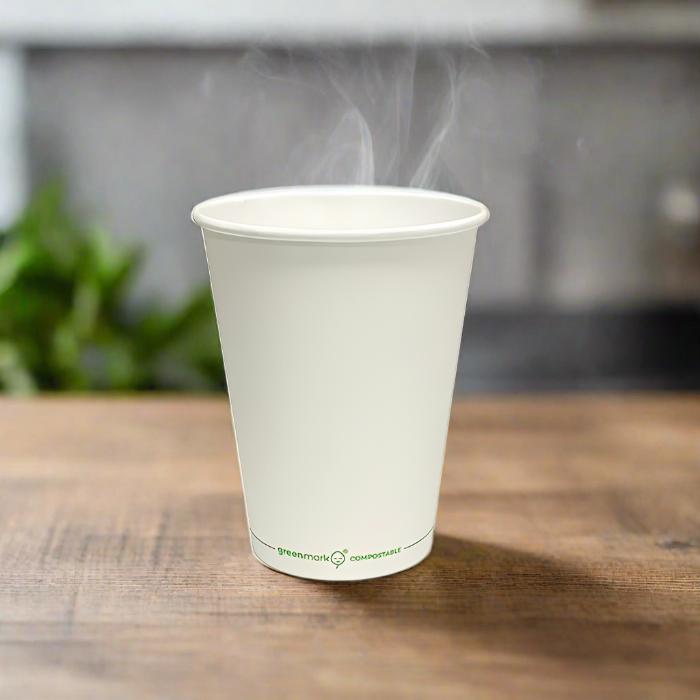
The fix: Always buy lids as part of a matched base-and-lid system. Explore our Coffee Cup Lids & Stoppers and Cold Cup Lids ranges for drinkware, and pair our Sho-bowls & Poke Bowls or Clamshells with their purpose-built lids for a guaranteed, tested seal.
Mistake 4: Poor Customer Instructions
Even genuinely compostable or recyclable packaging fails its environmental purpose if customers don't know what to do with it. If your packaging doesn't clearly indicate whether it's home compostable, commercially compostable, or kerbside recyclable, well-intentioned customers will often just put it in the wrong bin — undermining the entire point of choosing sustainable packaging in the first place.
The fix: Choose suppliers who print clear disposal information directly on the product, and reinforce it with simple in-store signage or a line on your receipt/app. This is exactly why certification matters (see Mistake 1) — certified products come with consistent labelling standards you can rely on and explain to your customers with confidence.
Mistake 5: Prioritising Price Over Lifecycle Cost
The cheapest container per unit isn't always the cheapest option overall. A slightly more expensive, better-engineered container that reduces breakage, prevents leaks, and eliminates the need for a secondary bag or wrap can easily out-perform a "budget" product once you account for wastage, customer complaints, and re-orders.
The fix: Evaluate packaging on total lifecycle cost — unit price, durability, stackability, freight efficiency, and disposal outcome — not sticker price alone. Bulk-buying through a Wholesale Program also helps offset any premium for higher-quality, certified stock.
What Makes Packaging Genuinely Versatile

Not every container that looks multi-purpose actually performs across a menu. When auditing your own range (or shopping for a new one), look for packaging that ticks these boxes:
- Consistent material family — so lids, bases, and inserts are always compatible
- A logical size range — small, medium, and large formats within the same design language
- Stackability — for efficient storage and easier delivery-bag packing
- Hot and cold suitability — so the same container can handle a warm curry and a cold noodle salad
- Grease and moisture resistance — critical for anything beyond dry goods
- Clear certification and labelling — so both your kitchen and your customers know exactly what they're dealing with
Building a Multi-Use Packaging System, Category by Category

Rather than sourcing container-by-container for every dish, build your range around a handful of flexible categories that flex across your whole menu.
Containers That Do Double (or Triple) Duty
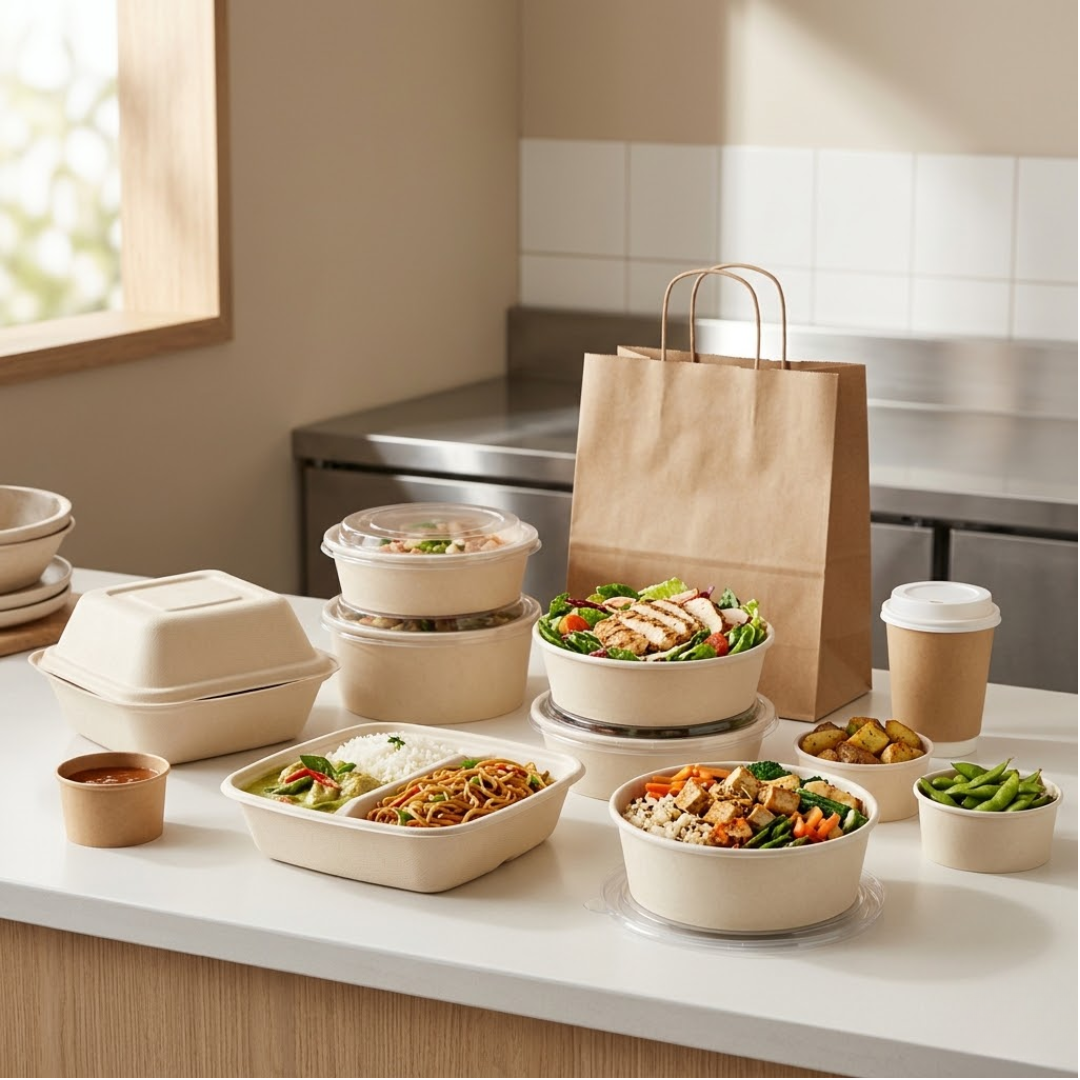
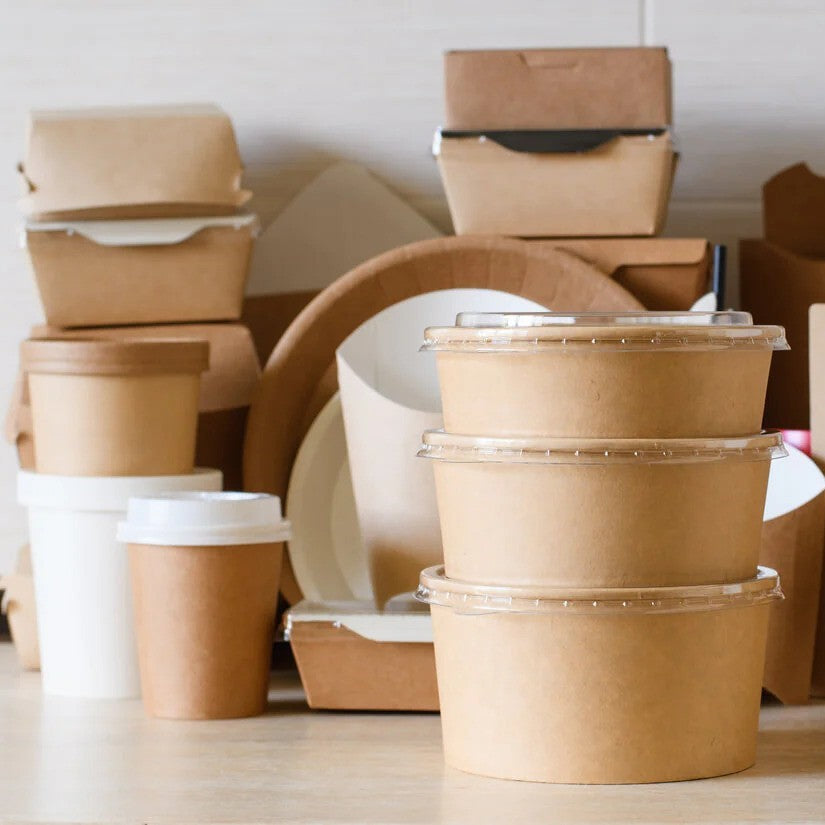
A well-chosen container range can service entrées, mains, sides, and salads all from the same family. Consider:
- Rectangle Containers — ideal for mains, stir-fries, and larger share plates
- Square Containers — compact and stackable for sides and smaller portions
- Round Containers — perfect for soups, dips, and deli-style items
- Noodle Containers — for noodle dishes, but equally suited to rice bowls and poke
Bowls for Fresh, Layered, or Saucy Dishes

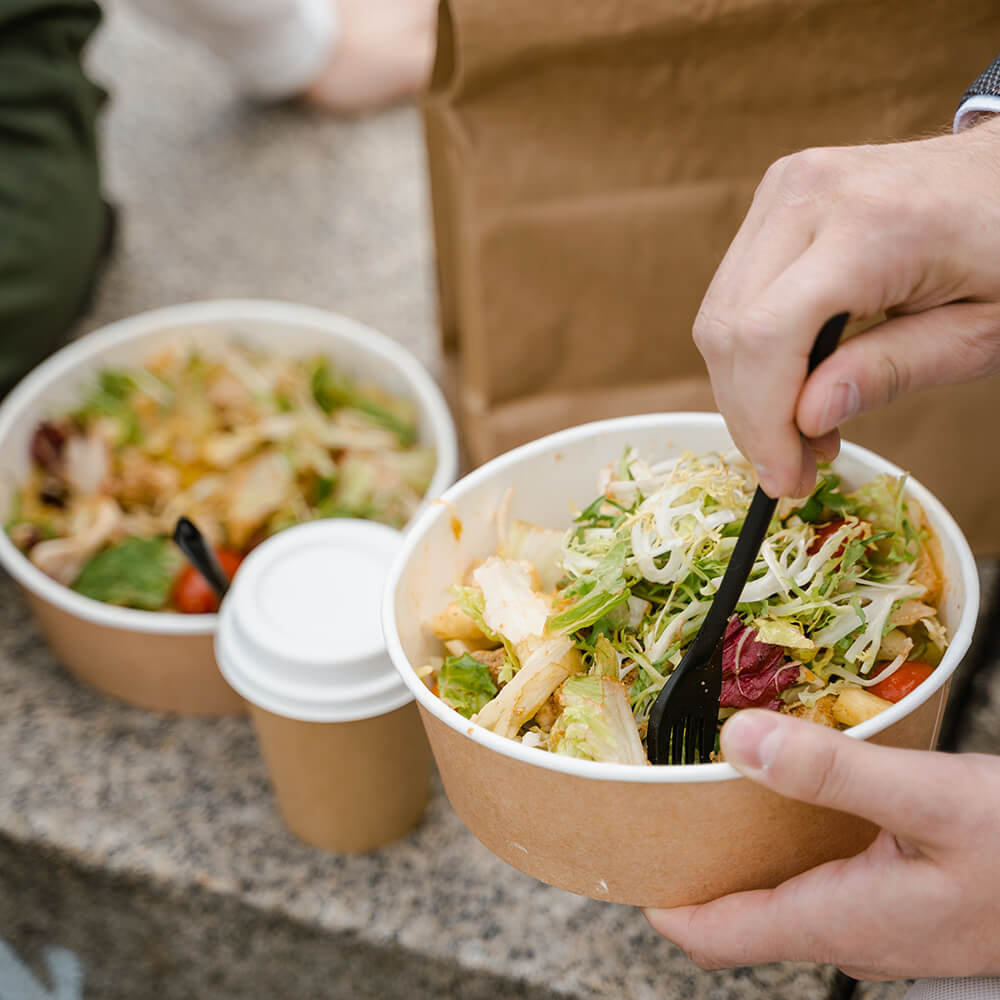
Bowls are one of the most versatile formats on any menu — equally at home holding a salad, a poke bowl, or a warm curry.
- Sugarcane Bowls — sturdy, compostable, and suitable for hot and cold food
- PE Coated Salad Bowls — great for lighter, fresher menu items
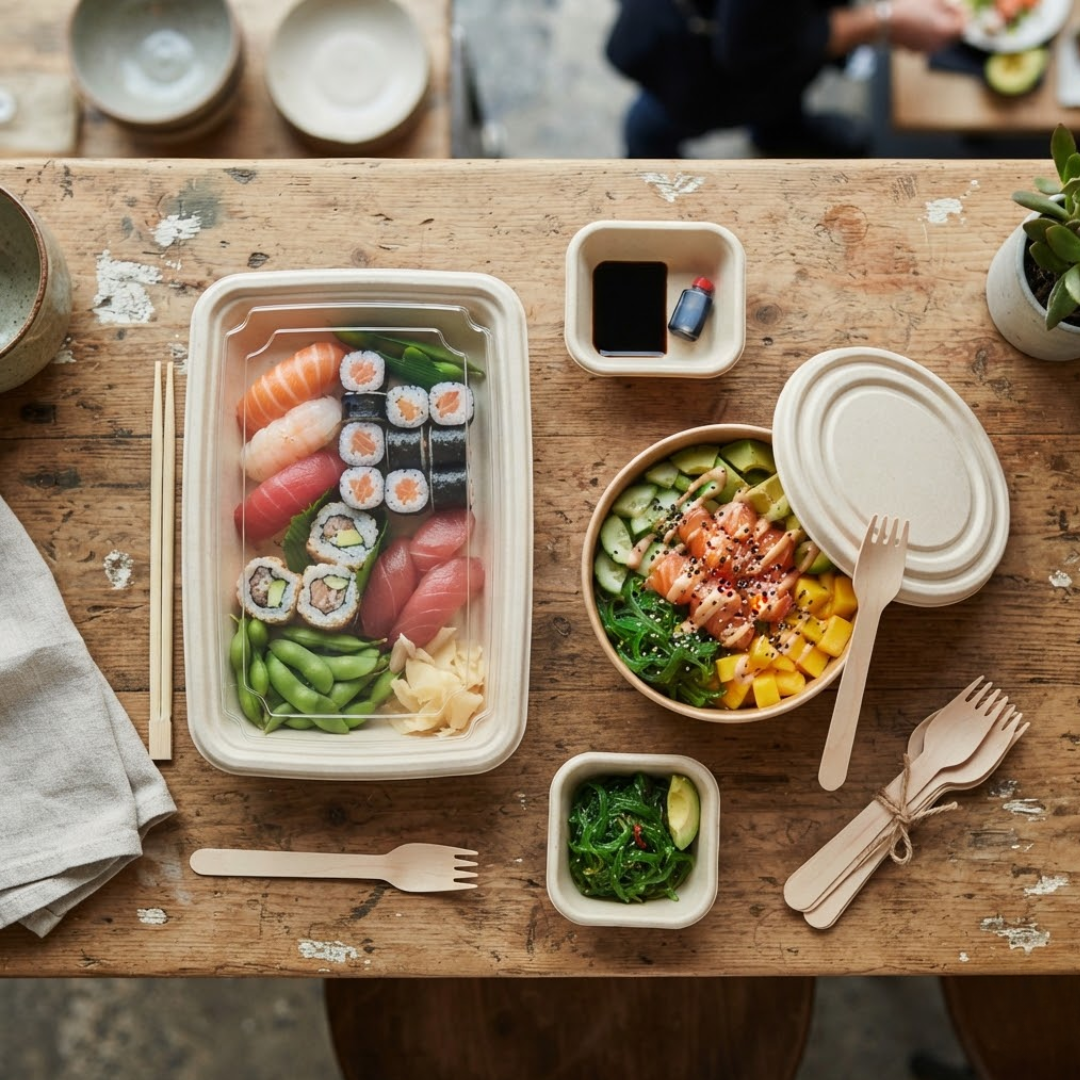
- Açaí & Poke Bowl Packaging — purpose-built for the growing healthy-bowl category
Lids and Seals That Actually Match
As covered above, mismatched lids are one of the top causes of leaks and customer complaints. Standardise on:
- PS Flat Lids and CPLA Lids for drinkware
- Bagasse Lids for fully compostable cup systems
Trays and Boxes for Presentation-Focused Items
- Sushi Trays — double as trays for other cold, presentation-led dishes like desserts or charcuterie
- Catering Trays — flex across event catering, grazing boxes, and bulk orders
- Pizza Boxes — a format that can also carry flatbreads, large shared mains, or bakery items
Bags, Cutlery, and the Final Touches
Round out your system with supporting packaging that works across every order type:
- Takeaway Carry Bags for consistent, branded hand-off
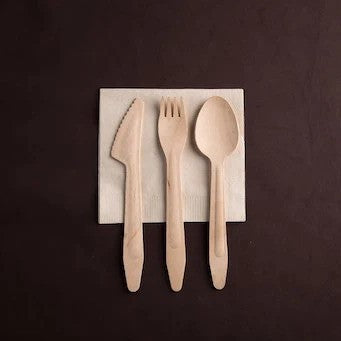
- Wooden Cutlery sets that work across every cuisine type
- Napkin & Dispenser ranges for front-of-house and delivery orders alike
Certifications to Look For in Eco Friendly Packaging Australia
If sustainability is part of your brand promise, certification isn't optional — it's the difference between a genuine claim and a greenwashing risk. When assessing any supplier's eco friendly packaging Australia range, check for:
| Certification | What It Confirms | Best Suited For |
|---|---|---|
| AS 4736 | Industrial/commercial compostability | Food service items processed through commercial composting facilities |
| AS 5810 | Home compostability | Products marketed as suitable for backyard compost bins |
| BPI / Seedling | International compostability recognition | Businesses trading or marketing across multiple regions |
| FSC (paper/board) | Responsibly sourced fibre | Paper-based bags, boxes, and cake packaging |
Pakio's BioPak Packaging range and Sugarcane Packaging collection are built around exactly this kind of verifiable certification, so you can confidently market your packaging choices to increasingly sustainability-conscious Australian consumers.
Pakio's Certified, Multi-Use Packaging Range
Rather than piecing together packaging from multiple suppliers, Pakio offers a single source for a genuinely versatile, certified range:
- Eco-Friendly Takeaway Packaging — our curated collection of certified, multi-use containers
- Sugarcane Takeaway Containers — compostable, sturdy, and suitable across hot and cold menu items
- Recyclable Plastic Food Packaging — for leak-proof, high-clarity presentation
- World Cuisine Takeaway Packaging — pre-curated ranges by cuisine type, so you can standardise packaging even across a diverse menu
- Custom Design Packaging — for brands that want a consistent, branded look across every format
If your business operates across multiple cuisines or concepts, our Shop By Industry hub groups packaging by use case — from Café Takeaway Packaging to Meal Prep & Ready-Made Meals Packaging — making it easy to find versatile options tailored to your specific operation.
A Simple 4-Step Audit to Consolidate Your Packaging
- List every SKU currently in your packaging store, noting which menu items each one is used for.
- Group items by function, not by dish — e.g., "leak-proof container," "presentation tray," "hot cup."
- Identify overlap, where two or three SKUs could be replaced by a single, better-performing format.
- Verify certification on anything marketed as sustainable before you commit to a bulk order.
Businesses that run this audit typically cut their total packaging SKU count by 20–40%, freeing up storage space and simplifying staff training almost immediately.
Conclusion: Fewer SKUs, Stronger Sustainability Story, Better Margins
Packaging that serves multiple menu items isn't a compromise — it's a smarter way to run a food business. By avoiding the five common pitfalls (non-certified products, mixed plastics, mismatched lids, unclear customer instructions, and price-only decision-making), and building your range around genuinely versatile, certified formats, you reduce cost, reduce waste, and strengthen your sustainability credentials at the same time.
Ready to simplify your packaging inventory? Explore Pakio's certified eco friendly packaging Australia range, or get in touch with our team for a tailored packaging audit for your menu.
Contact the Pakio team today at 1300 362 158 or visit our showroom in Keysborough to discuss your packaging consolidation strategy.
Frequently Asked Questions
What does "eco friendly packaging Australia" actually mean for restaurants?
Genuinely eco-friendly packaging in Australia is packaging backed by a recognised certification — such as AS 4736 for industrial compostability or AS 5810 for home compostability — rather than an unverified "green" label. It should also be sourced from renewable or recycled materials where possible and clearly labelled so both staff and customers know how to dispose of it correctly.
Can one container really work for multiple menu items?
Yes. Containers within a well-designed material family — such as a range of rectangle, square, and round sugarcane containers — are typically engineered with consistent wall strength, grease resistance, and lid compatibility, allowing the same base format to safely hold anything from a stir-fry to a salad to a curry.
How do I know if a packaging supplier's certification is genuine?
Ask for the specific certification standard (e.g., AS 4736, AS 5810, BPI, or Seedling) and check that it's listed on the product page or product documentation, not just used as a marketing term. Reputable suppliers, including Pakio, will list certifications clearly against each applicable product.
Is switching to versatile packaging more expensive upfront?
There can be a modest upfront investment in higher-quality, matched container systems, but most businesses recover this quickly through reduced SKU count, less wastage, fewer leaks and complaints, and access to bulk wholesale pricing on a smaller, more efficient product range.