

Eco-Friendly vs Traditional Packaging: A Complete Comparison Guide for Australian Businesses
If you run a café, restaurant, takeaway shop, or retail business in Australia, your choice of packaging is no longer just an operational detail. It affects your bottom line, your legal compliance, and how customers perceive your brand.
With single-use plastic bans expanding across every Australian state and national packaging reform legislation on the horizon, the question isn't whether to consider eco-friendly packaging — it's how to compare your options intelligently.
This guide puts eco-friendly and traditional packaging side by side across the dimensions that matter most: cost, performance, regulatory compliance, and real-world use cases. No advocacy, no greenwashing — just the information you need to make confident decisions for your business.
What Counts as "Eco-Friendly" Packaging? (And What Doesn't)
Before diving into comparisons, it helps to clarify what these terms actually mean. The eco-friendly packaging category includes several distinct material types, each with different properties and end-of-life pathways.
Eco-Friendly Materials
-
Compostable packaging breaks down into natural elements within 90–180 days in industrial composting facilities. Common materials include sugarcane bagasse (also called bagasse fibre), PLA (polylactic acid, a corn-based bioplastic), and certified compostable paper. Look for AS 4736 (industrial) or AS 5810 (home compostable) certification in Australia.
-
Biodegradable packaging breaks down naturally over time, but the timeframe and conditions vary widely. Without certification, "biodegradable" can be a vague claim.
-
Recyclable packaging can be processed and remade into new products. Paper, cardboard, glass, and certain plastics (PET, HDPE) fall into this category — but only if they're clean and collected through the right waste stream.
-
Reusable packaging is designed for multiple uses before disposal. This includes durable containers, return-and-refill programs, and washable servingware.
Traditional Materials
-
PE-coated paper — paper cups and containers lined with polyethylene for waterproofing. Technically paper-based, but the plastic lining makes them difficult to recycle.
-
EPS foam (expanded polystyrene) — lightweight and excellent insulation, but banned in most Australian states for food service and virtually non-recyclable.
-
PET and PP plastic — clear plastic cups, containers, and lids. Recyclable in theory, but recycling rates remain low (Australia's plastic packaging recycling rate sits at approximately 16%).
-
Aluminium foil trays — fully recyclable and widely used in catering, but energy-intensive to produce.
Key distinction: Not everything labelled "eco" performs equally, and not all traditional materials are inherently problematic. The comparison that follows looks at specific material matchups rather than broad categories.
The Real Cost: Upfront Price vs Total Cost of Ownership
The most common objection to eco-friendly packaging is price. And it's true — on a per-unit basis, sustainable materials typically cost more. But unit price alone doesn't tell the full story.
Upfront Cost Comparison
|
Material Type |
Eco-Friendly Option |
Traditional Option |
Price Difference |
|
Coffee cups (8oz) |
PLA-lined or aqueous-coated paper |
PE-coated single wall paper |
+10–20% |
|
Takeaway containers |
EPS foam clamshell |
+15–30% |
|
|
Cutlery |
Plastic (PS/PP) |
+20–35% |
|
|
Carry bags |
LDPE plastic bags |
+25–40% |
|
|
Cold drink cups |
PLA clear cups |
PET plastic cups |
+15–25% |
Prices reflect typical wholesale ranges in the Australian market as of early 2026. Actual costs vary by order volume and supplier.
The Hidden Costs You're Already Paying
Traditional packaging carries costs that don't appear on the invoice:
-
Waste levies: Most Australian states charge landfill levies ranging from $50 to $165 per tonne. Non-recyclable packaging goes straight to landfill, and these levies have been rising year-on-year.
-
Non-compliance fines: Selling or supplying banned single-use plastic items can attract fines of up to $15,000 for individuals and $50,000+ for businesses in some states.
-
Brand perception: Over 51% of Australian shoppers now consider sustainability a critical factor in their purchasing decisions. Continuing to use visibly non-sustainable packaging (foam containers, plastic bags) may quietly cost you repeat customers.
When Does Eco-Friendly Packaging Pay for Itself?
Research from the sustainable packaging sector indicates that businesses making the switch report average total cost savings of around 15% within the first 12 months, driven by:
-
Reduced waste disposal costs (compostable waste often qualifies for lower-cost organics collection)
-
Elimination of compliance risk and associated fines
-
Measurable uplift in customer satisfaction and willingness to pay premium prices
-
Operational simplification when a single product line covers both eco and compliance needs
The bottom line: If you compare only the purchase price per unit, traditional packaging appears cheaper. If you factor in waste levies, regulatory risk, and customer expectations, eco-friendly options often cost less overall within a year.
Performance Head-to-Head: How Do They Actually Stack Up?
Business owners rightly care about whether eco-friendly packaging can do the job. Nobody wants a container that falls apart before the customer gets home. Here's how the main material matchups perform across key criteria.
Material Performance Comparison
|
Criteria |
Sugarcane Bagasse |
EPS Foam |
PLA Cups |
PET Plastic |
Kraft Paper |
LDPE Plastic |
|
Heat resistance |
Up to 100°C |
Up to 80°C |
Up to 45°C (cold only) |
Up to 70°C |
Moderate |
Low (deforms) |
|
Grease resistance |
Excellent |
Good |
N/A (cups) |
Good |
Moderate (needs coating) |
Excellent |
|
Moisture barrier |
Good |
Excellent |
Good |
Excellent |
Poor (without lining) |
Excellent |
|
Structural strength |
Good |
Moderate |
Good |
Good |
Moderate |
Good |
|
Microwave safe |
Yes |
No |
No |
No |
Yes (uncoated) |
No |
|
Compostable |
Yes (AS 4736) |
No |
Yes (industrial) |
No |
Yes (uncoated) |
No |
|
Recyclable |
Via organics bin |
Rarely |
Rarely |
Yes (if clean) |
Yes |
Rarely in practice |
Matchup Breakdown
Sugarcane bagasse vs EPS foam — For food packaging such as takeaway containers, sugarcane bagasse outperforms EPS foam in heat resistance and microwave safety, while matching it on grease resistance. EPS foam has a slight edge in moisture barrier and weighs less, but is banned for food service in Victoria, South Australia, Queensland, the ACT, and Western Australia.
PLA-lined cups vs PE-coated cups — For cups and straws, both perform similarly for cold beverages. PLA cups are limited to cold applications (they soften above ~45°C), while PE-coated cups handle hot drinks. For hot beverages, aqueous-coated paper cups are the eco-friendly alternative — they provide similar performance to PE-coated cups while being recyclable and, in some formulations, compostable.
Kraft paper bags vs LDPE plastic bags — Paper bags win on recyclability and compostability, while plastic bags offer superior moisture resistance and weight capacity. For most café and bakery applications (pastries, bread, dry goods), kraft paper handles the task well. For heavy or wet items, consider compostable bin liners or heavier-duty paper options.
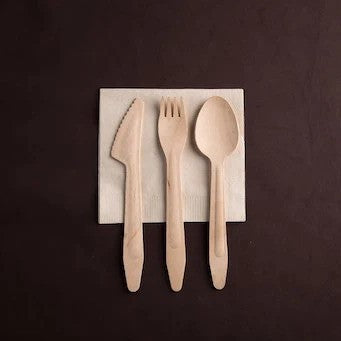
Wooden/bamboo cutlery vs plastic cutlery — Bamboo has tensile strength comparable to steel on a per-weight basis, so structural performance is not an issue. The main trade-off is texture preference — some customers find wooden cutlery less smooth than plastic. Offering quality wooden or bamboo options largely eliminates this concern.
Australian Regulations You Can't Ignore in 2026
Australia's regulatory landscape for packaging has shifted dramatically, and 2026 brings several significant changes. Here's a state-by-state summary of what's already in effect and what's coming.
State-by-State Single-Use Plastic Ban Timeline
|
State/Territory |
Key Items Banned |
Effective Date |
|
Victoria |
Straws, cutlery, plates, stirrers, EPS food containers, cotton bud sticks |
February 2023 |
|
South Australia |
All of the above + plastic soy sauce fish, attached cutlery, EPS food packaging; compostable items must be labelled by composting type from March 2026 |
September 2025 – March 2026 |
|
Western Australia |
Produce bags extended to dry goods and confectionery (Oct 2025); plastic barrier bags for meat, fish, dairy banned in 2026 |
October 2025 – 2026 |
|
New South Wales |
Expanded bans on problematic plastics; new legislation and regulations in 2026 under NSW Plastics Plan 2.0 |
2026 |
|
Queensland |
Straws, cutlery, plates, stirrers, EPS food containers |
September 2023 |
|
ACT |
Straws, cutlery, plates, stirrers, EPS food containers, oxo-degradable plastics |
July 2022 |
|
Tasmania |
Plastic bags, straws, cutlery, plates, EPS food containers |
November 2022 – 2024 |
|
Northern Territory |
Straws, cutlery, stirrers, EPS food containers, single-use plastic bags |
Staged from 2024 |
National Packaging Reform
Beyond state-level bans, Australia is moving toward a national packaging framework:
-
APCO 2030 National Packaging Targets: 100% of packaging to be reusable, recyclable, or compostable by 2030, with 70% of plastic packaging recycled or composted.
-
Eco-modulation: Under the 2030 plan, member fees will be tied to the environmental impact of your packaging. Businesses using harder-to-recycle materials will pay more; those using sustainable packaging will pay less.
-
National packaging legislation: New federal laws are expected in 2026 to standardise requirements, introduce design standards, and ban harmful chemicals in packaging.
What this means for your business: Even if your state hasn't banned a specific item yet, the national direction is clear. Investing in compliant packaging now avoids the scramble (and potential stock write-offs) of switching under deadline pressure.

Which Packaging Fits Your Business? A Scenario Guide
Different businesses have different packaging priorities. Here's a practical guide to choosing the right mix.
Café / Coffee Shop
Primary needs: Hot cups, cold cups, lids, stirrers, napkins, pastry bags
Recommended approach:
-
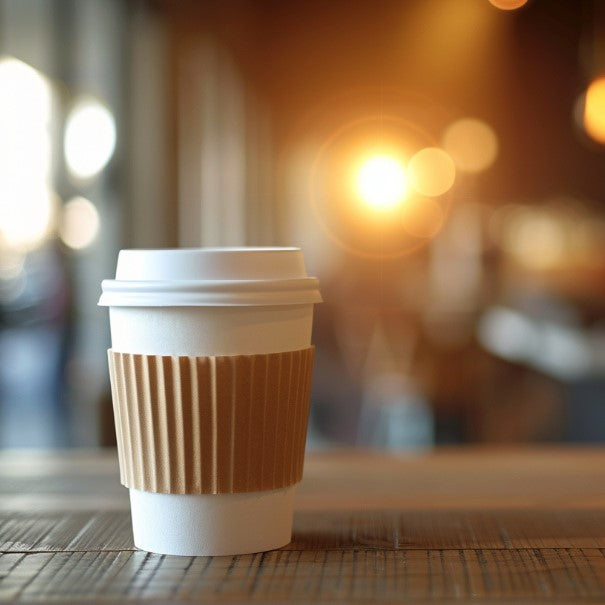
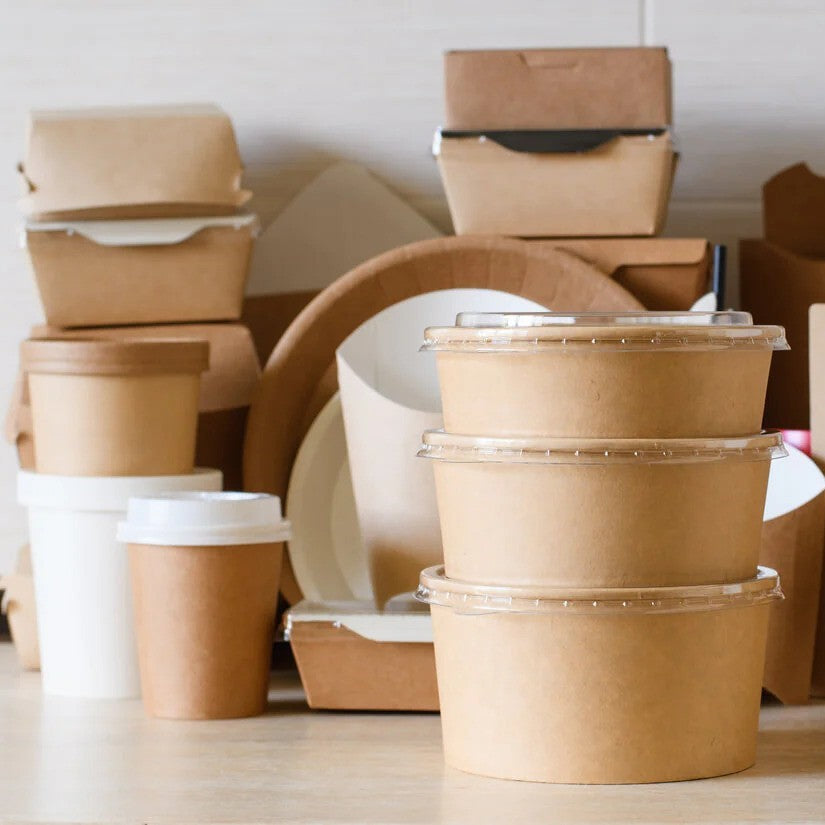
Hot drinks: Aqueous-coated or PLA-lined double-wall coffee cups (no sleeve needed, fully recyclable)
-
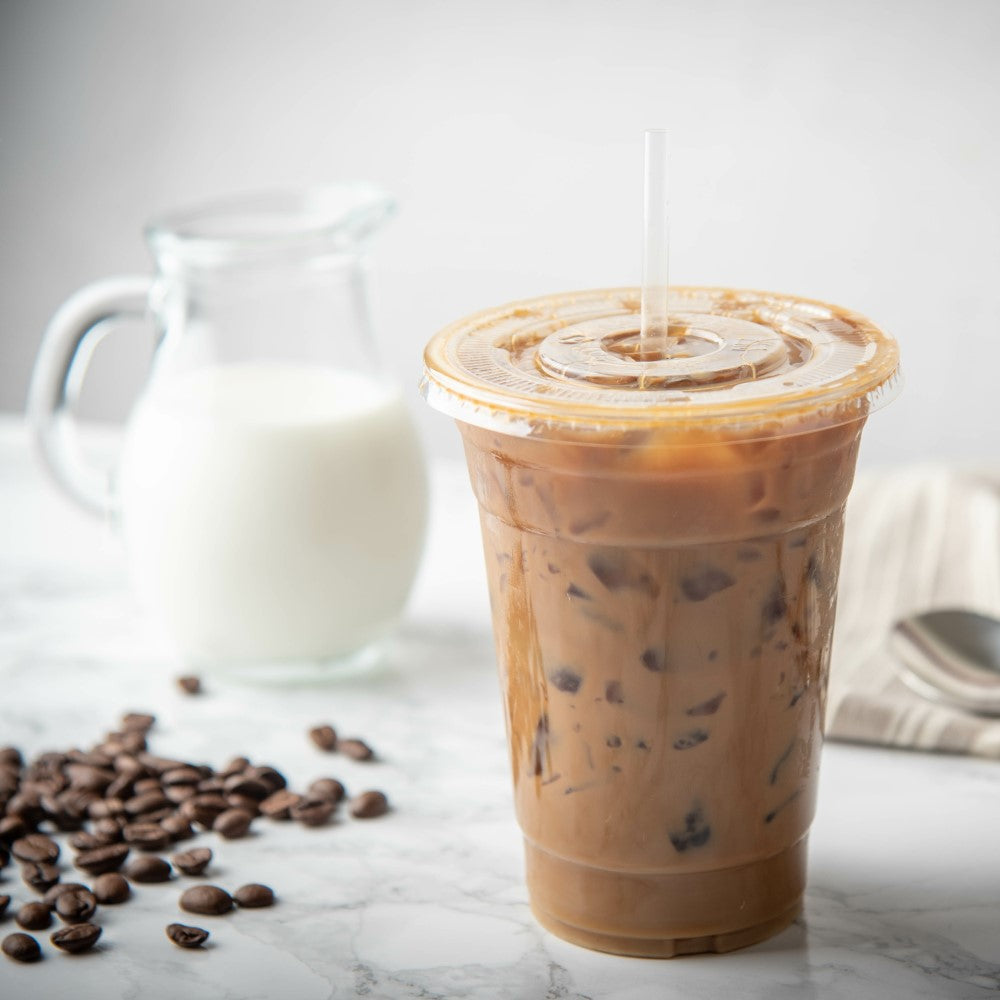
Cold drinks: PLA clear cups for iced beverages
-
Accessories: Wooden stirrers, paper straws, compostable lids
-
Carry bags: Small kraft paper bags for pastries and snacks
Why this works: Cafés generate high-volume, visible packaging waste. Customers in the specialty coffee market are particularly sustainability-conscious, so eco-friendly cups and accessories reinforce brand alignment.
Takeaway / Fast Casual
Primary needs: Meal containers, compartment trays, sauce cups, cutlery, carry bags
Recommended approach:
-
Containers: Sugarcane bagasse clamshells and compartment trays for hot meals
-
Sauce cups: PLA or bagasse small portion cups
-
Cutlery: Wooden knife, fork, and spoon sets
-
Bags: Medium kraft paper bags with handles
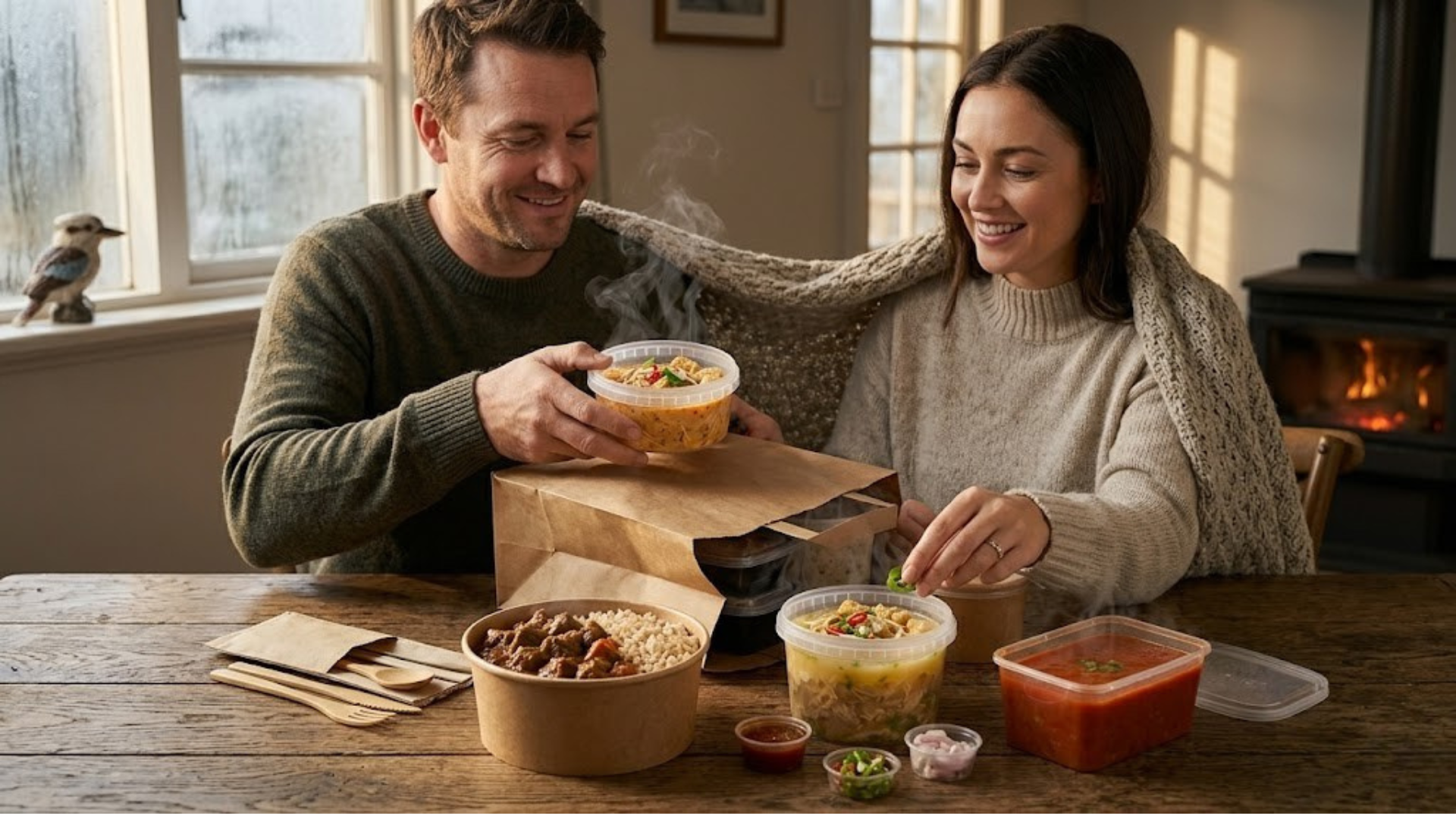
Why this works: Takeaway customers microwave their meals at home — sugarcane bagasse is microwave-safe while EPS and plastic containers are not. This is a genuine functional upgrade, not just an environmental one.
Bakery / Dessert Shop
Primary needs: Cake boxes, cupcake inserts, pastry bags, food-safe tissue, window display boxes
Recommended approach:
-
Cake boxes: Cardboard with window (recyclable) — traditional cardboard already performs well here
-
Pastry bags: Kraft paper with grease-resistant lining
-
Cupcake inserts: Recycled cardboard or moulded bagasse
-
Tissue/liners: Unbleached baking paper or wax-free compostable tissue
Why this works: Bakery packaging is already largely paper-based. The main opportunity is upgrading linings and inserts from plastic to compostable alternatives.
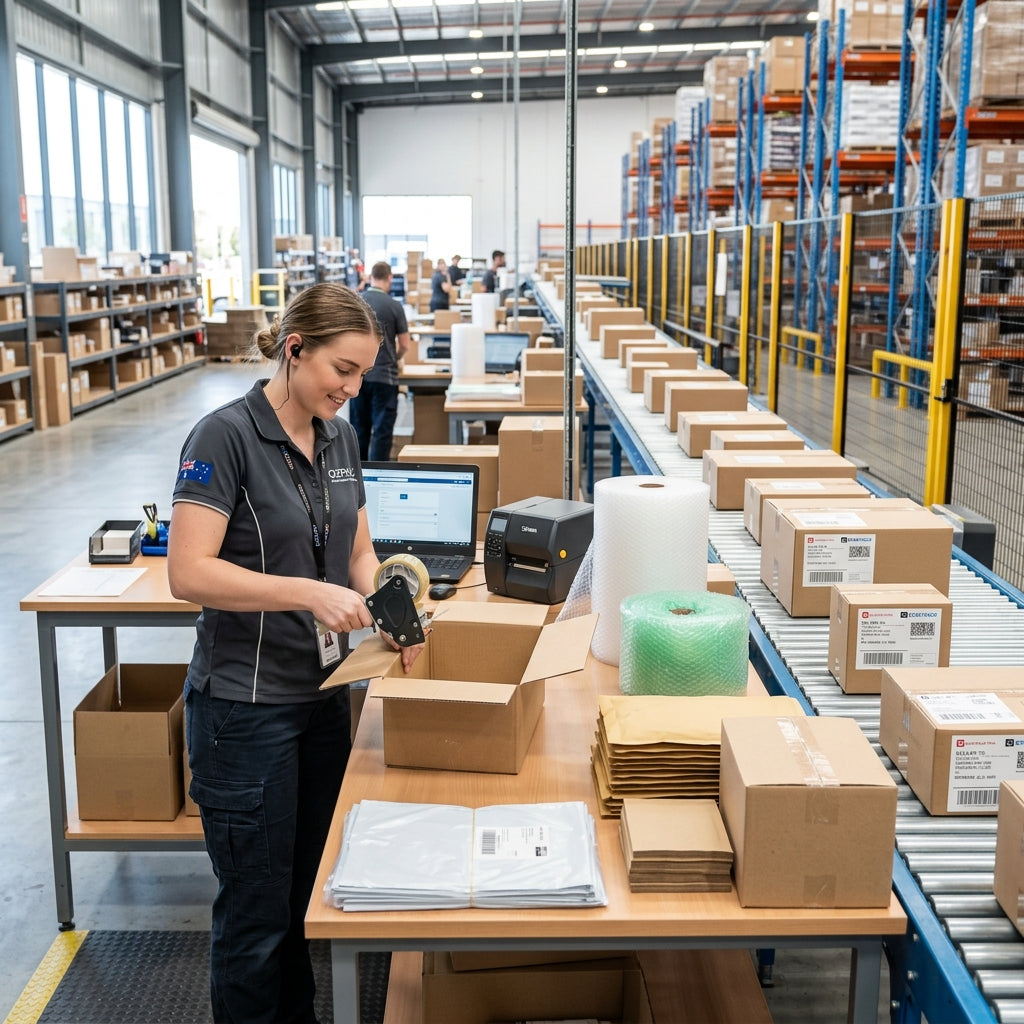
Retail / E-Commerce
Primary needs: Shipping boxes, void fill, protective wrap, labels, tape
Recommended approach:
-
Boxes: Recycled corrugated cardboard (already standard)
-
Void fill: Recycled paper crinkle, cornstarch packing peanuts, or honeycomb paper wrap
-
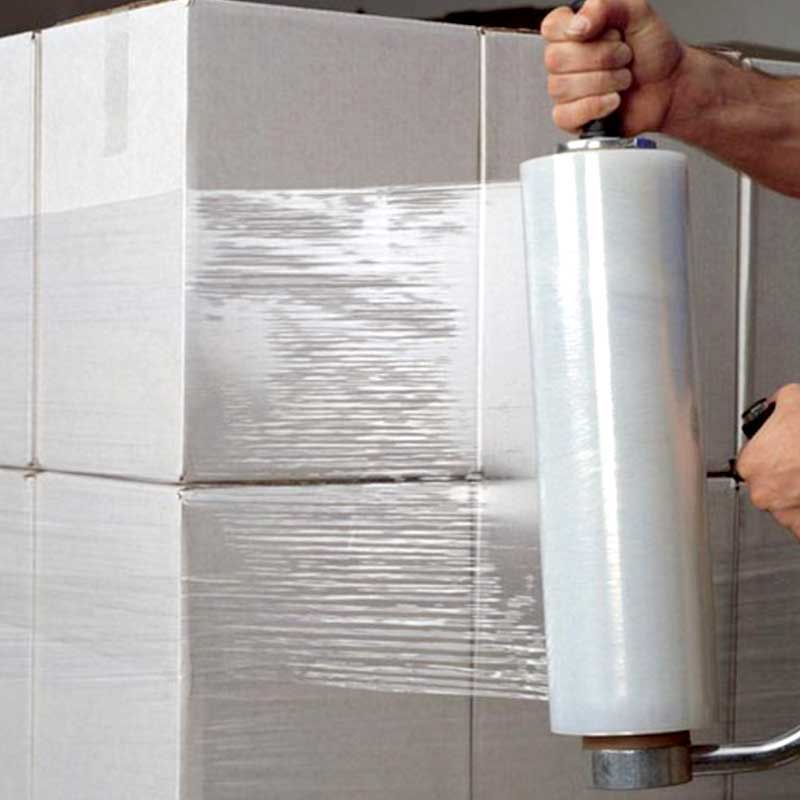
Protective wrap: Recycled paper wrap or corrugated cardboard rolls instead of bubble wrap where fragility allows
-
Tape: Paper tape with water-activated adhesive
-
Custom branding: Custom design packaging with eco-friendly materials
Why this works: E-commerce unboxing is highly visible on social media. Eco-friendly shipping materials create a positive brand moment at the point of delivery.
Making the Switch: A Practical Transition Checklist
You don't need to replace every item overnight. A phased approach reduces risk and lets you test customer response.
Step 1: Audit your current packaging inventory. List every packaging item you purchase, its material, unit cost, and monthly volume. Identify which items are already compliant and which are at regulatory risk.
Step 2: Prioritise high-impact swaps. Start with items that are (a) already banned or soon to be banned in your state, (b) highly visible to customers (cups, bags, containers), and (c) available as direct eco-friendly replacements at similar performance levels.
Step 3: Test before committing. Order sample quantities from your supplier. Run a two-week trial with the new packaging and note any operational issues or customer feedback.
Step 4: Partner with a supplier who stocks both. Working with a packaging supplier like Pakio that carries both eco-friendly and traditional options gives you flexibility to transition at your own pace, compare products side by side, and consolidate orders.
Step 5: Communicate the change. Let your customers know you've made the switch. A simple sign, a social media post, or a note on your menu builds goodwill and reinforces your brand values.
Frequently Asked Questions
Is eco-friendly packaging as durable as traditional plastic packaging?
For most food service applications, yes. Sugarcane bagasse containers match or exceed EPS foam on heat and grease resistance. PLA cups perform identically to PET for cold drinks. The main exception is extreme moisture exposure over extended periods, where plastic still holds an edge.
How much more does eco-friendly packaging cost?
Expect a 10–40% premium on per-unit purchase price, depending on the material and product type. However, when you account for waste levies, compliance costs, and customer preference, the total cost of ownership is often lower within 12 months.
Can compostable packaging go in my regular bin?
Compostable packaging certified to AS 4736 requires industrial composting facilities. It should go in your commercial organics (green) bin, not general waste. Home-compostable items (AS 5810) can go in a home compost system. Check with your local council for specific guidelines.
What happens if I keep using traditional plastic packaging?
Beyond potential fines for using banned items, the trend is clear: consumer expectations, state regulations, and national packaging reform are all moving toward sustainable packaging. Businesses that delay the transition face increasing regulatory risk and may find themselves out of step with customer preferences.
Where can I buy eco-friendly packaging in bulk in Australia?
Pakio stocks over 2,000 packaging products including a comprehensive range of compostable tableware, sugarcane containers, paper cups, wooden cutlery, and eco-friendly bags — all available at wholesale prices with fast shipping across Australia and free Melbourne metro delivery on orders over $200.
*Making informed packaging choices starts with understanding your options. Whether you're running a single café or managing procurement for a national chain, the right packaging balances cost, performance, compliance, and customer expectations. Explore Pakio's full product range to find the packaging that fits your business.*