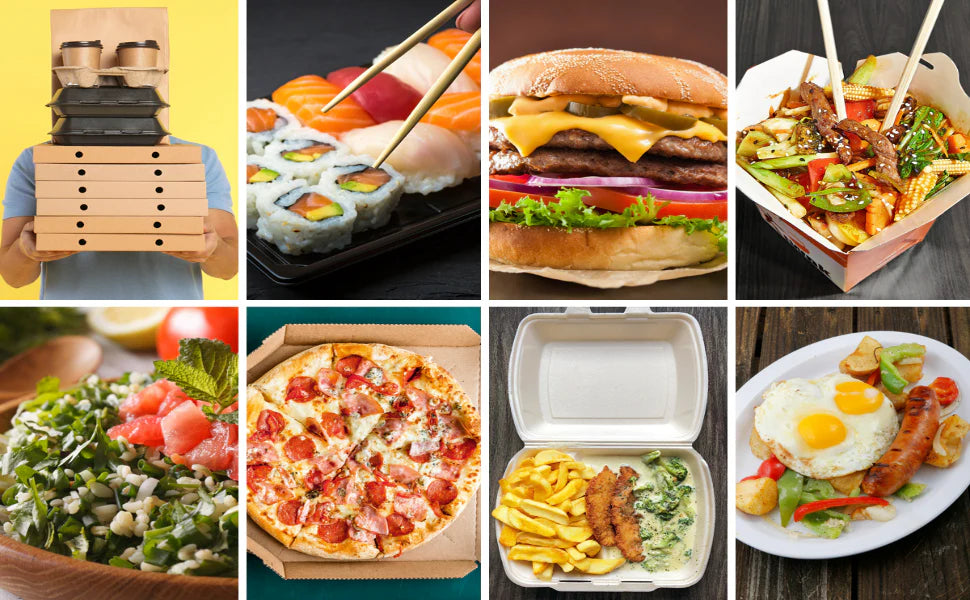


Introduction: Why Your Packaging Choice Makes or Breaks the Poke Bowl Experience
Sushi and poke bowls live and die by presentation. Unlike a burger or a bowl of noodles, a sushi roll or a beautifully layered poke bowl is meant to be seen before it's eaten — through a lid, in a delivery bag photo, or on an Instagram story. That means your packaging isn't just a container. It's part of the product.
But presentation is only half the job. The other half is freshness. Rice that sweats, fish that warms up, dressing that leaks into rice, or a lid that fogs and hides the food — these are the small failures that quietly cost Australian sushi bars, poke shops, and healthy-food cafés repeat customers and five-star reviews.
At the same time, more operators are being asked — by landlords, councils, and increasingly by customers — to move toward eco friendly packaging Australia regulators actually recognise, not packaging that simply looks green. Single-use plastic bans across Victoria, South Australia, Queensland, WA and the ACT have made "certified compostable" and "recyclable" more than marketing words; they're now compliance requirements.
This guide breaks down exactly what sushi and poke bowl packaging needs to do, the trays, containers and lids available, the mistakes that cost businesses money and customers, and how to choose certified, genuinely sustainable packaging that holds up under real service pressure.
Why Sushi & Poke Bowl Packaging Is Different From Standard Takeaway Containers

Sushi and poke bowls create packaging challenges most takeaway food doesn't. A curry container just needs to not leak. A sushi tray needs to manage several conflicting jobs at once:
-
Moisture control—rice releases steam and moisture that, if trapped, turns sushi soggy and poke bowl rice gluggy within 20–30 minutes.
-
Visual merchandising— the packaging is often the point-of-sale display and the takeaway container, so clarity and structure matter as much as function.
-
Leak resistance— poke bowls in particular carry loose dressings, soy-based marinades, and sauces that behave differently to a sealed sushi roll.
-
Temperature stability —raw fish and cold-prepared ingredients need packaging that doesn't insulate heat in transit.
-
Structural rigidity— stacked delivery bags mean a flimsy base can crush a beautifully arranged bowl before it reaches the customer.
Getting this combination right is why generic "one size fits all" containers so often disappoint sushi and poke operators. Pakio's Açaí & Poke Bowl Packaging and Sushi & Japanese Takeaway Packaging collections are built specifically around these constraints, rather than repurposing general salad containers.
The Core Packaging Types Every Sushi & Poke Bowl Business Needs
1. Sushi Trays

Sushi trays are the backbone of any Japanese takeaway menu. Two materials dominate the Australian market:
-
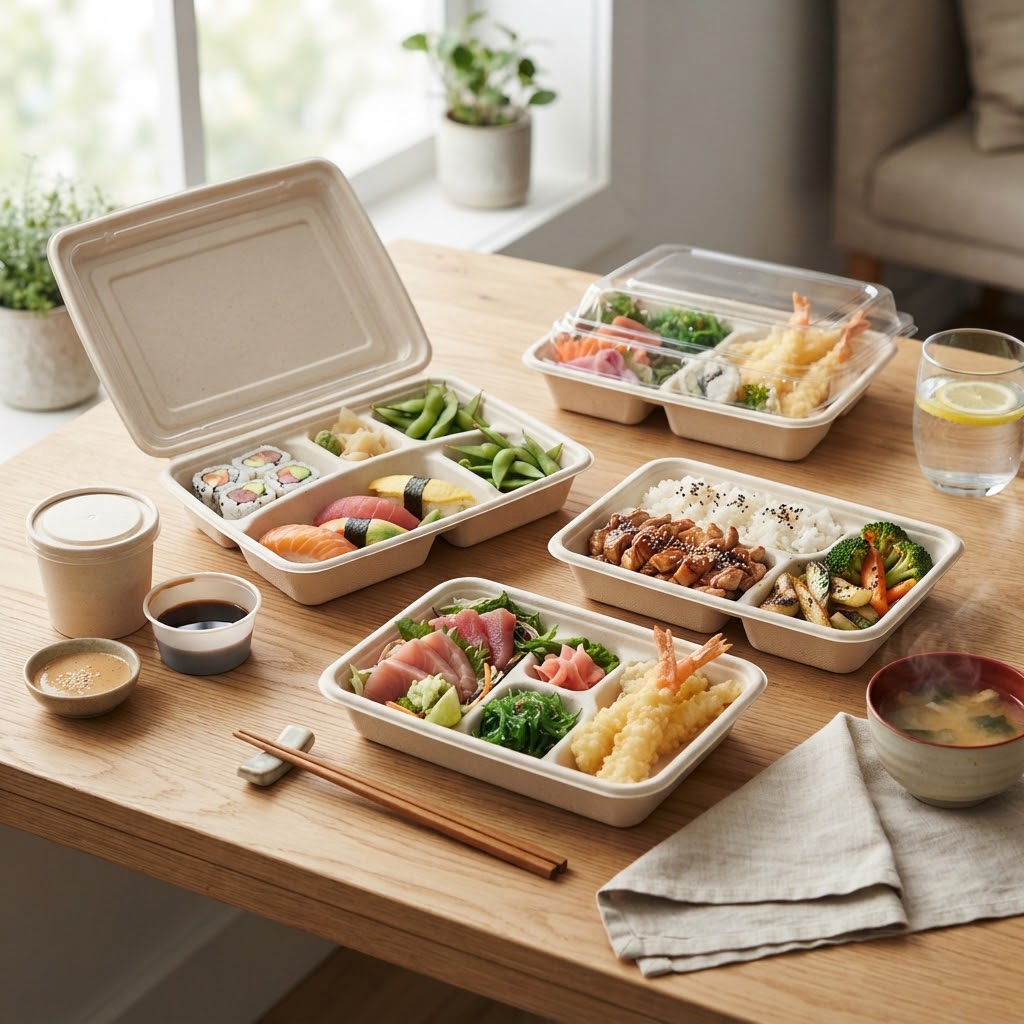
Paper sushi trays— moisture-resistant coated paper trays offer a premium, natural look and pair with clear lids for full product visibility. They're a strong fit for businesses prioritising a paper-first packaging story. Explore Pakio's Paper Sushi Trays range for coated, leak-resistant options in multiple sizes.
-
Recyclable plastic and PET sushi trays— clearer, more rigid, and better suited to chilled display cabinets or longer delivery times. The Sushi Tray with PET Lid is a common choice for operators who need a fully transparent, snap-secure lid that won't fog during refrigerated storage, while a Sushi Tray Base gives you a stable foundation that can be paired with different lid depths depending on how tall your rolls are stacked.
2. Poke & Sho-Bowls

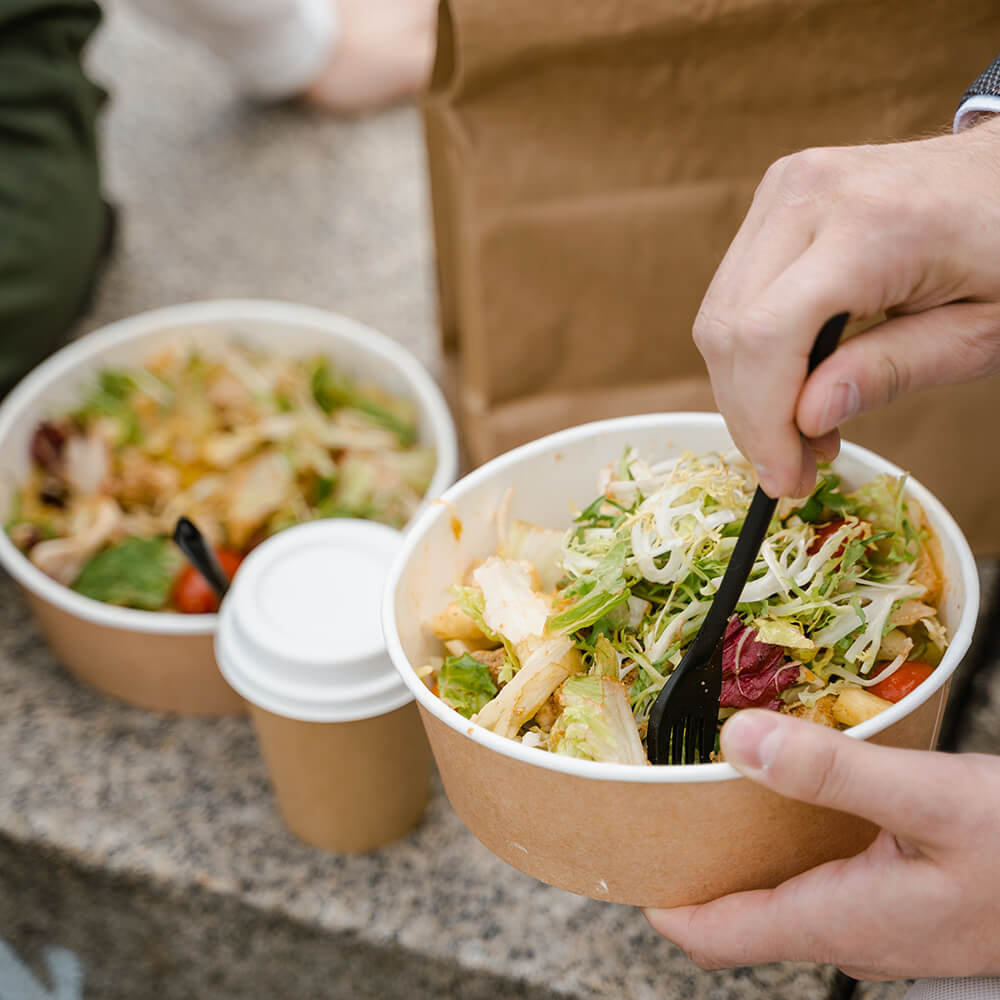
Poke bowls need depth, a secure lid, and — critically — a base that won't buckle under dressing and rice weight. Pakio's Sho-Bowls & Poke Bowls collection is designed around this exact use case, with round, stackable bowls that hold their shape from kitchen to delivery bag.
3. Lids: Dome, Flat, PET and RPET

The lid is where most freshness and presentation problems start or end:
- Flat lids suit sushi trays where the product is low-profile.
- Dome lids are essential for taller poke bowls or sushi rolls with garnish on top — a flat lid on a tall bowl will crush the presentation.
- PET and RPET lids offer crystal-clear visibility and a secure snap-fit, reducing the risk of spills in transit, which matters enormously once your bowls are being carried by a rideshare delivery driver rather than walked to a table.
4. Clear Sushi & Sandwich Containers
For operators who want a single, versatile clear container that works across sushi rolls, nigiri, and even sandwiches or wraps, Pakio's Sushi & Sandwich Container range offers rigid, food-safe clarity that keeps the product visible on a counter or in a fridge display.
What Actually Keeps Sushi and Poke Bowl Food Fresh

Freshness isn't one feature — it's the combination of several packaging decisions working together:
Ventilation vs. sealing balance.Fully airtight containers trap steam, which is the single biggest cause of soggy sushi rice. Trays designed with slight venting, or lids that sit just above the food rather than pressing down on it, let excess moisture escape without drying the product out.
Barrier coatings on paper trays.A moisture-resistant coating stops rice liquid from soaking through the base of a paper tray during the 20–40 minutes between packing and eating — a detail that separates a professional-grade paper sushi tray from a plain cardboard one.
Rigid, stackable bases.A base that flexes under weight lets rolls shift and rice compact against the lid. A properly moulded base — like Pakio's Sushi Tray Base — keeps rolls in position through transport.
Correct sizing.Oversized trays let food slide around; undersized trays crush garnish and force lids to bow, which is exactly what causes leaks in a poke bowl carrying dressing.
Temperature-appropriate materials.Raw fish and cold ingredients need packaging that won't insulate ambient heat. This is one reason recyclable plastic and PET options remain popular for chilled sushi and poke, alongside paper-based trays for freshly-made, same-hour service.
5 Costly Packaging Mistakes Australian Sushi & Poke Bowl Businesses Keep Making
Even experienced operators fall into these traps — and each one has a direct cost, whether that's wasted stock, customer complaints, or a compliance fine.

1. Buying Non-Certified "Eco" Products
The packaging market is full of products labelled "biodegradable," "green," or "eco-friendly" with no third-party certification behind the claim. Genuine certification in Australia means meeting AS 4736 (commercial compostability) or AS 5810 (home compostability), or holding recognised international certification such as BPI, which verifies compliance with ASTM D6400/D6868 standards. Without one of these on the product spec sheet, you can't verify the claim — and neither can your customers, or your council. This is the difference between genuine eco friendly packaging Australia businesses can defend under scrutiny, and greenwashing that creates reputational risk.
2. Mixing Plastics Within the Same Product Line
Combining a recyclable plastic base with a non-recyclable film lid, or a compostable tray with a conventional plastic lid, means the whole unit typically can't be processed correctly by either recycling or composting streams. Contamination like this is one of the most common reasons "recyclable" packaging still ends up in landfill. Keeping base and lid materials compatible — and clearly labelled — matters more than most operators realise.
3. Wrong Lid Combinations
Pairing a flat lid with a tall poke bowl, or a loose-fit lid with a runny dressing, is a leak waiting to happen. Lid depth, seal type, and venting all need to match what's inside — a dome lid for garnished bowls, a snap-secure PET lid for anything travelling by delivery app.
4. Poor Customer Instructions
Compostable packaging that ends up in general waste because there's no disposal guidance on the container or bag isn't delivering the environmental benefit you paid for. A simple "commercially compostable" or "home compostable — AS 5810 certified" note on the packaging (or the receipt) closes this gap and reinforces your sustainability credentials to the customer at the same time.
5. Prioritising Price Over Lifecycle Cost
The cheapest tray per unit isn't always the cheapest packaging decision. Flimsy bases that leak cost you remakes, refunds, and negative reviews. Non-compliant "eco" packaging can trigger fines under state single-use plastic legislation. Factoring in breakage rates, compliance risk, and customer retention — not just the unit price — is what separates a genuinely cost-effective packaging strategy from a false economy.
Understanding Certified Eco-Friendly Packaging in Australia
For food businesses, "eco-friendly" only means something when it's backed by a standard you can point to:

- AS 4736 — the Australian standard for commercial compostability, requiring packaging to break down in an industrial composting facility within a set timeframe.
- AS 5810 — the tougher standard for home compostability, confirming a product will break down in a standard home compost bin, not just an industrial one.
- BPI Certification — a widely recognised international mark confirming compliance with ASTM D6400 (compostable plastics) or D6868 (compostable packaging with fibre).
Pakio stocks two dedicated certified ranges built around these standards:
- Planetpak Eco Packaging — Australian-made, AS 5810 certified home compostable straws and packaging, designed for genuine end-of-life breakdown rather than industrial-only composting.
- BioPak Sustainable Packaging — certified to both AS 4736 and AS 5810, made from rapidly renewable materials including sugarcane bagasse, FSC-certified paper and corn-starch PLA. You can read more about BioPak's certification standards on Pakio's dedicated BioPak Packaging Australia page, including their range of kraft bases and RPET lids suited to poke bowls, salads and rice meals.
Pakio's Certified Sushi & Poke Bowl Packaging Recommendations
If you're rebuilding your sushi or poke bowl packaging line-up around genuine sustainability credentials rather than guesswork, here's a practical starting point:
- For freshly-made sushi with same-day service: Paper Sushi Trays paired with a clear lid keep rolls visible while offering a lower-plastic footprint.
- For chilled display or longer delivery windows: the Sushi Tray with PET Lid provides a secure, fog-resistant seal.
- For poke bowls, açaí bowls and rice-based meals: the Açaí & Poke Bowl Packaging collection and Sho-Bowls & Poke Bowls range are purpose-built for leak resistance and stackability.
- For businesses ready to move fully to certified compostable packaging: the BioPak Sustainable Packaging Collection and Planetpak Eco Packaging range give you AS 4736/AS 5810-certified options across trays, bowls and straws.
- For a single flexible SKU across sushi, sandwiches and wraps: the Sushi & Sandwich Container range simplifies your ordering without sacrificing presentation.
If sushi and poke bowls are only part of your menu, it's also worth reviewing Pakio's full Sushi & Japanese Takeaway Packaging and World Cuisine Takeaway Packaging collections to make sure your broader packaging range is consistent, compliant and cost-efficient across every dish you serve.
How to Choose the Right Packaging for Your Menu: A Step-by-Step Framework
-
Map your menu against packaging type.
Rolls and nigiri need trays; loose-ingredient bowls need deep, lidded containers. Don't force one format to do both jobs. -
Test your lid-to-base fit under real conditions.
Fill a sample container with your actual dressing or sauce ratio and check it in a delivery bag, not just sitting flat on a bench. -
Check the certification, not just the marketing copy.
Ask your supplier for the AS 4736, AS 5810 or BPI certificate reference number — a genuine supplier will have it on hand. -
Calculate cost per successful order, not cost per unit. Include an estimate of leak-related remakes and complaints when comparing suppliers.
-
Add clear disposal instructions to your packaging or receipts so certified compostable products actually reach composting, not landfill.
- Review Australia-wide delivery reliability. For businesses ordering in bulk across multiple sites, consistent stock and dependable freight matter as much as the product itself — something worth checking against a supplier's restaurant packaging checklist before committing to a full switch.
Sustainability, Compliance and the Single-Use Plastic Shift
Australian states have been progressively phasing out single-use plastics, including some plastic food containers and cutlery, across Victoria, South Australia, Queensland, WA, the NT and the ACT. For sushi and poke bowl operators, this makes certified compostable and clearly recyclable packaging less of an optional upgrade and more of an operational requirement in a growing number of jurisdictions.
Moving to certified packaging also has a knock-on benefit beyond compliance: it's a visible trust signal. Customers increasingly check for compostable or recyclable labelling on takeaway containers, and a clearly certified sushi tray or poke bowl container reinforces the same quality expectations they bring to your food.
If your business also ships perishable or temperature-sensitive stock — for example, wholesale sushi supply or meal-prep delivery — it's worth reading Pakio's guide on packaging for perishables and temperature-sensitive goods alongside this one.
Frequently Asked Questions
What packaging keeps sushi fresh for the longest time?
A moisture-resistant paper or rigid PET tray with a well-fitted, slightly ventilated lid keeps sushi at its best. Fully airtight lids trap steam and speed up sogginess, so the seal quality matters as much as the material.
What's the difference between compostable and recyclable poke bowl packaging? Compostable packaging, certified to AS 4736 or AS 5810, breaks down into organic matter in a composting environment. Recyclable packaging, typically PET or RPET plastic, is designed to be reprocessed into new material through kerbside or commercial recycling. Neither should be assumed without checking the product's actual certification.
Can I use the same container for sushi and poke bowls?
Not ideally. Sushi trays are shallow and wide to keep rolls flat and visible, while poke bowls need depth and a secure, often domed, lid to contain loose ingredients and dressing. Using a sushi tray for a poke bowl usually results in spills.
Is eco-friendly packaging more expensive than standard plastic?
Certified compostable and recyclable packaging can carry a modest per-unit premium over generic plastic, but factoring in reduced compliance risk, fewer leak-related remakes, and stronger customer trust often narrows or offsets that gap over time.
How do I know if a packaging supplier's "eco-friendly" claim is genuine?
Ask for the specific certification standard and reference number — AS 4736, AS 5810, or BPI/ASTM D6400. A legitimate supplier will provide this without hesitation. If a product only carries vague terms like "green" or "eco" with no standard attached, treat the claim with caution.