


Every June, the takeaway counter shifts. Customers who spent autumn lingering over a flat white at the front bench start asking for it in a cup to go. The walk-and-sip habit returns, the drive-to-the-office order returns, and Saturday morning queues stretch out the door — most of those orders leaving the building. For a typical Aussie cafe doing two to four hundred hot drinks a day, the takeaway share can climb from roughly half in autumn to seventy per cent or more across June, July and August.
Winter is also when the complaints arrive. A lid pops on the first corner home. A bare hand grips a single-wall cup too hard and the customer winces. A latte that left the counter at the right temperature is lukewarm by the time it reaches the office desk eight minutes away. Owners usually blame the coffee or the lid manufacturer. The real cause, more often than not, is that the cup, lid and sleeve were specified separately rather than as a winter takeaway system.
This is a wholesaler’s checklist for that system — when single-wall plus sleeve still earns its place, when double-wall is the better default, how to choose the right lid, and a realistic ordering guide for cafes doing two hundred, three hundred and four hundred hot drinks a day.
Why Winter Complaints Spike Beyond What the Cup Alone Can Fix
Three failure points drive most winter takeaway complaints, and each lives outside the coffee itself. The first is the lid leak on the way home — a press-fit lid that holds fine on a walk to the table pops the moment a driver brakes harder than expected. Spilled coffee on a car seat is the kind of thing customers remember.
The second is the burn. Australian baristas pull espresso milk at temperatures customers find pleasant to drink. The same temperature against a bare hand on a single-wall paper cup, after a few minutes of carrying, becomes uncomfortable enough that customers either swap hands repeatedly or grip the cup awkwardly through a sleeve of paper napkins.
The third is the lukewarm arrival. Single-wall cups lose heat more quickly than double-wall cups in the same ambient conditions, and a windy Melbourne winter car park is a hostile environment for keeping a drink at serving temperature for the ten-minute walk to the office desk. All three are solvable through component selection rather than barista technique — they are signs that the disposable packaging stack has not been specified as a winter takeaway product.
Single-Wall Plus Sleeve Versus Double-Wall — When Each One Wins
Both have a place, and the right choice depends on how your customers actually leave the building.
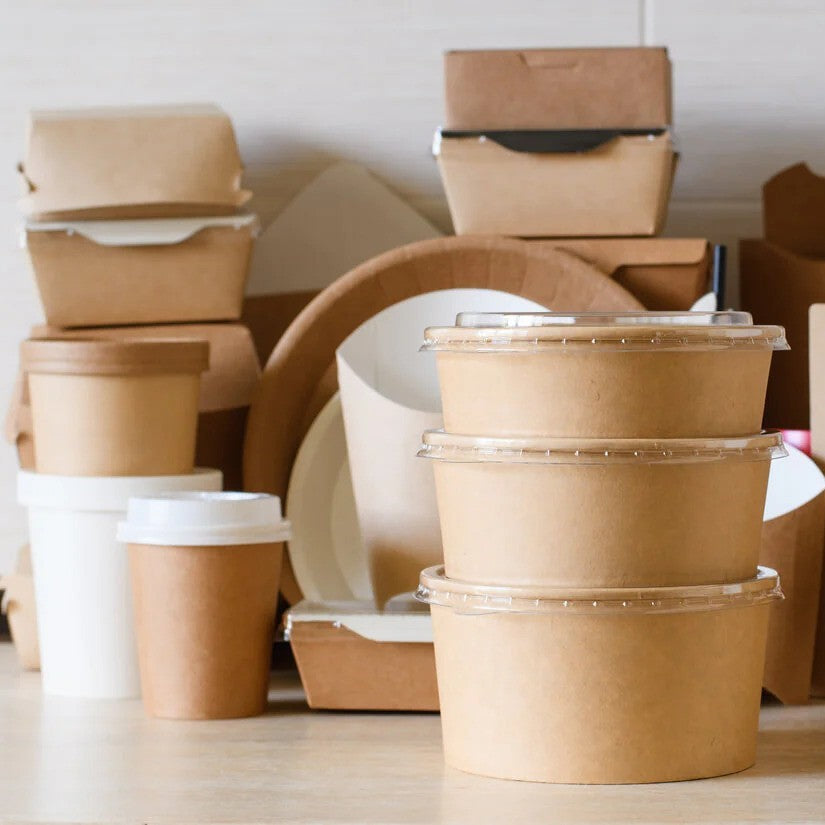
A single-wall kraft cup paired with a paper sleeve remains the most cost-effective combination for cafes whose takeaway customers walk to a nearby seat — the bench out the front, the park across the road, the office tower next door. The single-wall cup is cheaper per unit, the sleeve adds enough hand insulation for a short walk, and the visual is honest and warm. A corrugated kraft sleeve costs marginally more than a flat sleeve and adds grip and heat retention through the trapped-air ridges, which matters more in July than in March.
A double-wall cup builds the insulation into the cup itself. There is no sleeve to manage at the counter, and the heat retention is meaningfully better — typically three to five degrees Celsius better than single-wall plus sleeve over the first ten minutes. For cafes whose customers regularly carry drinks for longer than five minutes, or for cafes positioning at the premium end of their suburb, double-wall is usually the right winter default.
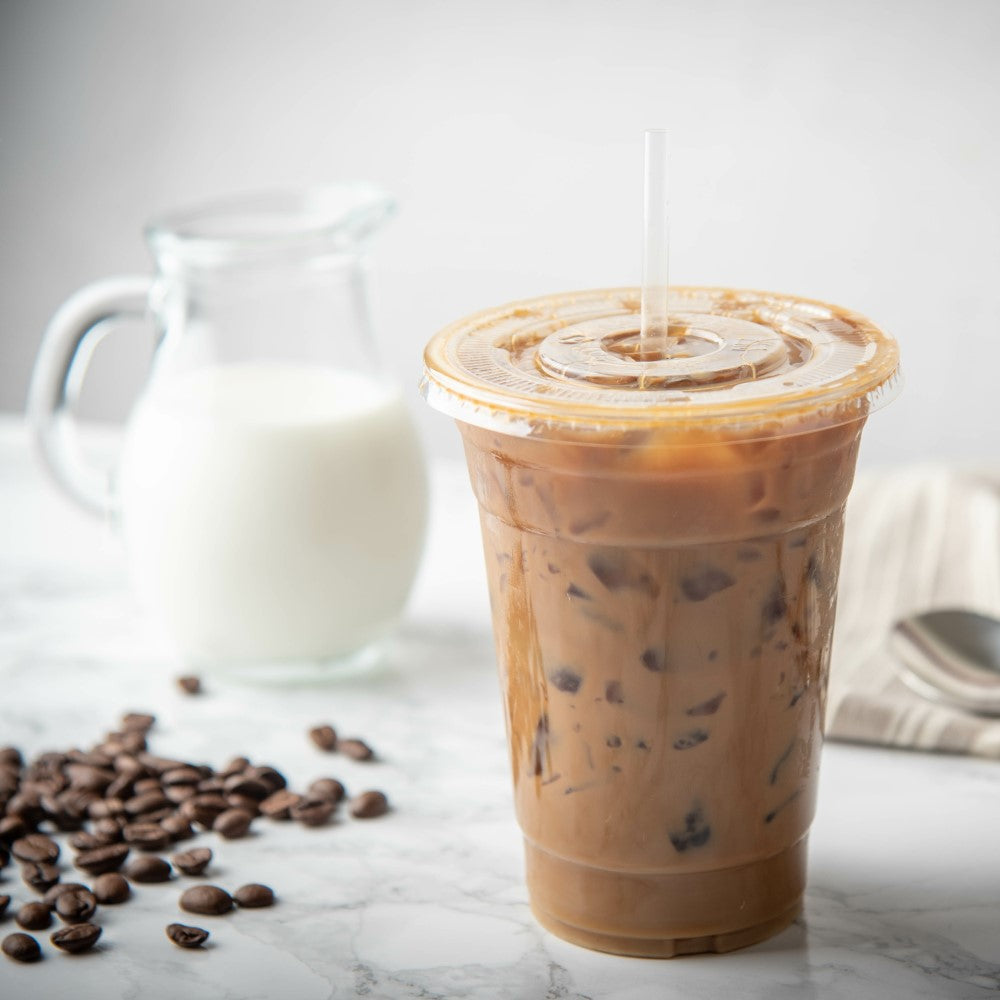
Aqueous-coated cups deserve a specific mention. The aqueous coating is a water-based barrier that replaces traditional polyethylene linings, and it is increasingly the default for cafes managing both performance and end-of-life sustainability. Where compostability claims are made, those should be referenced against AS 4736 for industrial composting and AS 5810 for home composting, and the ACCC’s guidance on environmental claims is worth a careful read before any front-of-counter signage goes up. Our single-wall coffee cups and double-wall coffee cups collections are organised by size to make ordering straightforward.
Lid Selection — Press-Fit, Twist-Lock and Sip-Through
Lid choice often gets less attention than cup choice, which is a mistake. The lid is the most failure-prone part of the takeaway system in winter and interacts most directly with how customers carry their drinks.
The press-fit lid is the workhorse of the Australian cafe scene — fast to apply, cheap per unit, and entirely adequate for customers who carry drinks gently. It is also the lid most likely to pop under sudden braking, on a stair, or during a longer walk with a swinging arm. Twist-lock lids are less common in Australia but offer better leak resistance through a mechanical seal. They cost more per unit and add a second or two to handover — usually not worth it for the bulk of the menu, but sensible for a premium “to go” tier or delivery orders. The sip-through lid sits in the middle, with a small opening moulded into the top so customers can drink without removing it; for the Australian walk-and-sip culture, particularly near train stations and office foyers, sip-through is often the format complaints drop fastest against.
Two operational notes get overlooked. Lid and cup compatibility is brand-specific — an eight-ounce lid from one manufacturer will not necessarily sit cleanly on an eight-ounce cup from another, and standardising on a single cup-and-lid family eliminates mid-rush mismatches. Lids stored in damp areas warp at the rim and pop more often, so store them dry, off the floor, and away from the dishwasher splash zone. Our full lid range is at coffee cup lids.
Sleeve Material — Plain Paper, Corrugated, and the Branded Option

Where single-wall cups are the chosen format, the sleeve still has work to do. Plain paper sleeves are the cheapest option and adequate for short carries. Corrugated paper sleeves add a measurable amount of hand-side insulation through the air gaps between the ridges, and most customers can feel the difference on the first contact — usually the better winter default for any cafe doing more than two hundred hot drinks a day.
Custom-printed sleeves are a small marketing opportunity that gets overlooked. Minimum order quantities are higher and lead times longer, so they are worth planning in May or June for a July run rather than in late winter. Our coffee cup sleeves range covers both stock and custom. One sizing note: standard eight, twelve and sixteen-ounce sleeves are dimensioned for most major cup families, but narrower or taller cup designs may need a matched sleeve.
A Realistic July Order Quantity Guide
The most common ordering mistake we see is under-ordering in late May because autumn volumes are still in mind, then scrambling in mid-July when industry supply chains are at their busiest. The numbers below are starting points, not targets.
A cafe doing roughly two hundred hot drinks a day, seventy per cent takeaway, six-day trading week, uses something in the order of five to six thousand cups per month. Ordering in cases of a thousand for a five-to-six-week stock buffer keeps the storeroom from running tight. A three-hundred-drink cafe is closer to seven and a half to nine thousand cups per month, and four hundred per day pushes you towards ten to twelve thousand — at which point pallet ordering becomes economical.
Lid quantities match cup quantities one-for-one, with a five-to-ten per cent buffer for the lids dropped, dented or misaligned during service. Sleeve quantities tie to the takeaway portion of single-wall orders only. Spread your order across sizes by your point-of-sale data, not by guesswork. A typical Australian cafe ratio sits roughly at forty per cent eight-ounce, forty per cent twelve-ounce, twenty per cent sixteen-ounce, but the spread varies meaningfully by suburb and season. Pull last July’s sales by size if you have them.
Lead Time and Local Warehouse — Why Winter Is Not the Time to Run Lean
Australian cafes typically see a twenty to forty per cent uplift in hot-drink takeaway volume across June, July and August relative to the shoulder months. Stock-out risk climbs in step. Running lid stock to a one-week buffer in mid-July is a high-anxiety place to be — a single courier delay can leave you serving short hot blacks in a paper cup with no lid.
A more comfortable rhythm is to keep a three-to-four-week stock buffer on the highest-velocity SKUs through the winter window. When current stock drops below two weeks of expected consumption, place the next order rather than waiting for the one-week red zone. Pakio dispatches from local Australian warehousing, which shortens lead times compared with offshore direct shipping, but courier capacity across the industry tightens in late June and stays tight through July, so the safety margin matters most when supply chains are most stressed.
Where possible, mix-and-match a single shipment to cover cups, lids, sleeves and carriers together. This reduces freight cost per item and removes the small risk of receiving a lid order without the matching cups still on shelf.
Two Small Add-Ons That Quietly Cut Complaint Rates
Two items are worth specifying alongside the core combo, because they are cheap and disproportionately effective. The drink carrier — a two-cup or four-cup paperboard tray handed to customers carrying more than a single drink — costs cents per unit at wholesale, prevents the most common car-seat spill, and makes the cafe look like a place that has thought about the experience past the counter. Our drink carriers range covers both formats. A simple branded paper napkin is the second — customers will use it to wipe a small drip before it becomes a coat or car-seat stain, and the moment of utility is exactly when your brand is most likely to be noticed. Adding both to the standard takeaway hand-over typically adds well under fifty cents per drink at wholesale.
Putting It Together for Your Winter
Specify the cup, lid, sleeve and carrier as one combo, not four separate purchases. Order four to six weeks of buffer stock before the first cold week of June, and re-order at the two-week mark. Standardise on a single cup-and-lid family to eliminate compatibility errors during the rush. Store lids dry and off the floor. Match your size mix to your point-of-sale data rather than to a generic ratio.
For most Australian cafes, this is the difference between a winter spent triaging takeaway complaints and a winter where the disposable side of the business simply works — touching every customer who walks back out the door with a coffee.
Quantities, lead times and current bulk break-points should be confirmed against your most recent point-of-sale data and the current Pakio price list at order placement. Any compostability claims made on cup or sleeve packaging should be referenced against AS 4736 or AS 5810 as applicable, and front-of-house environmental signage should follow the ACCC’s guidance on environmental and sustainability claims.