


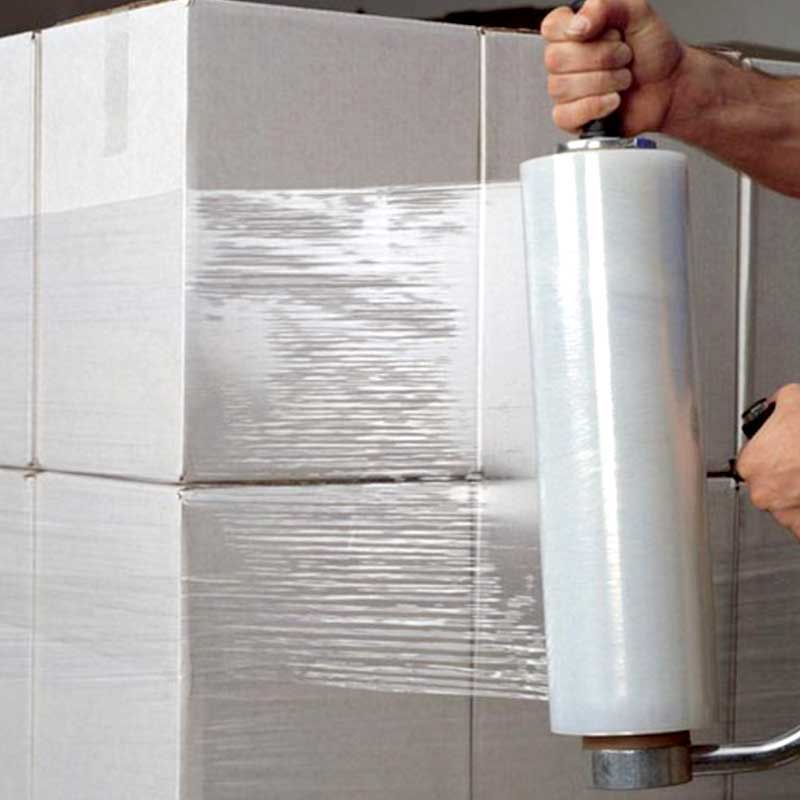



Pallet wrap is the cheapest item in most warehouses and one of the most expensive to get wrong. A roll costs a few dollars. A pallet that collapses in a truck costs you the stock, the freight, the redelivery and the phone call.
Most film problems show up as symptoms long before anyone questions the film itself. Here are five of them.
1. Loads arrive leaning, shifted or collapsed
This is the obvious one, and it's almost never "bad film" — it's the wrong film, or the wrong technique, for that load.
Three things to check, in order:
- Thickness. Heavy or sharp-edged loads need more micron. As a general guide, 12–15um suits light, evenly stacked cartons; 17–20um handles standard mixed pallets; 23–25um is the sweet spot for most freight; 30um+ is for very heavy or irregular loads.
- Wrap pattern. Film applied only around the middle does nothing to lock the load to the pallet. You need wraps that tie the base of the load to the timber.
- Overlap. Roughly 50% overlap between passes is the usual target. Sparse spirals look economical and fail in transit.
If your loads are consistently arriving intact but you've been stepping up thickness "just in case", you may be over-specced — which brings us to the next sign.

2. Your film bill keeps climbing but your volume hasn't
The most common cause is pre-stretch — how far the film is stretched before it goes on the load.
Hand wrapping stretches film very little. A pallet wrapping machine stretches the same film several times its original length, so you cover the same pallet with dramatically less material. If your pallet volume has grown but you're still wrapping by hand, your cost per pallet is quietly rising with it.
Rough rule of thumb: once you're consistently wrapping more than about 15–20 pallets a day, machine stretch film usually works out cheaper per pallet than hand wrap, even after allowing for the machine.
Below that volume, a quality hand pallet wrap with a proper dispenser is still the right call.
3. The film keeps tearing on corners
Constant tearing usually means one of two things: the film is too thin for the load's edges, or you're using the wrong film construction.
Cast film is clear, quiet to unwind and cheaper — great for regular boxed loads. Blown film is tougher, with better puncture and tear resistance, which is what you want for timber, machinery, drums and anything with corners that bite. If your team is fighting tears all day, blown stretch film often solves it outright.
One more culprit: wrapping too fast at the corners. Film that's already at its stretch limit will split the moment it catches an edge.
4. Your stock is walking, or baking in the sun
Clear film is the default because you can see the load and read the labels. But there are two situations where it's the wrong choice:
- Security. If pallets sit in a yard, a depot or a shared dock, opaque film hides what's on them. You can't steal what you can't identify.
- UV exposure. Pallets stored outdoors degrade — both the film and, often, the product. Black and opaque films add UV protection.
This is a genuinely underused fix. If you've had shrinkage from a particular site, black film costs very little more and removes the temptation.
5. Procurement is asking about your plastic
Soft plastic is now a live question in tenders, supplier reviews and sustainability reporting — particularly if you supply government, education or large retail.
The good news is you no longer have to choose between performance and a better environmental story. Two practical options:
- Biodegradable stretch film — wraps exactly like standard film, no change to your process or machine settings.
- Film made with 30% recycled content — a straightforward reduction in virgin plastic.
Worth knowing: standard LLDPE stretch film is a soft plastic and generally isn't accepted in kerbside recycling, but clean, dry film can often be collected through commercial soft-plastic streams. Ask your waste contractor what they'll take — many warehouses are already paying for a service they're not fully using.
Quick spec reference
| Symptom | Likely cause | Try |
|---|---|---|
| Loads leaning on arrival | Too thin, or base not tied to pallet | Step up micron, fix wrap pattern |
| Film cost rising | Hand wrapping at machine volumes | Machine film + wrapper |
| Constant tearing | Cast film on sharp loads | Blown film, slow at corners |
| Stock shrinkage / UV damage | Clear film in exposed areas | Black or opaque film |
| Sustainability questions | Virgin LLDPE only | Biodegradable or recycled-content film |
| Bundling small items | Using full-width pallet wrap | Bundling film |
How to work out what you actually need
You don't need a consultant. You need fifteen minutes and three numbers:
- Pallets per day. This decides hand versus machine, and nothing else matters as much.
- Heaviest and most awkward load you regularly ship. Spec your film for that, not for the average.
- Rolls used per week. Track it for two weeks. If it's higher than you expected, the problem is almost always pre-stretch or overlap — not the film brand.
One last note: if you're wrapping to bundle or unitise rather than to stabilise a pallet, you may want shrink wrap instead — it's a different product doing a different job, and the two get confused constantly.
The short version
Match micron to your worst load, not your average one. Move to machine film once volume justifies it. Use blown film where corners bite, black film where stock is exposed, and check whether a recycled or biodegradable option would tick a procurement box for free.
Not sure which film fits your operation? Browse the full range of pallet wrap and stretch film — by the roll or by the carton, with business pricing and fast delivery Australia-wide.