




Whether you're running a busy warehouse, dispatching e-commerce orders, or sealing boxes in a café storeroom, one thing is certain: not all packaging tape is built equal. Choosing the wrong tape can mean broken seals mid-transit, damaged goods, unhappy customers — and unnecessary costs.
This guide breaks down every major type of packaging tape available in Australia, explains what each is designed for, and gives you clear, practical advice on which tape to choose for which job. From industrial-grade carton sealing tape to eco-friendly kraft paper tape and beyond, you'll leave knowing exactly what to put on your next order.
Why Choosing the Right Packaging Tape Matters
Packaging tape is often an afterthought — right up until a carton falls apart in transit or a package arrives looking like it's been through a war zone. The reality is that the right tape is as important as the box itself.

Different adhesive formulations, backing materials, and tensile strengths make each tape type suited to specific conditions: ambient temperature, surface texture, weight of goods, speed of application, and whether the package will be handled manually or by automated machinery. Using the wrong tape doesn't just risk product damage — it can undermine your brand, increase returns, and eat into your margins.
The good news? Once you understand what each tape type does, the right choice becomes obvious.
The Main Types of Packaging Tape — and When to Use Each
1. Standard Carton Sealing Tape (Polypropylene / BOPP Tape)
Best for: General e-commerce fulfilment, retail dispatch, light-to-medium duty carton sealing.
Standard carton sealing tape — made from biaxially oriented polypropylene (BOPP) film with a hot-melt or acrylic adhesive — is the workhorse of Australian warehouses. It's transparent, strong, easy to tear by hand, and delivers a clean, professional finish on corrugated cardboard boxes.
Pakio's Packaging Tape collection covers a wide range of standard and heavy-duty options suited to everything from daily dispatch to high-throughput fulfilment centres.
Key considerations:
- Acrylic adhesive tapes offer better UV and temperature resistance for goods stored outdoors or in warm environments.
- Hot-melt adhesive tapes provide a stronger initial tack — useful for quick sealing in cold environments or on recycled cardboard.
- Standard tapes typically come in 48mm x 75m or 75mm x 75m rolls; buying in bulk brings unit cost down significantly.

Pakio tip: If you're sealing heavy cartons or double-walling for extra protection, look at Pakio's Forza Packaging Tape range — engineered for high-tensile strength and reliable adhesion even on rough corrugated surfaces.
2. Machine Packaging Tape
Best for: High-volume automated packing lines, fulfilment centres, logistics hubs.
If you're sealing hundreds or thousands of cartons per day with a tape machine, hand-roll tape won't cut it. Machine packaging tape is manufactured to tighter tolerances — consistent thickness, reliable unwind tension, and a core size compatible with case sealing machines.
Using hand tape on a machine causes jams, missed seals, and costly downtime. Machine tape is designed for consistent performance at speed — thinner backing, smoother unwind, and even adhesive coating throughout the roll.
Who needs this: E-commerce distribution centres, FMCG manufacturers, cold-chain logistics operators.
3. Kraft Paper Tape (Water-Activated Tape / Gummed Tape)
Best for: Eco-conscious businesses, high-security parcels, premium unboxing experiences.
Kraft paper tape — also known as water-activated tape (WAT) or gummed tape — is the sustainable alternative to plastic-backed tapes. Made from paper and activated by water, it bonds directly with the fibres of a cardboard box, creating a permanent seal that cannot be removed without visible damage.
This makes it an excellent choice for:
- Tamper-evidence: Because WAT bonds at a fibre level, any attempt to remove or open the tape leaves obvious damage — highly valuable for high-value goods, pharmaceuticals, or document shipments.
- Sustainability: Paper tape is recyclable with the box, reducing packaging waste. This supports Australian businesses working toward greener supply chains.
- Premium brand positioning: Kraft tape gives packaging a distinctive, natural aesthetic that resonates with eco-conscious consumers.
The trade-off? You'll need a water-activated tape dispenser for efficient application. But for businesses where sustainability or security is a priority, it's well worth the investment.
4. Fragile Tape (Printed Warning Tape)
Best for: Sensitive goods, glass, electronics, furniture, art, fragile homeware.
Fragile tape serves two functions: sealing and communicating. The bold "FRAGILE" print (or other handling instructions) tells everyone in the supply chain — warehouse staff, couriers, recipients — to treat the package with extra care.
Studies consistently show that labelled "fragile" packages are handled more carefully. For businesses shipping breakable goods, this is one of the simplest and most cost-effective ways to reduce damage claims.
Pakio also stocks Printed Warning Tape in a range of messages including "HANDLE WITH CARE," "THIS WAY UP," and "DO NOT BEND" — each a small investment that can significantly reduce costly returns and claims.
5. Cloth Tape (Gaffer Tape / Duct Tape)
Best for: Event setup, repairs, bundling irregular-shaped items, general industrial use.
Cloth tape — commonly called gaffer tape or duct tape — has a woven fabric backing that gives it exceptional tear resistance and conformability. It sticks firmly to almost any surface, including metal, plastic, timber, and concrete, and can be torn cleanly by hand without scissors.
In a packaging context, cloth tape excels at:
- Reinforcing the base of heavy boxes before dispatch
- Bundling awkward or irregular-shaped items together
- Sealing pallets, wrapping cables, or making quick repairs
- Event, exhibition, and trade show setups
While not typically used for carton sealing in high-volume settings, it's an indispensable multi-purpose tape for warehouses, workshops, and event crews.
6. Filament Tape (Strapping Tape)
Best for: Securing heavy items, reinforcing boxes, bundling long or cylindrical goods.
Filament tape is reinforced with embedded fibreglass filaments running lengthwise, giving it extraordinary tensile strength far beyond what standard polypropylene tape can achieve. It's purpose-built for applications where the tape is under consistent tension.
Ideal uses include:
- Securing heavy appliances or machinery
- Reinforcing the base or corners of overweight cartons
- Bundling long items like timber, pipes, conduit, or rolled materials
- Palletising as part of a two-layer securing system (combined with stretch pallet wrap)
Also see Pakio's Strapping Tape range for high-tension bundling applications.
7. Double-Sided Tape
Best for: Display assembly, mounting, gift packaging, point-of-sale materials.
Double-sided tape has adhesive on both faces, making it ideal where you need to join two surfaces without visible tape. Common uses include:
- Mounting retail signage or display materials
- Assembling gift boxes, hampers, or premium packaging
- Attaching labels, padding, or inserts inside cartons
- Office and stationery applications
For industrial-grade mounting applications (e.g., fixing components or panels), look at Foam Tape or Adhesive Transfer Tape, which offer stronger adhesion and gap-filling capability.
8. Masking Tape
Best for: Painting and surface preparation, light bundling, temporary labelling.
Masking tape is a crepe paper tape with a low-tack adhesive that removes cleanly without leaving residue. In a packaging context, it's used for:
- Temporarily labelling boxes or items during picking/sorting
- Light bundling of items that will be separated later
- Protecting surfaces during painting or finishing
Not recommended for sealing cartons — masking tape is not designed for load-bearing applications and its low-tack adhesive will not hold under transit stress.
9. Coloured Tape
Best for: Colour-coded warehouse systems, order sorting, department identification.
Coloured packaging tape is functionally similar to standard carton sealing tape but available in a range of colours for visual management purposes. High-volume warehouses and 3PLs use colour-coded tape to:
- Identify orders by carrier, destination, or priority
- Differentiate product lines or departments
- Indicate stock rotation or date coding
- Streamline picking and dispatch workflows
It's an easy, cost-effective way to add a visual system to your packing operation without additional labelling equipment.
10. Reflective Tape and Specialty Tapes
Best for: Safety marking, industrial environments, compliance applications.
Reflective tape is used on vehicles, warehouses, loading docks, and equipment for high-visibility safety marking — essential in environments where forklifts, pallet jacks, and pedestrian traffic mix.
For niche industrial applications, Pakio's Specialty Tapes and Industrial Tape collections include options for specific surfaces, temperature ranges, and adhesion requirements — from protection tapes for surface masking to foam tapes for sealing and vibration dampening.
Quick Reference: Tape Type Comparison Table
| Tape Type | Best Use Case | Key Feature |
|---|---|---|
| Standard BOPP / Carton Sealing | General fulfilment, e-commerce | Strong adhesion, cost-effective |
| Machine Tape | Automated packing lines | Consistent unwind, machine-compatible |
| Kraft Paper / WAT | Eco-friendly, tamper-evident | Bonds to carton fibre, recyclable |
| Fragile Tape | Breakables, sensitive goods | Visual handling instructions |
| Cloth / Gaffer Tape | Events, repairs, bundling | Conformable, tear-by-hand |
| Filament / Strapping Tape | Heavy goods, reinforcement | Embedded fibres, high tensile strength |
| Double-Sided Tape | Mounting, display, gift packaging | Invisible join |
| Masking Tape | Painting, temporary labelling | Low-tack, residue-free removal |
| Coloured Tape | Warehouse colour-coding | Visual sorting system |
| Reflective Tape | Safety marking, compliance | High-visibility, reflective |
How to Choose the Right Tape Width and Length
Tape width and roll length are just as important as tape type. Here's a quick guide:
Width:
- 48mm — standard for most boxes up to 20kg; the most common width
- 72mm / 75mm — heavier cartons, wider overlaps, and high-security seals
- Custom widths — available for machine applications
Roll Length:
- 75m — standard; suits moderate dispatch volumes
- 100m / 150m+ — reduces change-over time on busy lines; lower cost per metre
Core size:
- 76mm core — standard for hand dispensers and most manual tape guns
- Custom core sizes — required for machine tape dispensers; always check machine specifications before ordering
Pakio stocks Tape Dispensers to match all standard roll sizes — investing in a good dispenser improves speed, reduces waste, and protects your team from repetitive strain.

Tape and the Broader Packaging System
The best packaging tape still can't save a poorly packed box. For a complete, damage-resistant dispatch process, pair the right tape with:
- Padded Envelopes — for small, flat, or fragile items
- Bubble Bags — for electronics, glass, and fragile products
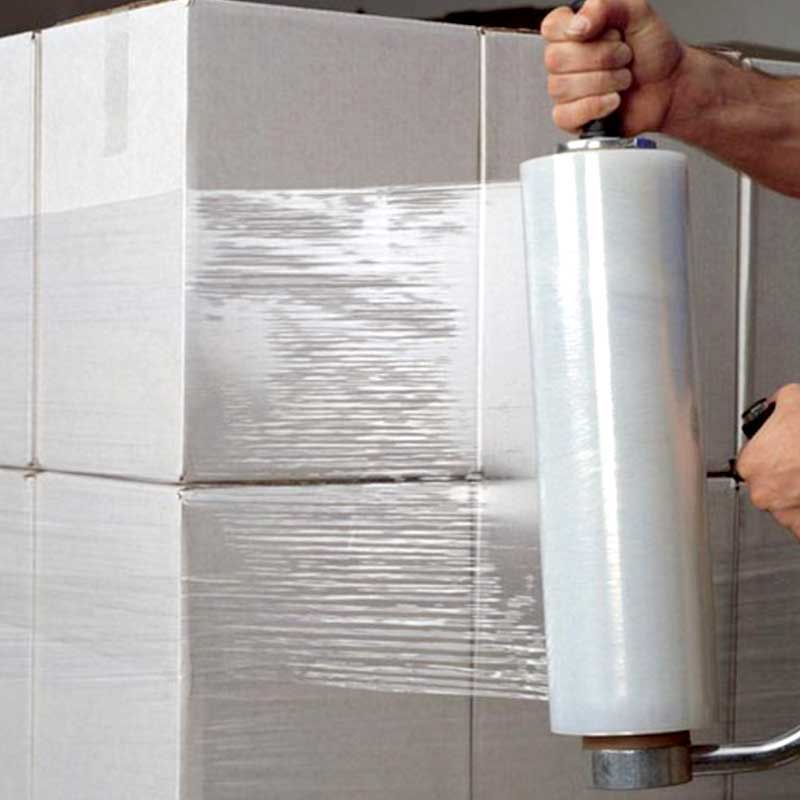
- Stretch & Pallet Wrap — for securing palletised loads
- Edge & Corner Protectors — for preventing crush damage to pallet corners
When the whole system works together, damage rates drop, returns decrease, and your customers receive exactly what they ordered — every time.
Expert Tips: Getting the Most from Your Packaging Tape
1. Store tape correctly. Rolls should be stored at room temperature, away from direct sunlight and humidity. Extreme heat or cold affects adhesive performance — a particular concern in Australian summer conditions.
2. Clean surfaces before taping. Dust, oil, and moisture all compromise adhesion. In high-humidity environments, acrylic-adhesive tapes generally outperform hot-melt.
3. Apply even pressure. Proper bond requires firm, even pressure across the full width of the tape. Flimsy application = failed seals under transit stress.
4. Use the H-method for heavy boxes. Apply tape along the seam, then two strips perpendicular across each end of the box in an "H" pattern. This distributes load and prevents corner failure.
5. Don't over-tape. More tape doesn't always mean more strength. One well-applied strip of quality tape outperforms four strips of cheap tape applied poorly.
6. Buy in bulk to reduce cost. For businesses sealing more than 50 cartons per day, buying tape by the carton (36 or 48 rolls) cuts unit costs significantly. Pakio's wholesale pricing makes this straightforward — browse all packaging tape options or contact the team for bulk pricing.

Packaging Tape for Australian Businesses: What to Consider
Australia's climate adds a layer of complexity to tape selection. High summer temperatures in Queensland, Western Australia, and the Northern Territory can soften hot-melt adhesives, while cool-to-cold winters in Victoria and New South Wales can reduce initial tack. For cross-continental freight, acrylic adhesive tapes are generally the more reliable choice.
For businesses in food service, retail, or e-commerce shipping perishables, the packaging system matters even more. Read our guide to Packaging for Perishables: Best Practices for Shipping Food and Temperature-Sensitive Goods for complementary insights.

Where to Buy Packaging Tape in Australia
Pakio supplies businesses across Australia with industrial-grade packaging tape in bulk quantities — from small retailers to large distribution centres. With a comprehensive range spanning every tape type covered in this guide, you can source everything you need from a single, reliable supplier.
Explore the full Packaging Tape collection at Pakio, or speak with our team at 1300 362 158 or info@pakio.com.au for volume pricing, product recommendations, or custom requirements.
Frequently Asked Questions About Packaging Tape
What is the strongest type of packaging tape?
Filament tape (also known as strapping tape) is the strongest packaging tape, reinforced with embedded fibreglass filaments. For heavy carton sealing, heavy-duty BOPP tapes with hot-melt adhesive also offer excellent strength. Pakio's Forza range is specifically engineered for high-tensile performance.
What's the difference between hot-melt and acrylic adhesive tape?
Hot-melt tapes offer stronger initial tack and bond well to recycled cardboard — ideal for cold environments. Acrylic adhesive tapes are more resistant to UV, heat, and humidity, making them better for goods stored outdoors or shipped across Australia's varied climate zones.
Is kraft paper tape better than plastic tape?
Kraft paper (water-activated) tape is better for sustainability and tamper-evidence — it bonds at a fibre level and cannot be removed without visible damage. Plastic BOPP tape is faster to apply and more suitable for high-volume automated environments. The best choice depends on your priorities.
What tape should I use for heavy boxes?
For heavy boxes (15kg+), use a minimum 75mm wide carton sealing tape with hot-melt adhesive, applied using the H-method. For very heavy loads (30kg+), consider reinforcing with filament tape along the base seam.
Can I use masking tape to seal boxes for shipping?
No. Masking tape is not designed for carton sealing and will fail under transit stress. Always use BOPP carton sealing tape or water-activated kraft tape for shipping cartons.
What is fragile tape used for?
Fragile tape is used to clearly communicate to couriers and handlers that a package contains breakable or sensitive contents. It combines a standard carton sealing function with a bold printed warning, reducing the risk of mishandling throughout the supply chain.
Does Pakio sell tape dispensers?
Yes. Pakio stocks Tape Dispensers compatible with standard hand rolls. Using a proper dispenser improves application speed, reduces tape waste, and prevents repetitive strain in high-volume environments.
What tape do I need for a tape machine?
You need machine packaging tape — it's manufactured to tighter specifications with consistent thickness and unwind tension. Using hand tape on a case sealing machine can cause jams and missed seals.