


It's May in Melbourne. The temperature is dropping.
A Fitzroy café owner, fresh off a busy pastry season, heads to the storeroom and realises: the double wall cups are almost gone. Stock ordered in December ran out by mid-July. For two weeks, the café was packed with regulars wanting hot chocolate and oat milk flat whites — but the only cups left were single wall. Staff scrambled to add sleeves. Someone still burned their hand. A one-star review followed.
This isn't a one-off story. For cafés across Melbourne and Australia, winter (June to August) is the true peak for hot takeaway drinks. The demand spike is real — but too many owners are still buying on a summer schedule.
This guide addresses the gap: what packaging categories do you need for winter? How do you choose materials? How do you use the EOFY (End of Financial Year) window for bulk buying? Straight answers, no fluff.
Why Winter Packaging Is a Different Problem
Melbourne winters are mild by global standards, but temperatures drop noticeably through June to August, driving a clear shift in hot drink demand. Industry observation consistently shows hot beverages representing a much higher share of café takeaway orders in winter than in summer, with total volumes also running higher.
This means two things.
First, your packaging consumption will be higher than summer. Double wall coffee cups, hot food containers — these winter workhorses often sit underused in summer and get under-ordered as a result.
Second, the mix of what you need changes. Summer is PET cold cups and cold drink lids. Winter is insulated cup bodies, bagasse containers for soups and hot food, and compliant PLA lids. If you haven't shifted your product mix, you'll be scrambling mid-season.
One more date to lock in: EOFY (30 June). Australian businesses use this as their annual purchasing decision window — spend made before 30 June counts in the current financial year, directly affecting tax deductions. Smart café owners batch their winter packaging orders in May-June, stocking three months at once. One order. Better pricing. Better tax position.
Core Winter Categories: What You Actually Need
Double Wall Coffee Cups
This is the non-negotiable workhorse of winter takeaway packaging.
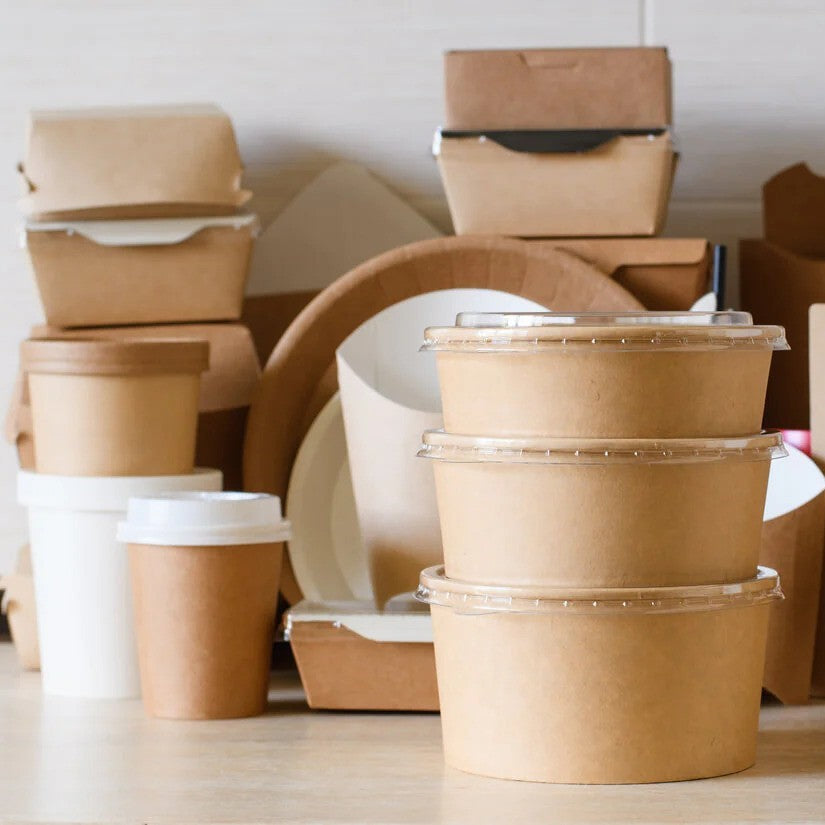
The structure: two layers of paperboard with an air insulation gap between them. The result: better heat retention than single wall, no sleeve required, and a cup your customers can hold without burning their hand. For your team, fewer steps at peak hour. For your customers, a coffee that's still warm at the office.
Double wall coffee cups cost more than single wall ($0.18-0.25 per unit versus $0.08-0.12), but factor out the sleeve cost and the extra handling step, and the gap closes. At peak hour, operational efficiency is the real cost.
Standard sizes: 8oz (espresso-based drinks), 12oz (standard takeaway, your main volume), 16oz (large). For Melbourne's espresso-forward café culture, 8oz is more important than most owners budget for.
A rough starting split: 12oz ~50%, 8oz ~30%, 16oz ~20% — adjust against your actual sales data.
Single Wall Cups + Sleeves
The budget-conscious option. Single wall coffee cups have a lower unit cost, but require a sleeve, which adds a step and a separate SKU to manage. At winter peak, every handling step adds up. If you're volume-constrained on margin, single wall plus sleeve still works — just make sure your sleeve inventory matches your cup inventory. Running out of sleeves mid-rush is its own kind of problem.
PLA Lids
Coffee cup lid selection is the compliance risk most owners overlook.
Victoria's Single-Use Plastic Ban (in force from 1 February 2023) prohibits traditional EPS products. PLA (polylactic acid, plant-derived bioplastic) lids are the compliant alternative — but two certifications matter, and they're not the same:
AS 4736 (industrial compostable): PLA products degrade in professional industrial composting facilities, not in household bins. Australia's industrial composting infrastructure is limited — facilities that accept PLA packaging aren't universally available.
AS 5810 (home compostable): A higher standard. Degrades in household composting conditions. Less commonly available for lids, and priced accordingly.
Honest note: if you market "compostable lids" to customers but there's no industrial composting collection in your area, those lids go to landfill like any other waste. That's not your fault — it's a gap in Australian composting infrastructure. Being upfront about this builds more trust than vague eco claims, and it keeps you on the right side of ACCC's greenwashing guidelines.
Common hot drink lid types: flat lid (flat white, latte, long black) and dome lid (drinks with foam or whipped cream on top). Both needed in winter; ratio depends on your menu.
Bagasse Containers (Hot Food)
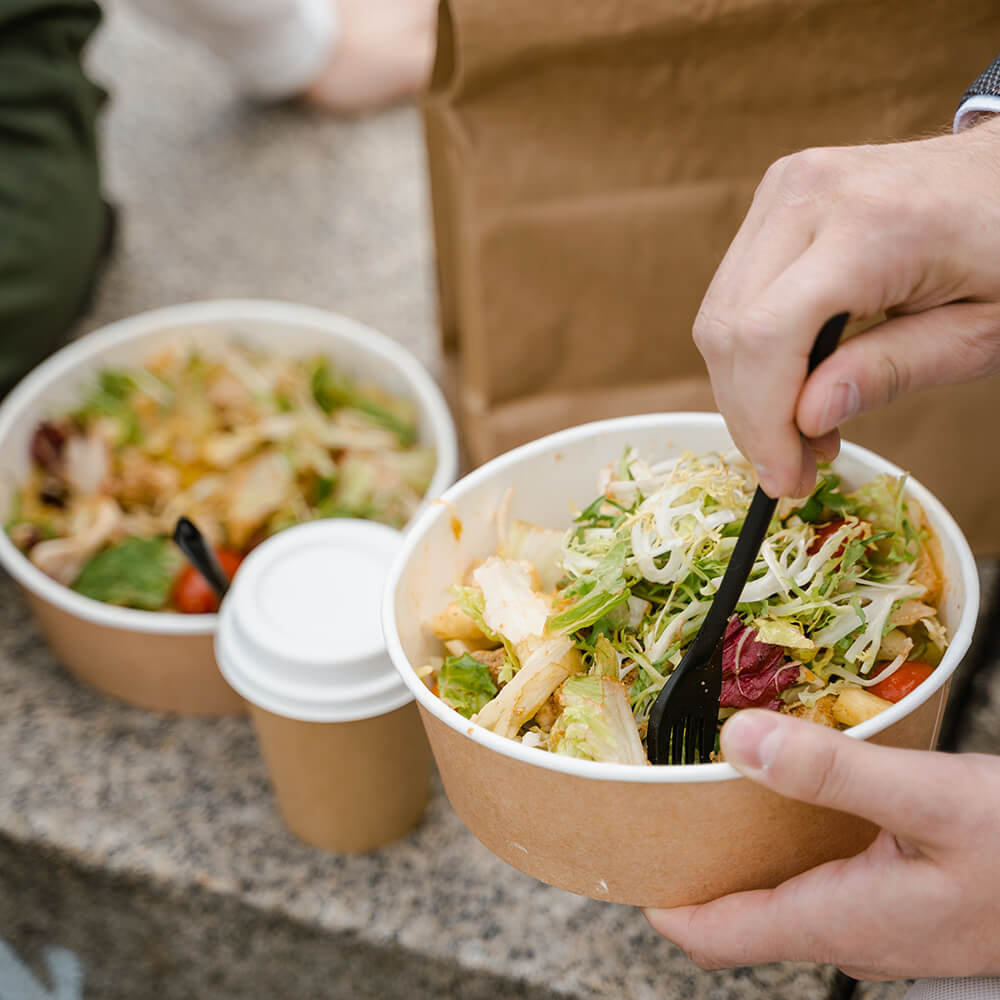
Winter isn't just coffee. Soup, congee, hot oats, oden — these need proper hot food containers.
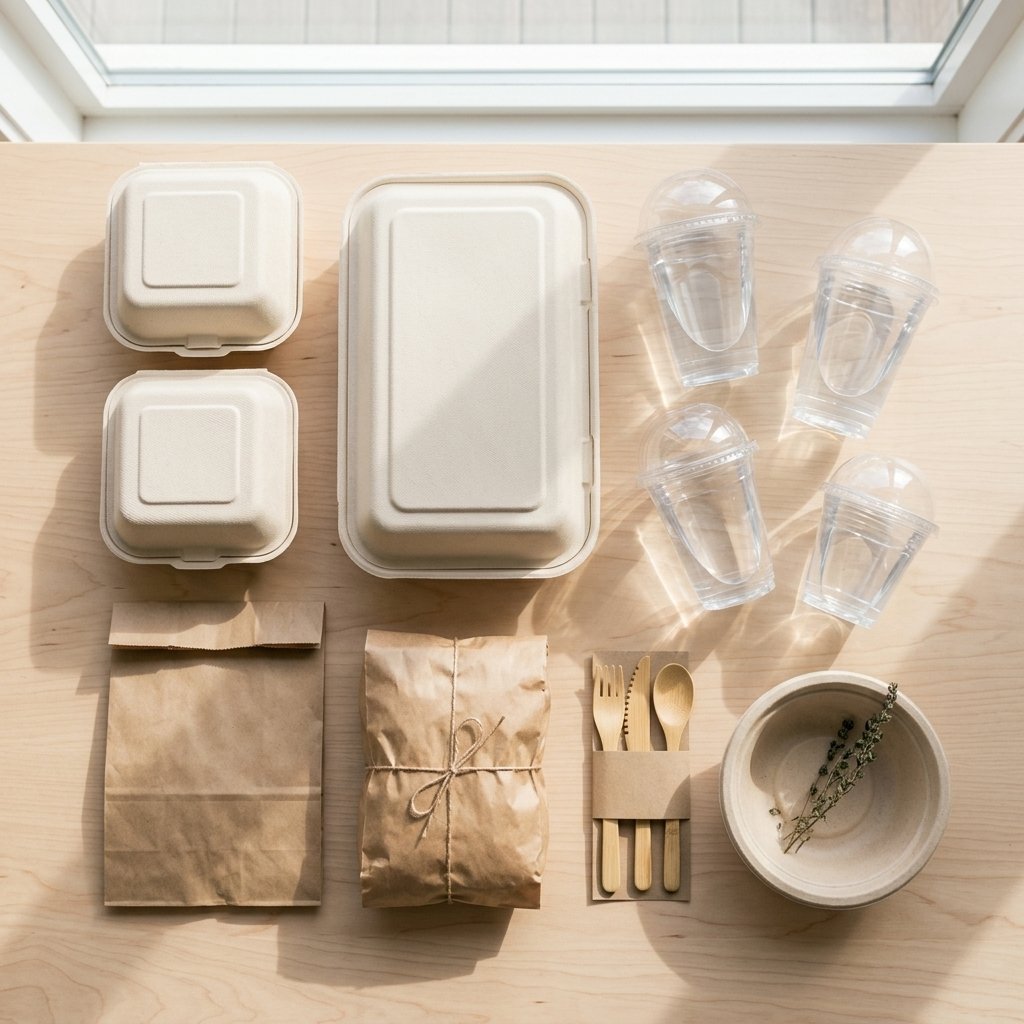
Bagasse takeaway containers (the fibre left after sugarcane is pressed for juice) are naturally derived and carry these properties: heat resistance up to approximately 90°C; built-in grease and liquid barrier so it doesn't leak; microwave-safe in most products (unlike plain paper); and AS 4736 industrial compostable certification across most lines.
Common sizes: round soup bowls (350ml / 500ml / 750ml), bagasse takeaway boxes (small / medium / large), lidded soup bowls. Wholesale pricing typically runs $0.25-0.45 per unit depending on size — contact Pakio for current pricing. More than old EPS foam bowls, but fully VIC-compliant and carrying a significantly higher perceived value with customers.
Hot Paper Bags (Grease-Resistant)
Croissants, hot pies, fried items — winter pastry and hot snack volume goes up too.
Eco-friendly paper bags with grease-resistant barrier coating handle oils and fats without leaking through the bag. Sizes run from small (single pastry) to large (multi-item meal orders). This is consistently the category that runs out first at winter peak, because owners treat it as a secondary SKU and don't buffer it enough.
Material Comparison: Thermal Performance and Compliance at a Glance
|
Material |
Insulation |
Max Temp |
VIC Compliance |
Wholesale (per unit) |
Industrial Compostable |
|
Double wall paper cup (no sleeve) |
Excellent |
Hot drinks |
Compliant |
$0.18-0.25 |
No (PE coating) |
|
Single wall cup + sleeve |
Good |
Hot drinks |
Compliant |
$0.10-0.15 (combined) |
No |
|
PLA clear cup (cold drinks) |
Poor (not for hot drinks) |
≤ 60°C |
Compliant |
$0.12-0.18 |
AS 4736 |
|
EPS foam cup / container |
Good |
Hot drinks / food |
Non-compliant (VIC banned) |
— |
No |
|
Bagasse bowl / box |
Good |
≤ 90°C |
Compliant |
$0.25-0.45 |
AS 4736 |
|
Kraft paper hot food box |
Moderate |
≤ 70°C |
Compliant (check coating) |
$0.20-0.35 |
Product-specific |
Prices are wholesale reference ranges — contact Pakio for current quotes. MOQ 1,000+ unlocks tiered pricing.
Compliance Check: What Will Get You in Trouble This Winter

Victoria's SUP ban has been in force since 1 February 2023, but compliance gaps persist. Run through these before peak season starts.
EPS foam containers: EPS cups, bowls, and food boxes are banned. This is the clearest item in the VIC prohibition. If you have old stock, it goes — you can't use it up first.
"Biodegradable" claims without certification: If a supplier tells you something is biodegradable but can't provide AS 4736 or AS 5810 certification, that claim doesn't meet ACCC greenwashing requirements. Ask for the certification document before buying in volume. Pakio's compostable packaging lines all carry applicable certifications — ask the team for documentation.
Conflating industrial and home compostable: AS 4736 (industrial) and AS 5810 (home) are different standards. Using them interchangeably in customer-facing communication creates compliance exposure.
PE-lined paper cups: Currently not specifically banned under VIC's SUP rules, but the industry is moving away from them. Water-based barrier paper cups — which can enter paper recycling streams — are increasingly available and represent where regulatory direction is heading.
EOFY Bulk Buying Strategy: Timing, Quantities, Storage
Why EOFY Lines Up Perfectly With Winter Prep
Australia's financial year ends 30 June. Business spending before that date reduces your taxable income for the year. Combine that with bulk pricing tiers and the timing aligns almost perfectly: order in late May or early June, stock arrives as winter peaks.
If you've been ordering monthly in small batches, May is the right moment to recalibrate. Pakio's stock up and save range is a good starting point for identifying which lines offer the best bulk value.
Calculating Your Winter Minimum Order
A simple formula:
Daily takeaway cup volume × 90 days × 1.2 (20% safety buffer) = your winter minimum
Example: 120 cups per day × 90 days = 10,800 units. Add 20% buffer: 12,960, or roughly 13,000 units to order.
For current tiered pricing information, visit Pakio's wholesale information page or contact the sales team directly. As a general guide, ordering at higher volumes (5,000+ or 10,000+ units) unlocks meaningfully better per-unit rates compared to monthly small batches — the savings compound across a full winter season.
Storage Notes
Paper-based and bagasse packaging is sensitive to storage conditions.
Dry: Moisture compromises structural integrity and internal coatings. Melbourne winters bring higher humidity — ensure your storeroom has adequate ventilation.
Away from direct sunlight: Prolonged UV exposure degrades paper packaging materials.
First-in, first-out: Rotate by batch date. Don't let older stock sit behind newer deliveries.
Stack height: Follow product-specific stacking limits to prevent compression damage on bottom units.
For cafés with limited storage, Melbourne metro free shipping on orders over $200 makes a more frequent, split-delivery approach viable — smaller footprint, same pricing benefit when you plan the total volume upfront.
Winter Stock-Up Action List
Week 1 of May — Audit
Count current stock of double wall cups, single wall cups, lids, hot food containers. Flag anything under 6 weeks of supply. If you have EPS containers, remove them now.
Product Selection Confirmation
Verify all hot food containers comply with VIC SUP rules. Request AS 4736 / AS 5810 certification documents from your supplier. Confirm cup sizes match your espresso machine output volumes.
Mid-May — Sample Test
If switching to a new product, allow 3-4 weeks to test under real conditions: thermal retention, lid seal, liquid integrity for soups and hot food. Don't test during the rush.
Late May to Early June — Place Bulk Order
Calculate your winter minimum using the formula above. Confirm the order is placed and paid before 30 June to capture EOFY deductibility.
Storeroom Reorganisation
Move winter priorities (double wall cups, soup containers) to the front and most accessible positions. Push summer stock (PET cold cups) to the back.
Customer Communication Prep
If you're switching to compostable products, have a short, honest explanation ready: "We've moved to AS 4736-certified compostable packaging. These need to go to an industrial composting facility — we're working toward that locally." Honest beats vague, every time.
About Pakio
Pakio® was founded by young Australian entrepreneurs George Weng and Josh Trenerry, operating from Melbourne's Keysborough. With 2,000+ packaging SKUs and Australia-wide shipping, Pakio serves cafés, restaurants, foodservice distributors, and national retailers. Free delivery on Melbourne metro orders over $200.
The product range covers single wall and double wall coffee cups, PLA lids, bagasse hot food containers, paper bags, straws, and foodservice accessories — with a focus on eco-certified materials including bagasse, PLA, and compostable alternatives.
To request samples before committing to a bulk order, or to discuss volume pricing for your winter stock-up, contact the Pakio team.
Phone: 1300 362 158 | Email: info@pakio.com.au | Website: pakio.com.au
Pakio® is a registered trademark. Compliance information in this article is for reference only — verify against current state regulations. Material certifications (AS 4736 / AS 5810) are as per product documentation.