

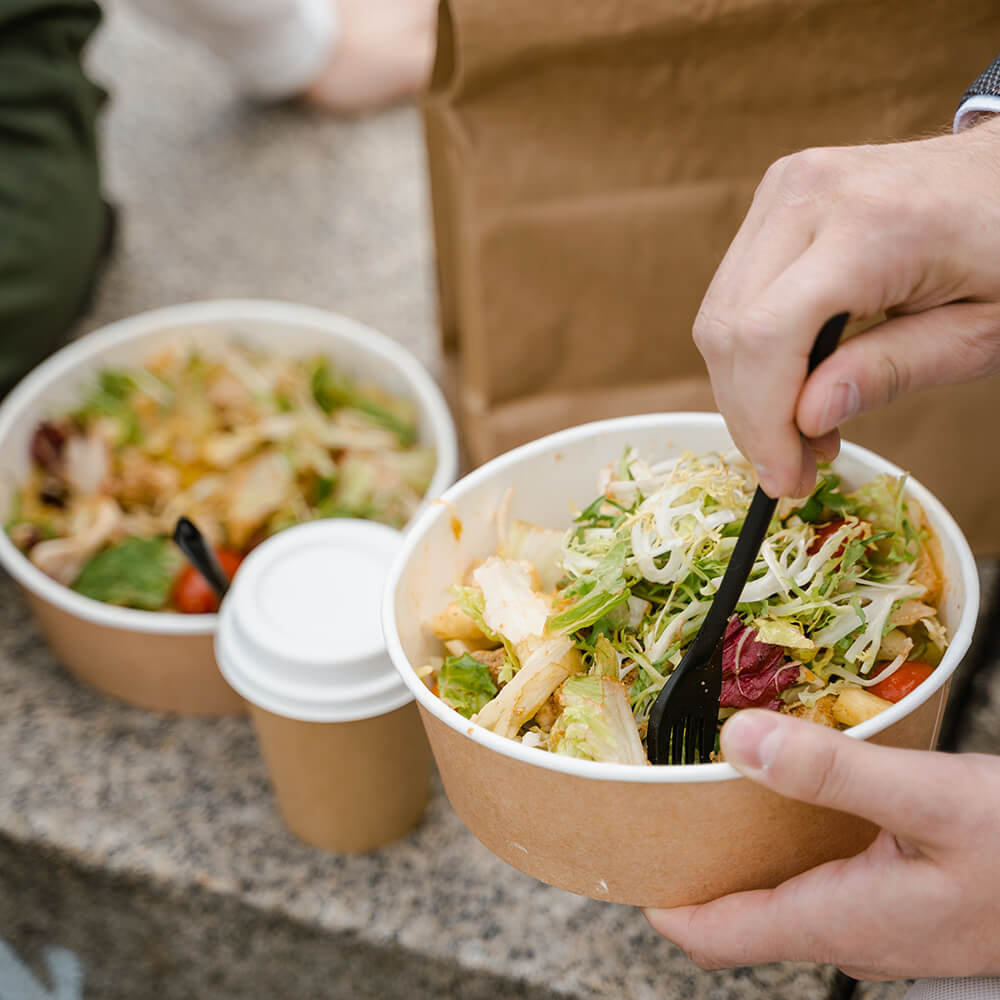

Every café owner in Australia faces the same tension: your customers want fast, convenient takeaway — and they also want you to be sustainable. Packaging waste sits right at the centre of that contradiction.
The good news? Reducing packaging waste doesn't mean slowing down your service or annoying your regulars. It means making smarter choices about what you stock, how you use it, and where it ends up after it leaves your counter.
This guide walks you through practical, proven strategies to cut waste in your café — starting with the changes that cost nothing and working up to the ones that pay for themselves.
Why Packaging Waste Matters More Than Ever for Australian Cafés
Australia's café culture is one of the strongest in the world. Melbourne alone has over 1,800 cafés, and Australians drink roughly 1.9 billion cups of coffee per year. That's a lot of cups, lids, stirrers, bags, and containers moving through the system every single day.
At the same time, every state and territory is tightening rules on single-use plastics. Victoria, New South Wales, Queensland, South Australia, Western Australia, and the ACT have all introduced bans of varying scope. The direction is clear: disposable packaging is under scrutiny, and the regulations will only get stricter.
But regulations aside, your customers are watching. Research by organisations including the Australian Packaging Covenant Organisation (APCO) consistently shows that a majority of Australian consumers consider a business's environmental practices when deciding where to spend. For cafés — where brand loyalty is built on daily habits — that carries real weight.
Reducing packaging waste isn't just about compliance. It's about running a tighter operation, spending less on supplies you don't need, and giving your customers one more reason to keep coming back.
Start With a Waste Audit: Know What You're Actually Throwing Away
Before changing anything, spend one week tracking what goes into your bins. You don't need a consultant for this — just a notebook and some attention.
What to look for:
-
Which packaging items fill up your bins fastest?
-
How many cups, lids, and containers do you go through per day?
-
What percentage of your orders are dine-in vs. takeaway?
-
Are you over-packaging? (Double-bagging, extra napkins by default, lids on dine-in drinks)
-
What comes back from customers unused? (Stirrers, sauce packets, extra cutlery)
Most café owners who do this discover the same thing: a surprising amount of packaging never needed to be there in the first place. Napkins stuffed into bags that customers throw away. Plastic stirrers handed out with black coffee. Lids put on cups for people sitting three metres from the counter.
This isn't about judging — it's about seeing clearly. Once you know where the waste is, the fixes become obvious.
The Low-Cost Wins: Changes That Save Money Immediately
These strategies require no capital investment. They're operational tweaks that reduce waste and lower your weekly packaging spend from day one.
Ask Before You Add
The simplest change is also the most effective: stop giving packaging items by default. Instead, make them available on request.
This applies to:
-
Napkins (keep a dispenser on the counter instead of putting three in every bag)
-
Stirrers and straws (ask "do you need a straw?" rather than dropping one in)
-
Sauce packets and sugar sachets (offer, don't assume)
-
Plastic cutlery (many customers eat at their desk with their own fork)
One Melbourne café owner reported a 30% drop in napkin and stirrer costs after switching from automatic to ask-first. That's money that was literally going in the bin.
Right-Size Your Cups and Containers
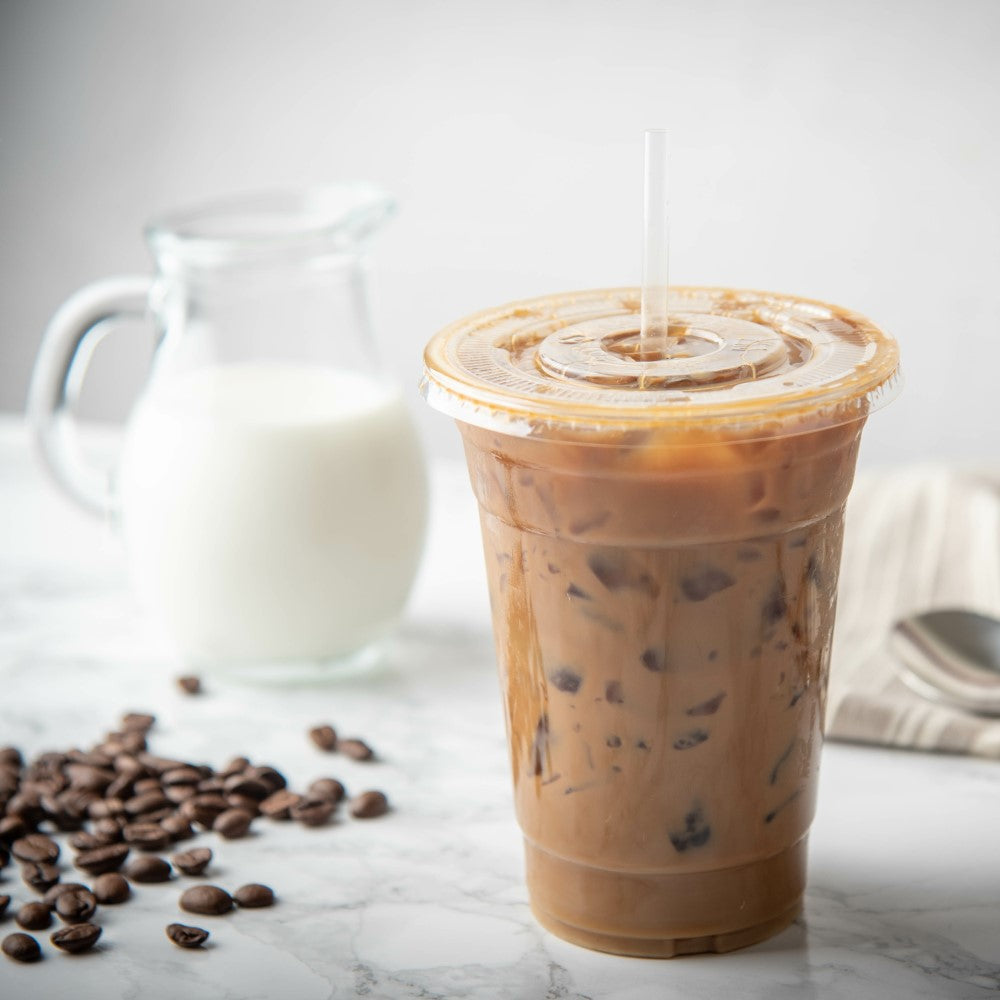
Oversized packaging is one of the sneakiest waste drivers. If your small coffee goes into a 12oz cup because you ran out of 8oz, that's more material, more cost, and more landfill — for no benefit to the customer.
Practical steps:
-
Stock three cup sizes and actually use all three (many cafés default to medium)
-
Match container sizes to portion sizes for food items — a small salad doesn't need a 1-litre container
-
Review your takeaway menu against your container inventory quarterly
Eliminate Dine-In Disposables
If a customer is sitting in your café, they don't need a disposable cup. This sounds obvious, but walk into any busy café on a weekday morning and you'll see takeaway cups on half the tables.
How to make the switch:
-
Train staff to ask "having here or taking away?" before reaching for a cup
-
Invest in enough ceramic mugs and glasses to cover your peak dine-in numbers
-
Some cafés charge a small premium (10–20 cents) for takeaway cups to nudge behaviour — check your local sentiment before trying this
Material Switches: Better Packaging, Not Just Less
Once you've cut the unnecessary stuff, the next step is upgrading what remains. The goal: every piece of packaging that leaves your café should be either compostable, recyclable, or reusable.
Compostable vs. Recyclable: Which Path Suits Your Café?
This is where it gets practical. The "right" material depends on your local waste infrastructure.
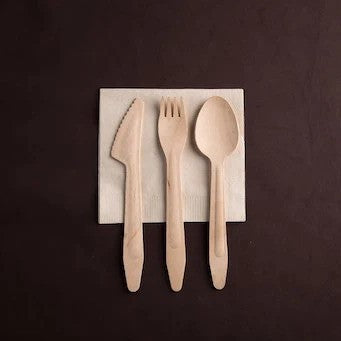
Compostable packaging (sugarcane containers, PLA-lined cups, wooden cutlery) breaks down in commercial composting facilities. It's the right choice if:
-
Your council or waste contractor offers commercial composting collection
-
You have a composting bin on-site or nearby
-
Your customers are likely to dispose of items in green/organic bins
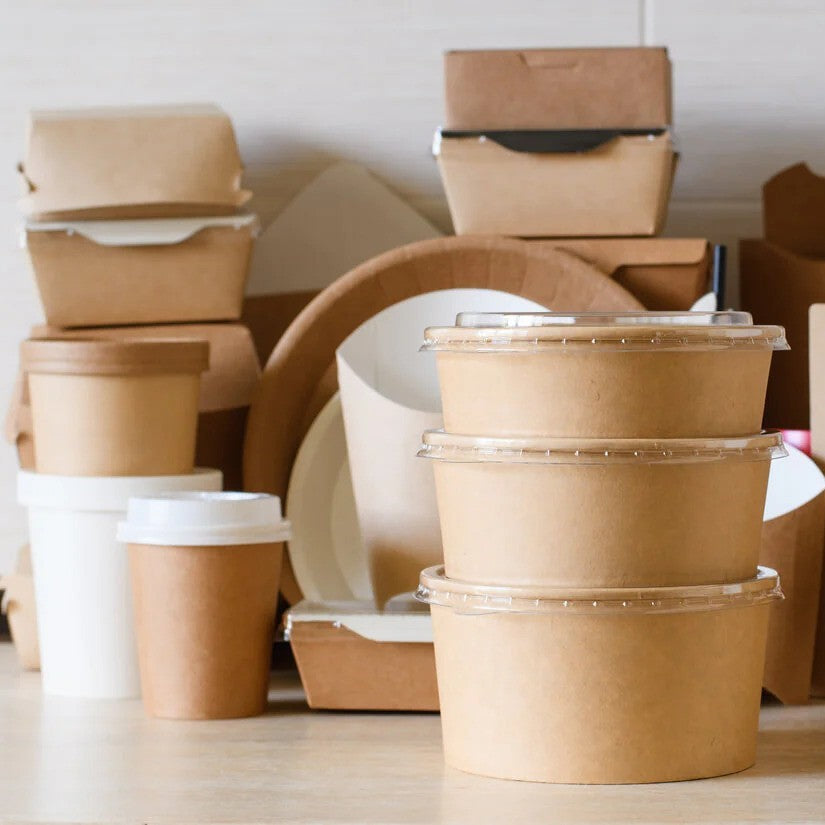
Recyclable packaging (cardboard containers, paper bags, unlined paper cups) works if:
-
Your area has strong kerbside recycling infrastructure
-
Your packaging is clean and uncontaminated (grease is the enemy of recycling)
The trap to avoid: Don't assume "compostable" means it'll break down in a home compost bin or landfill. Most compostable food packaging requires commercial composting at 60°C+. If your area doesn't have that infrastructure, compostable packaging may end up in landfill anyway — where it performs no better than conventional plastic.
Check with your waste contractor. Ask specifically: "Do you accept compostable food packaging in your organic waste stream?" The answer determines your material strategy.
Making the Switch Without Disrupting Operations
Changing your entire packaging range at once is a recipe for confusion. Here's a phased approach that works:
Month 1: Switch your highest-volume item first. For most cafés, that's coffee cups. Move to a compostable single-wall or double-wall option and let your team get comfortable with the new stock. Don't forget matching compostable lids.
Month 2: Tackle takeaway containers. Sugarcane clamshells and kraft paper boxes are direct replacements for polystyrene and plastic — same functionality, better end-of-life.
Month 3: Address the small items — straws, cutlery, sauce containers, bags. These are low-cost to switch and high-visibility for customers.
Month 4: Review and optimise. What's working? What's causing operational friction? Adjust quantities and sizes based on real usage data.
Work With Your Supplier, Not Against Them
Your packaging supplier should be part of this conversation, not just a line item on your expenses.
What to ask your supplier:
-
"Can you help me audit my current packaging mix for waste reduction opportunities?"
-
"What compostable alternatives do you carry that are direct replacements for my current items?"
-
"Can I trial smaller quantities before committing to a full switch?"
-
"Do you offer mixed cases so I can stock multiple sizes without over-ordering?"
A good supplier will welcome these questions. They know the regulations, they've seen what works for other cafés in your area, and they can match you with the right products instead of leaving you to guess. Wholesale pricing can also close much of the gap between conventional and sustainable packaging costs.
If your supplier can't or won't have this conversation, that's useful information too.

Communicate Your Efforts (Without the Greenwash)
Your customers want to know what you're doing — but they can smell hollow marketing from across the room.
What works:
-
A simple sign: "We use compostable cups and containers. Ask us about it."
-
Train your baristas to mention it naturally: "That's a compostable cup, by the way — you can put it in your green bin."
-
Update your Google Business profile and website with a line about your packaging choices
What doesn't work:
-
Grand declarations about "saving the planet"
-
Logos and certifications your customers don't recognise
-
Charging a "sustainability surcharge" without explaining what it covers
Keep it honest and specific. "We switched to sugarcane containers because they're commercially compostable and cost about the same" is more convincing than any green marketing campaign.
Measuring Progress: Track What Changes
You did a waste audit at the start. Now keep it going — not daily, but quarterly. Track:
-
Packaging spend per week (this should trend down or hold steady as you switch to right-sized, right-material options)
-
Bin volume (fewer bins going out = less waste and lower collection costs)
-
Customer feedback (are people noticing? Commenting positively? Complaining about anything?)
-
Compliance status (are you ahead of your state's regulations, or scrambling to catch up?)
Even rough numbers are better than guessing. A simple spreadsheet with four columns, updated once a quarter, gives you the data to keep improving.
State-by-State Snapshot: Where Australia Stands on Single-Use Plastics (2026)
Keeping track of which bans apply where is genuinely confusing. Here's the current landscape:
Victoria: Banned single-use plastic straws, cutlery, plates, drink stirrers, expanded polystyrene food containers, and cotton bud sticks. Lightweight plastic bags already banned.
New South Wales: Banned single-use plastic straws, stirrers, cutlery, bowls, plates, expanded polystyrene food service items, and plastic cotton bud sticks.
Queensland: Banned single-use plastic straws, stirrers, cutlery, plates, bowls, and expanded polystyrene food containers.
South Australia: One of the earliest movers. Banned single-use plastics including straws, cutlery, stirrers, polystyrene cups and containers, and oxo-degradable plastics.
Western Australia: Banned single-use plastic plates, bowls, cutlery, stirrers, straws, thick plastic bags, expanded polystyrene food containers, and coffee cup lids made of polystyrene.
ACT: Banned single-use plastic cutlery, stirrers, expanded polystyrene food and drink containers, and oxo-degradable plastics.
Tasmania and NT: Currently developing their frameworks with bans progressively rolling out.
The trend is convergence. Within the next few years, the practical difference between states will shrink as all jurisdictions move toward comprehensive bans on single-use plastics in food service.
The strategic move: Get ahead of your state's timeline rather than reacting to each new ban. Switching proactively means you choose the products and the pace, rather than scrambling when a deadline hits.
A Realistic Timeline for Your Café
Overhauling your packaging doesn't need to happen overnight. Here's a realistic 90-day plan:
Week 1–2: Conduct your waste audit. Track what goes into your bins and what goes out the door.
Week 3–4: Identify your top three waste drivers. Contact your packaging supplier to discuss alternatives.
Week 5–8: Make your first material switch (usually cups). Train your team on the new products and the "ask before you add" approach for napkins, stirrers, and cutlery.
Week 9–12: Switch your takeaway containers and small items. Set up a quarterly tracking system. Update your signage and online profiles.
That's it. No consultants, no certifications, no complicated programs. Just better choices, implemented steadily, tracked honestly.
Frequently Asked Questions
What's the difference between compostable and biodegradable packaging?
Compostable packaging meets specific Australian standards (AS 4736 for industrial composting, AS 5810 for home composting) and breaks down completely in a composting facility within a defined timeframe. "Biodegradable" is a looser term with no regulated standard — it simply means the material will eventually break down, but gives no guarantee of timeframe or conditions. For café packaging, always look for certified compostable products rather than vaguely labelled "biodegradable" ones.
How much does switching to sustainable packaging actually cost?
For most cafés, the per-unit cost increase is 30–60% depending on the product category. However, this is offset by reduced consumption (asking before adding cuts usage by 30–40%), lower waste collection costs, and the marketing value of being visibly sustainable. Many café owners report that total packaging spend stays flat or even drops after a well-planned switch.
Can compostable packaging go in my council's green bin?
Not always. Only a relatively small number of Australian councils currently accept compostable packaging in their FOGO (Food Organics Garden Organics) bins. Check directly with your local council or waste contractor before assuming your compostable cups and containers can go in the green bin. Where they're not accepted, compostable packaging goes in general waste.
Do I need to switch everything at once?
No — and you shouldn't. A phased approach over 90 days works better. Start with your highest-volume item (usually coffee cups), get your team comfortable, then move to containers and small items. Trying to switch everything overnight leads to ordering mistakes, staff confusion, and operational disruption.
What should I do with leftover conventional packaging stock?
Use it up. Throwing away perfectly functional packaging to make a statement is the opposite of waste reduction. Run through your existing stock, then replace it with sustainable alternatives as you reorder. The transition should be practical, not performative.
The Bottom Line
Reducing packaging waste in your café is a business decision, not a sacrifice. Less waste means lower costs. Better materials mean happier customers and easier compliance. A clear strategy means you're always ahead of the next regulation change.
Start with what you already know: look at your bins, talk to your supplier, and make one change this week. The rest follows naturally.
*Need help finding the right packaging for your café's waste reduction goals? Browse Pakio's full range of compostable and sustainable food packaging — from coffee cups and takeaway containers to cutlery and paper bags. Free Melbourne metro delivery on orders over $200. Call 1300 362 158 or get in touch for a free packaging consultation.*